Roast Lamb with Caponata

I’ve just started working with Wine Trust 100, producing some recipes for their website to match some of the excellent wines there. I thought you might like to see the recipe here so below is my first post for them – the links lead through to the matched wine on their site.


This being my first post about food and wine matching, I must own up to something straight away: I used to be scared of wine. Not scared it was going to hurt me (although of course, that has happened), but intimidated by the way some people pretend it’s all part of a secret club that’s very hard to get into.

Wine should not be used as a status symbol, or to make other people feel inferior if they don’t know their Sancerre from their Sauvignon. The word ‘accessible’ almost sounds clichéd nowadays, but the enjoyment of wine should not be the preserve of those who are apparently able to ‘fully’ appreciate it. Anyone can appreciate wine, and food and wine matching is nowhere near as hard, or easy, or anywhere in between, as people make out. It’s simply a question of trial and error – one might taste a wine and, finding something stony or flinty, wonder if it will go well with oysters, which have similar characteristics.

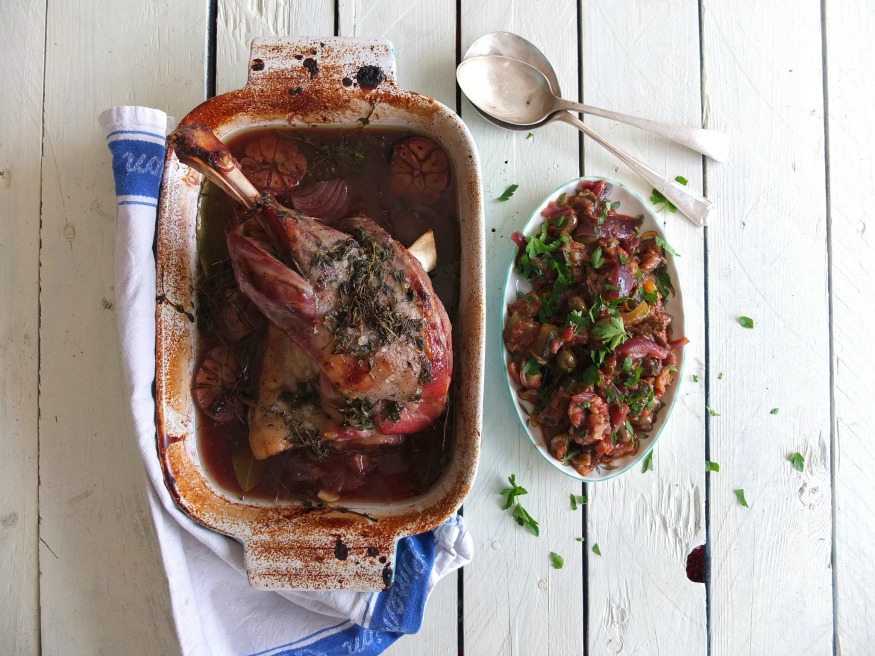
This brings me nicely to the shoulder of lamb. Having waved goodbye to any insecurities about the adequacy of my palate, I’m free to have fun with combinations, and I like my matches to have a little story behind them. I decided to go Roman.

The wine I have chosen (2013 Il Passo, Nerello Mascalese, Vigneti Zabu), comes from the ancient volcanic wine growing region of mount Etna and is made from two indigenous grape varieties: Nerello Mascalese (mostly only found on Etna) and Nero D’Avola (much more common). It’s full of dark herbal cherry accents with a slight sweetness of fruit from the drying of the grapes prior to fermentation.

It was this sweet and sour cherry character that, along with the wine’s Sicilian origin, made me think of agro dolce and the fact that in Sicily they still cook a cuisine very similar to that of the Romans.

The lamb is cooked with plenty of red wine, herbs, honey and – don’t be alarmed – a splash of fish sauce. It’s really not that odd if you consider it cooks out to leave a pleasing savoury funk, a punch of umami not too dissimilar from the Roman’s garum. The resulting roast is sweet, salty and vaguely gamey, full of herbal notes, which compliment the wine so well.

I’ve served it with a sweet/sour caponata, which is a rich Sicilian stew of aubergines, courgettes, olives and other vegetables, piqued with the acidity of vinegar and capers. You have my full permission to recline like an Emperor during consumption.

Roman Style Lamb with Caponata (matched with 2013 Il Passo, Nerello Mascalese, Vigneti Zabu)

1 x ½ shoulder of lamb (around 1.2kg)
1 onion, sliced
2 heads of garlic, unpeeled, sliced in half across the cloves
6 bay leaves
2 sprigs thyme, left whole + 1 tablespoon leaves
200ml red wine (any is fine)
1 tablespoon honey
1 tablespoon fish sauce
Juice ½ lemon

Preheat the oven to 170C.

Place the onion, garlic, bay leaves, thyme sprigs and the lamb into a roasting tray. Mix the fish sauce, honey, lemon juice and thyme leaves and brush onto the lamb. Season well with salt and pepper. Mix the wine with 200ml water and gently pour this around the lamb (not on top of it).
Put in the oven for 3 – 3.5 hours until very tender.

Caponata

1 large aubergine, cut into 2cm dice
100g celery, sliced into 2cm slices
1 large courgette, cut into 2cm dice
1 tin chopped tomatoes
1 large red onion, sliced
2 tablespoons capers, rinsed
2 tablespoons green olives
1 tablespoon sugar
2 tablespoons red wine vinegar
Small handful parsley leaves, chopped
Olive oil

Heat a couple of tablespoons of oil in a frying pan and fry the aubergine until golden on all sides, then remove to drain on kitchen paper. Do the same with the courgette (adding more oil as necessary).

Add a little more oil and cook the onion and celery until soft and just starting to colour. Add the aubergine and courgettes, capers, tomatoes, olives, sugar and vinegar and bring to a simmer. Put a lid on and simmer gently for 45 minutes to one hours, until thick. Season with salt and pepper then leave to cool to room temperature before serving. You may want to add a little more vinegar to taste.

Chipotle Goat Tacos with Sour Creamed Corn

So it turns out that a shoulder of goat goes a reeaally long way – the two of us were eating that thing for a week. As much as it was great braised and stuffed into pitta bread, there are rules about cooking leftovers, most of which involve frying, adding chilli, or plopping a wobbly egg on top.

Tacos are handy for using up leftover roasted meat, which can be chopped and pumped with extra flavour (in this case chipotles in adobo sauce). We’re still getting the hang of making the fresh ones, as you can see. Now now, don’t laugh; we didn’t add enough water to this batch so they came out somewhat thick and raggedy. More practice needed.

You can buy tacos from Mex Grocer if you want the authentic corn jobs – entirely different to those weird, gummy wheat versions. The flavour is amazing, and when made properly, they’re not dry or hard in the slightest. When I went on a taco tour of Tijuana in Mexico last year, I found that most places actually give you two tacos as a bed for the fillings, they’re so floppy and soft.

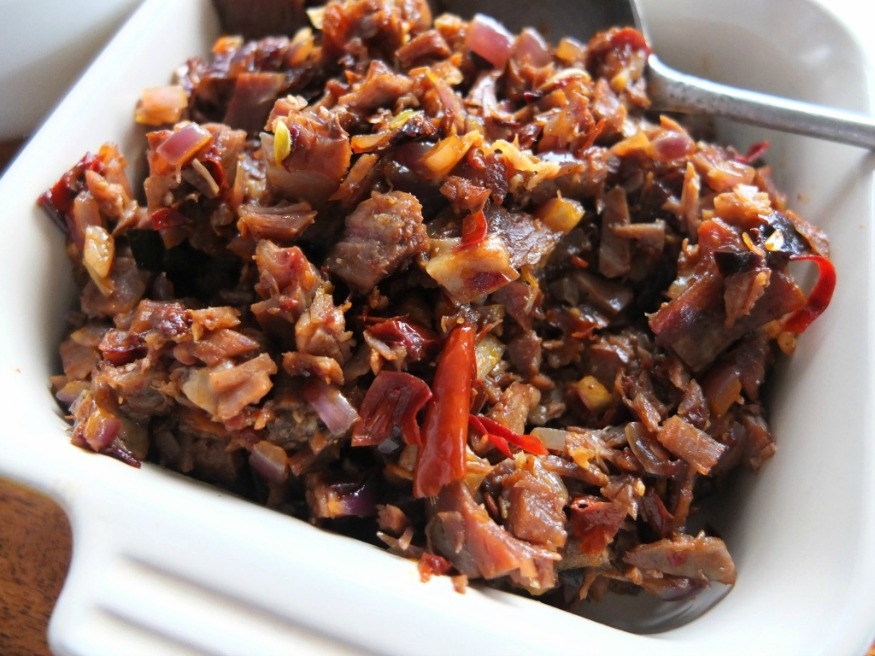
Chipotle Goat

We sizzled the leftover meat with a mixture of chipotle, ancho, guajillo and arbol chillies, to get some complex smoke and fruit flavours going on. There’s cumin, coriander, garlic, red onion. Look, it’s not a timid recipe, m’kay? The sour creamed corn is just BOSS too, a tangier version of the regular creamed. Dangerous stuff which finds its way into your mouth by the spoonful.

Chipotle Goat Tacos with Sour Creamed Corn

Leftover goat or other roasted meat
2 chipotles in adobo sauce, chopped
1 each ancho, guajillo and arbol chilli, rehydrated and chopped
1 small red onion, finely chopped
2 cloves garlic, crushed
Pinch each of cumin seeds, coriander seeds and black pepper, ground together or smashed in a pestle and mortar

Fry the onion in a tablespoon or so of oil and add the garlic and spices. Cook gently, stirring for a few minutes, then add the goat and chillies. Allow to cook, stirring regularly, for around 15-20 minutes, maybe longer depending on the fattiness of your meat. Play it by ear. Season.

For the sour creamed corn:

1 tin sweetcorn (regular size, whatever that is)
25g butter
1 tablespoon flour
75ml soured cream

Melt the butter in a small pan, stir in the flour and blend well. Add the corn, sour cream and salt and pepper. Cook over a medium heat untl thick and lovely.

Quick pickled red onions:

Finely slice red onions and mix with three tablespoons sugar, 3 tablespoons cider or white wine vinegar. Leave for an hour or so, stirring every now and then. Makes a great topping on loads of things.

Serve with tacos (available online) plus coriander and lime wedges.

Retsina Braised Shoulder of Goat with Whipped Feta

I sit here stroking my weary ribs, which have only just stopped jiggling after I read your comments on my food confessions post. It seems that we’re all secretly hoofing back corned beef and salad cream sandwiches, washed down with buckets of instant coffee (mainly to annoy people with beards, apparently). There’s a time and a place though, guys. Just been dumped? Grab the Cheesestrings. Hungover? Anything goes, frankly – the world is your pickled onion Monster Munch cheese toastie.

Sunday lunch though, that’s sacred turf. One cannot be messing around with Gregg’s steak slices and cheap Cheddar on the Official Day of Long, Slow Cooking.

Goat is now becoming more mainstream in the UK, not found only in Caribbean takeaways. It’s not that easy to get down here in Peckham or Brixton actually, with most places selling you mutton instead. In the past couple of years, we’ve seen dedicated suppliers like Cabrito become known, and Turner and George are selling goat from Tailored Goat Company (based in Cumbria), which is how I got hold of this shoulder.

It’s fantastic meat, with a flavour not unlike mutton (hence the substitution), but without that ‘slightly high’ kiff you often get with lamb. The best way to cook a shoulder is to braise it in liquid for around 4 hours (I once tried to cook it entirely on the BBQ – total cock up, it’s too lean), after which time you’ll have meat tender enough to pull apart.

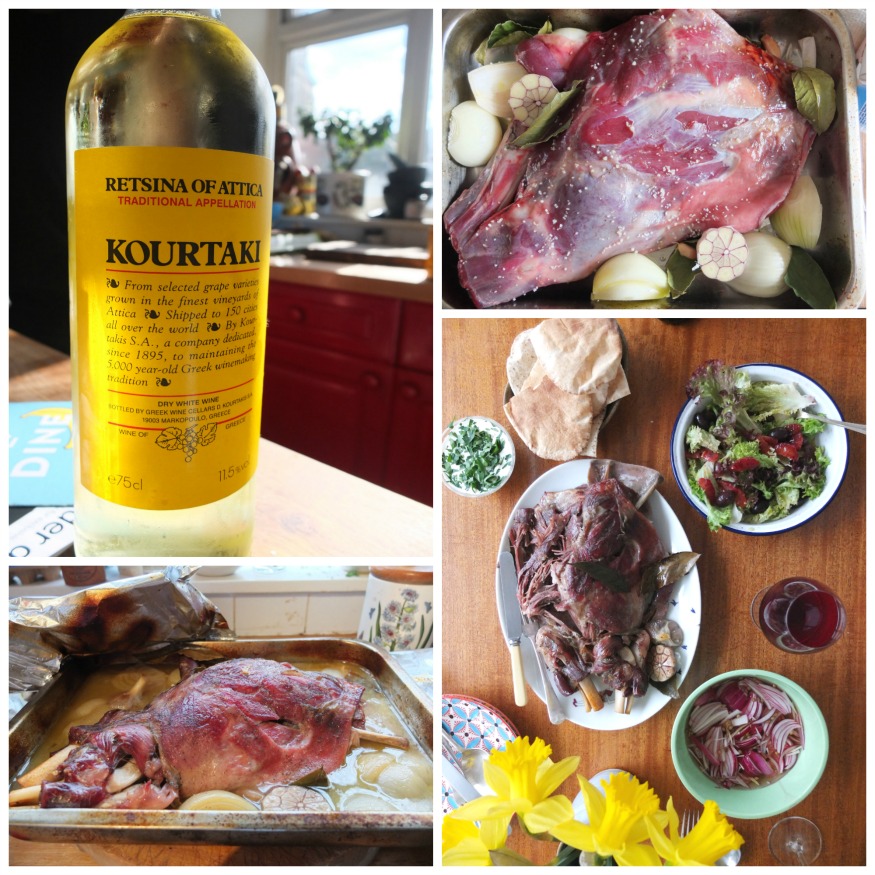
Retsina braised goat with whipped feta

We decided to go Greek, and it went into a roasting tray with garlic, onions, about ten bay leaves (I’m all for silly amounts of bay) and half a bottle of retsina, which we had to beg off the staff at a local restaurant who thought we were the council trying to stitch them up. It’s a classic ‘stick it in the oven and forget about it’ job, with serious springtime Mediterranean vibes.

We ate it with toasted pitta, a salad of blood orange and olives (Greek, obvs), some quick pickled red onions, and Feta which I whipped up because that is what we do with Feta now, don’t ya know. It turns into a sort of fluffy paste when mixed with cream cheese or yoghurt, great for spreading inside little goat-y sandwiches. They really do take some bleating.

SORRY.

Retsina Braised Shoulder of Goat with Whipped Feta

This method looks long but every stage is about as simple as it gets. I reckon this would easily serve 6 people. It kept us going for a week… more on that soon. 

1 x 2.5kg shoulder of goat
6 tablespoons olive oil
1 head of garlic, cut in half
2 onions, peeled and roughly sliced
10 bay leaves
1/2 bottle retsina (standard wine bottle size)

Preheat the oven to 160C. Place the shoulder on top of the onions in a roasting tray and rub with the oil. Season with salt and pepper. Add everything else to the tray, cover with foil and cook for 4 hours, or until very tender.

For the blood orange salad:

3 blood oranges, segmented
10 kalamata olives
Soft lettuce
3 tablespoons extra virgin olive oil
1.5 tablespoons lemon juice
1 teaspoon honey

Mix olive oil, lemon juice and honey in a jar. Add salt and pepper. Put lid on and shake until combined. Set aside. To assemble the salad, mix the orange segments, olives and lettuce and mix with a enough of the dressing to coat.

For the whipped feta:

140g feta cheese
80g cream cheese
Parsley, chopped

Crumble the feta into a food processor and blend. Add cream cheese and blend again. Taste and season with pepper, garnish with parsley.

For the quick pickled red onions:

1 red onion, finely sliced
3 tablespoons cider vinegar
1 tablespoon sugar
Large pinch of salt

Mix all the ingredients together and leave to pickle. Stir occasionally.

Serve the goat with toasted pitta breads and the rest of the bits and pieces.

Sweetcorn and Kimchi Fritters

So brunch is a big thing, then. We’re not allowed to go out for breakfast any longer – we must brunch. The Australians are mad for it, with their avocados and endless cups of coffee. In America, they’ve long loved those stacks of impossible-to-finish pancakes dripping in syrup. Why a stack? One of those fluffy facecloths is enough. I had a shock the first time I saw a plate of those arrive, let me tell you, giving the waitress my best, ‘when will the other people be arriving?’ look. She didn’t care, it’s normal. They’re used to picking up the remains and chucking them straight in the bin.

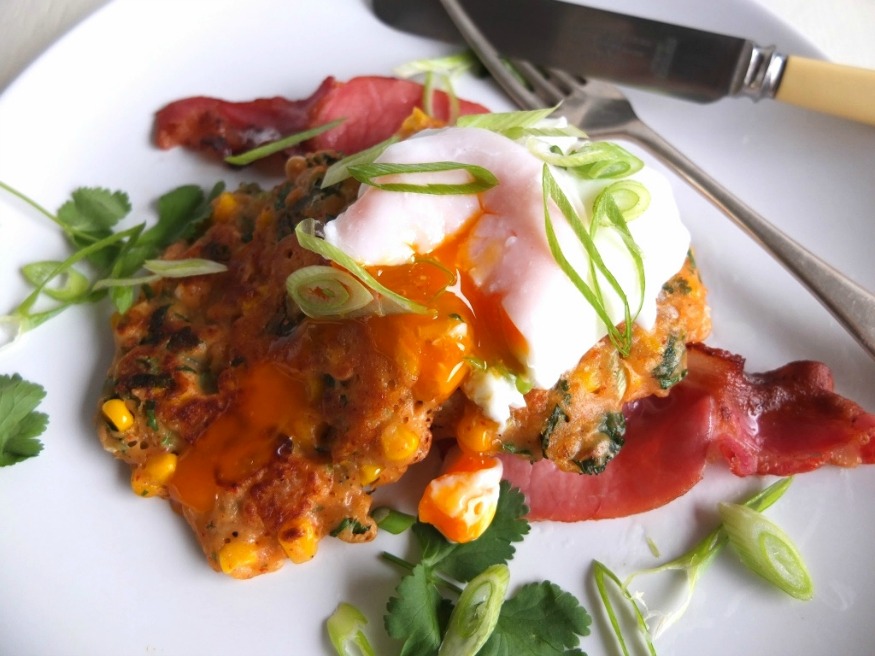
I feel a bit like this about brunch in general, it’s all just too much for the morning. Eggs, meat, bottomless booze and all of the rich things on one plate. Instead of setting you up for the day, this meal can easily send you back to bed. I like to draw the line at a single egg, a couple of bacon rashers and my new secret weapon – the corn and kimchi fritter. Corn fritters are obviously brilliant already (what with them containing corn and all), and kimchi goes really well with their sweetness, adding its own special funky punch of heat and crucially, acidity to lighten things. The drippy egg means it’s enough to fill you up, but not f*ck you up, because we all have stuff we’d like to do on a Saturday morning that doesn’t involve going back to bed, right?

Sweetcorn and Kimchi Fritters

Makes 12 fritters.

140g plain flour
1/2 teaspoon baking powder
220ml milk
3 spring onions, finely sliced (plus another to serve)
1 x 165g can sweetcorn (drained weight)
150g kimchi, roughly chopped
Small handful of coriander leaves, chopped
Oil, for frying

Bacon and eggs, to serve

Mix the flour and baking powder then whisk in the milk to make a smooth but thick batter. Add the other ingredients (saving 1 spring onion and a little coriander for garnish). Season with salt and pepper.

Heat some oil in a frying pan, a couple of tablespoons to start, you can add more as you go, and drop tablespoons of the mixture into the pan. Flatten them out and cook for a minute or so each side until golden. Set aside on kitchen paper while you cook the others.

Serve with grilled bacon and a poached egg. Scatter with the remaining spring onion and coriander to serve.

Curry Goat

Peckham is now so trendy it’s no longer cool. I haven’t even lived there for four years, yet just the other day I got a letter from the clothing brand Anthropologie addressing me as M. Peckham. Even they still think I own the place. I will always love the area, (I’m just down the road in Camberwell now), but the edges are softened, the archways fluffed. I can smell beard oil. Nigerian restaurants such as Delta Tavern have been replaced by hip spots like Pedler, all pineapple prints and jam jar glasses. I will miss their gelatinous cow foot stew and cans of warm Stella.

What I’d hate to see is the closure of those little West African restaurants on Choumert Road, the ones where you can catch a breath-snatching fug of scotch bonnet peppers three hours before they open for lunch. I once tried to approach one of these restaurants for an article and they basically told me to Do One, which was funny and made me love them more. I adored what Peckham used to be, however much I was guilty of romanticising it.

Curry Goat

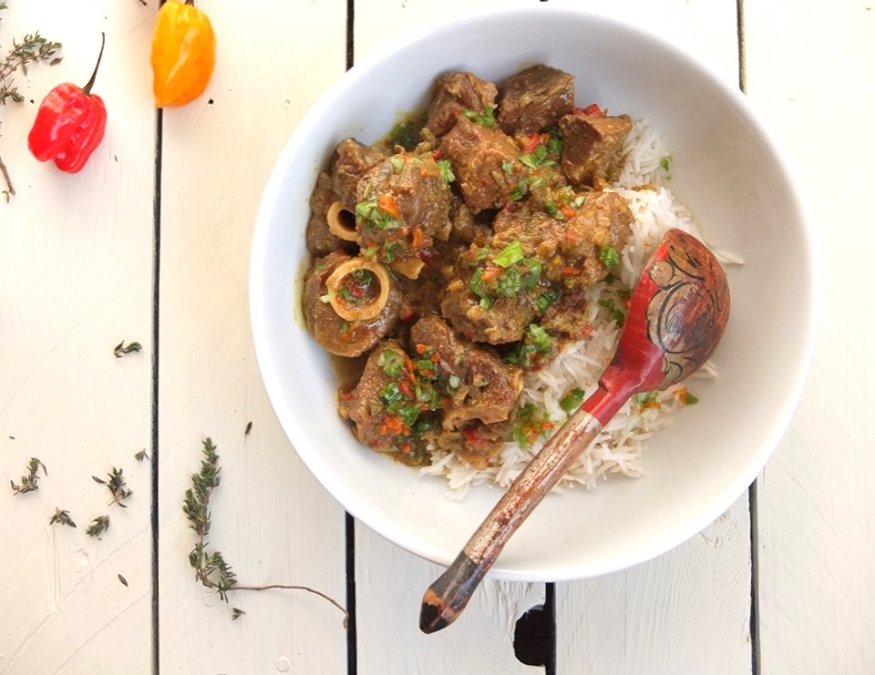
A lot of people used to ask me (and still do) where they should go for Caribbean food in Peckham and I would reply that I’m sorry, but it’s not really a thing. The Nigerian population is much larger than the Caribbean, or Tasty Jerk in Thornton Heath. People ask me mainly about jerk chicken, but not so much curry goat.

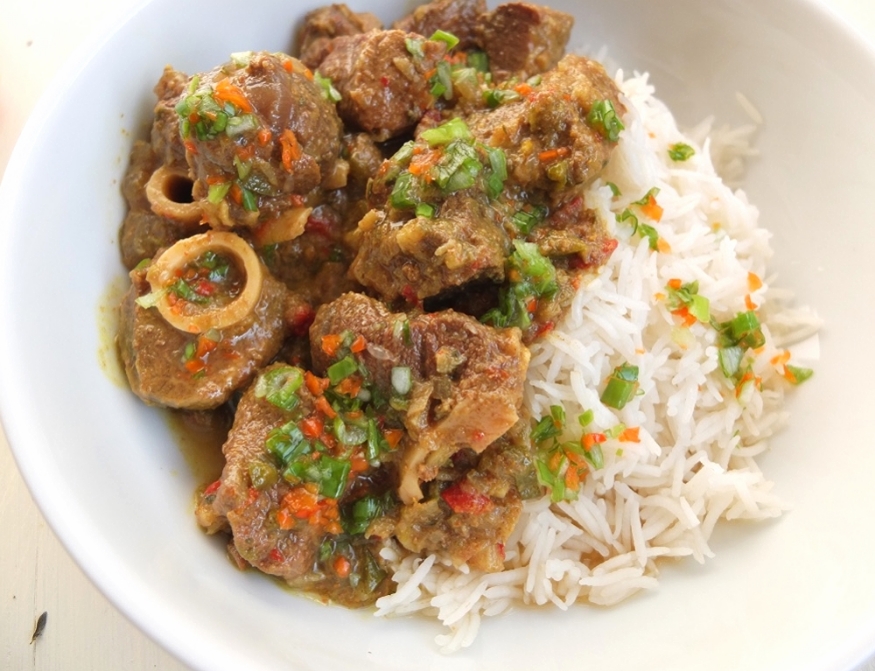
Mutton is a fine substitute, just as long as you ask for some bony pieces which are important for the flavour and also that general ‘I’m eating curry goat’ feeling. I use peppers with the onions at the beginning which cook down to a sweet base, and then I finish the dish with a quick pickled sauce of lime juice, sugar, more chilli and spring onion. I think this really lifts it. Rice and peas are brilliant but I often just go with plain basmati rice, a fluffy, bland cushion for the sauce to soak into.

Curry Goat

Serves 4-6

1 kg goat meat (or mutton), diced into large chunks (get the butcher to do it)
2 tablespoons mild curry powder
350ml veg stock
1 onion, finely chopped
1 small green pepper, finely chopped
1 small red pepper, finely chopped
4 cloves garlic, crushed or grated
1 x 3 inch piece of ginger, peeled and finely chopped
8 allspice berries
Small sprig thyme
4 spring onions, green parts sliced
4 tablespoons vegetable or groundnut oil
1 scotch bonnet chilli, pierced

For the pickle

1 scotch bonnet chilli
1 spring onion
Juice 2 limes
2 level tablespoons sugar
Large pinch of salt

In a bowl, combine the meat and curry powder. Add the thyme, stripping the leaves off and then lobbing the stalks in too. Mix thoroughly and leave to marinate for at least two hours, preferably three or four.

Heat the oil in a large saucepan (with a lid). Cook the onions and peppers over a low heat for a few minutes, stirring, then add the goat mixture. Stir, turn the heat down very low, put the lid on and leave for 45 minutes, stirring occasionally. The meat will make its own juice inside the pan.

Add the ginger, garlic, stock, allspice, scotch bonnet and spring onions. Simmer on very low heat for two hours with the lid on. Remove the lid and simmer for a further hour to reduce to sauce. Season to taste and serve with plain rice (or your choice of rice) and the pickle.

To make the pickle, just combine everything and leave it for an hour or so while the curry is cooking.

Tagliatelle with Cauliflower and Crispy Capers

You may notice that things looks a little different around here. Finally, the site looks close to the way I wanted it before I hired a dodgy developer who tacked it together with sellotape then buggered off and left me to deal. I hope now that it will be a lot more user friendly, organised and easier on the eye. There’s still a lot of housekeeping to do, so please bear with me if something doesn’t work – I will get it sorted.

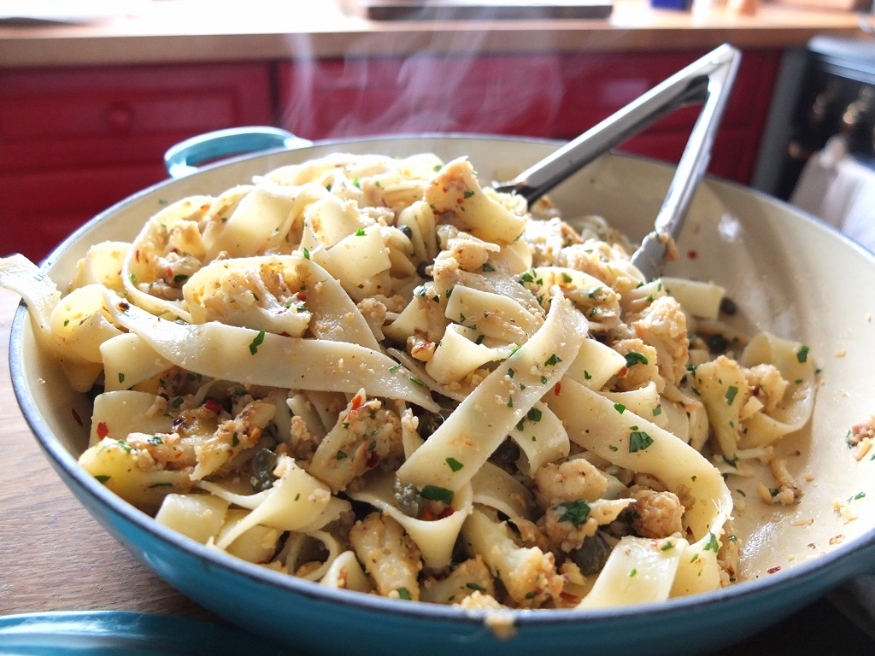
I noticed that there are only nine pasta recipes on this site, which makes no sense whatsoever for a writer who claims to be obsessed with the stuff. It’s a total disgrace. I promise to serve your carb needs better in the future starting right here and now with this recipe, which includes toasty cauliflower, anchovies and capers, the latter fried until crisp.

You can make the anchovies more or less of a thing here – personally, I love them so I add 8-10 fillets, but it’s up to you. Capers are brilliant fried, by the way. If you can, get the ones that come packed in salt as they have a much better flavour than those in brine. Rinse them, pat, then fry until their petals explode in the hot oil and they crisp up, salty and sharp. They may just be the best pasta garnish since oh, I don’t know, breadcrumbs fried in anchovy oil.

Tagliatelle with Cauliflower and Crispy Capers

500g good quality dried tagliatelle
8-10 anchovy fillets
1 large cauliflower, broken into florets
4 cloves garlic, 2 whole, 2 crushed
1 teaspoon chilli flakes
1 handful parsley leaves, roughly chopped
Juice of 1/2 lemon
2-3 tablespoons capers, rinsed and dried on kitchen paper
1-2 tablespoons olive oil
4 tablespoons oil, for frying (like groundnut or vegetable)
50g butter
Parmesan, to serve

Preheat the oven to 220C (425F). Toss the cauliflower with enough oil to coat plus salt, pepper, and 2 cloves of the garlic. Roast for around 40 minutes until tender and golden.

Cook the pasta in boiling salted water until al dente. Heat the veg oil in a small saucepan and fry the capers in it until crisp, then drain on kitchen paper.

While the pasta is cooking, melt the butter in a pan and add the anchovies until they melt. Add the crushed garlic and chilli flakes and cook for a minute or so, stirring. Add the cooked cauliflower plus some salt and pepper and stir until combined.

When the pasta is cooked, drain and add the cauliflower mixture, plus some lemon juice and parsley. Taste for seasoning and serve with grated Parmesan and the crispy capers.

Cheese and Kimchi Toasties

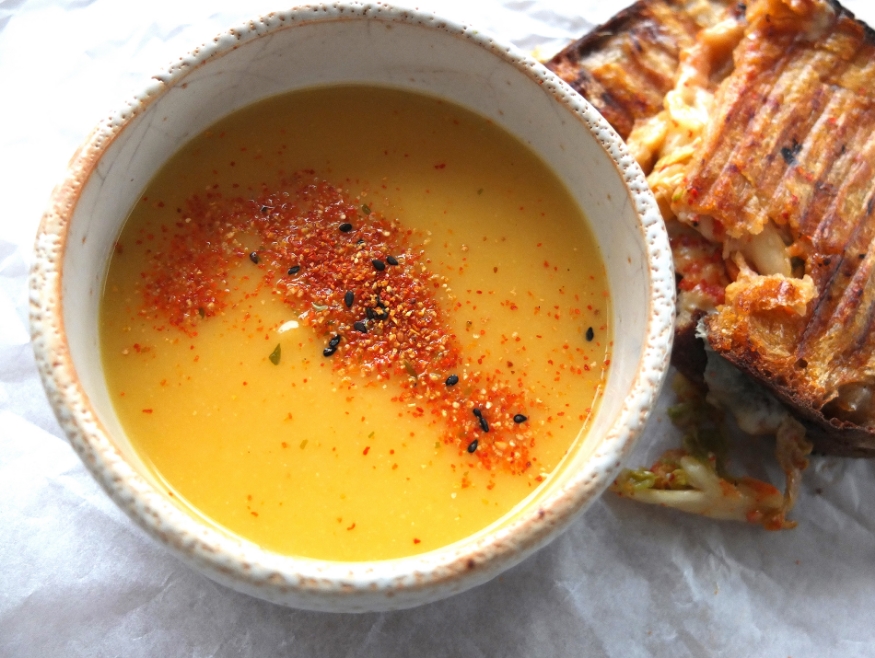
I never thought I’d be posting a squash recipe here, let alone a squash soup. I used to loathe the pappy sweetness of most orange-fleshed gourds, and they’re like pure baby food when whizzed into a soup; I’ve still got teeth. In recent years however I’ve come around to certain preparations of butternut squash, in particular those which steer away from that pumpkin-pie-cinnamon-spice-thanksgiving vibe. Miso does this job very well indeed, its yeasty funk bringing some complexity.

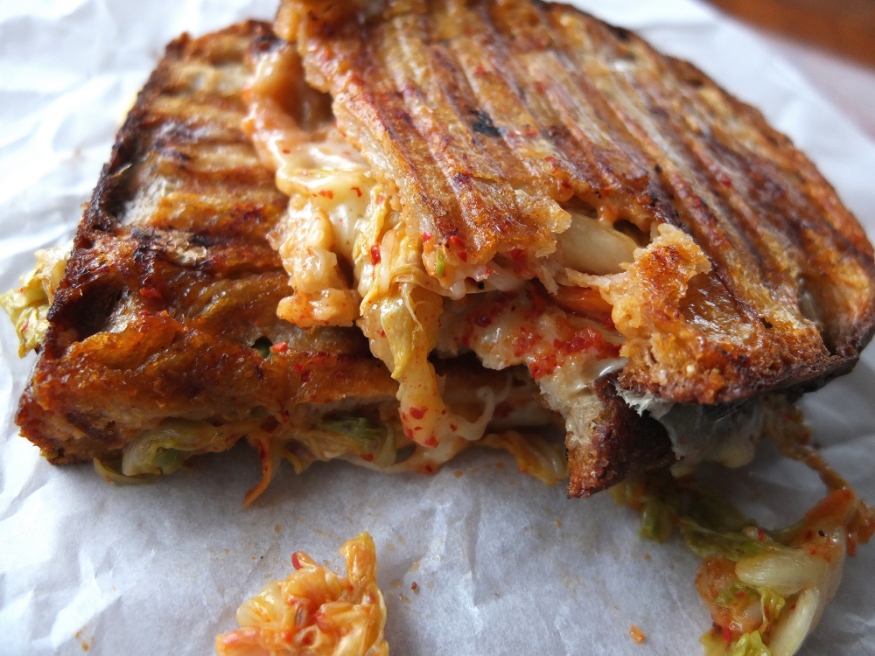
A toasted cheese sandwich is hardly a groundbreaking accompaniment to soup but it is more exciting with the addition of kimchi, especially a really punchy one. I used up the ends of a cheeseboard in the sandwich but it was mostly Lancashire, which has some sharpness. That’s one gnarly end of ageing cheese and a double whack of fermentation before 1pm on a Wednesday. Not bad going.

Squash and Miso Soup with Kimchi Cheese Toasties

Squash & Miso Soup with Cheese & Kimchi Toasties

If you do dig the sweetness of squash then you could enhance that in this soup by roasting it first and adding it later.

1 kg butternut squash, peeled, seeds removed and cubed
1 large potato (around 400g), peeled and cubed. You could use sweet potato too.
1 onion, finely chopped
2 large cloves garlic, crushed
1 thumb of ginger, peeled and grated or crushed (I do all mine on a microplane these days)
3-4 tablespoons white miso (or yellow)
1.5 litres good quality vegetable stock
Oil for frying (vegetable or groundnut/peanut)
Shichimi Togarashi (Japanese seven spice) to garnish (optional)

Heat a tablespoon of oil in a large pan (large enough to cook the soup in) and gently cook the onion until soft but not coloured, then add the garlic and ginger and cook for a minute or so, taking care not to burn it. Add the miso and stock and stir until the miso is dissolved. Add the squash and potato and simmer gently until soft. Blend the soup – this is easiest with a stick blender.

Taste and season. Serve topped with a sprinkle of shichimi and the cheese toastie.

For the toastie

Two slices sourdough bread
Kimchi
Cheese (any melter will do here, but you want something with strong flavour, like good Cheddar or Lancashire)
Butter or mayonnaise

Do I really need to tell you how to do this? Okay. You can either butter the outside of your bread or spread it with mayonnaise, both work well (as mayonnaise is really just oil). If you have a toastie machine, as I do, then it’s a case of filling the sandwich and then putting it (butter or mayo-ed side down) into the machine. If you don’t, then fry the sandwich in butter, weighing it down with something heavy, then flipping over and repeating until golden on both sides.

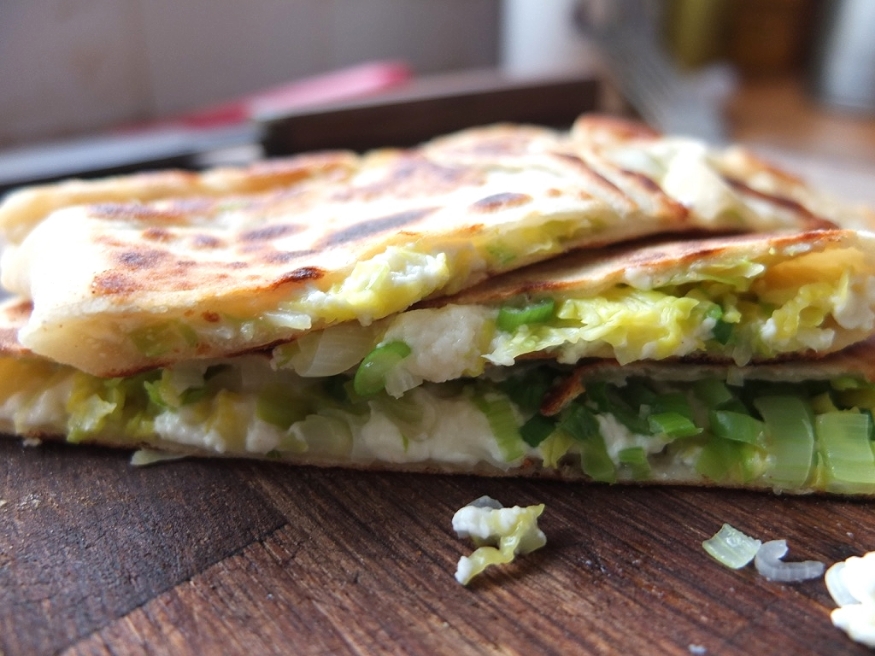
Gozleme with sprouts and cheese

Remember when I told you about my love for sprouts? If it were up to me, they’d be having their moment. Recently, they’ve had to put up with avocados hogging the attention, then kale, and worst of all, their own bloody leaves in the form of ‘sprout tops’. Now, ‘flower sprouts’ have swaggered onto the scene, a cross between regular sprouts and kale. Like mini cabbages, but with a lot more frilly appeal, these hybrid imposters are stealing the show with their flouncy showmanship and seductive purple hue. They’ve all the sweetness of regular Brussels, but none of the bitterness, which they leave for my tightly furled friends, once again left lonely on the shelf.

Personally, I enjoy the sulphuric bite of a sprout and the general lack of interest has only encouraged me to use them more. At dinner recently I got into a conversation about gözleme and from that moment I glazed over and allowed my mind to wander down paths verged with finely shredded Brussels, the sky above filled with clouds of melted cheese.

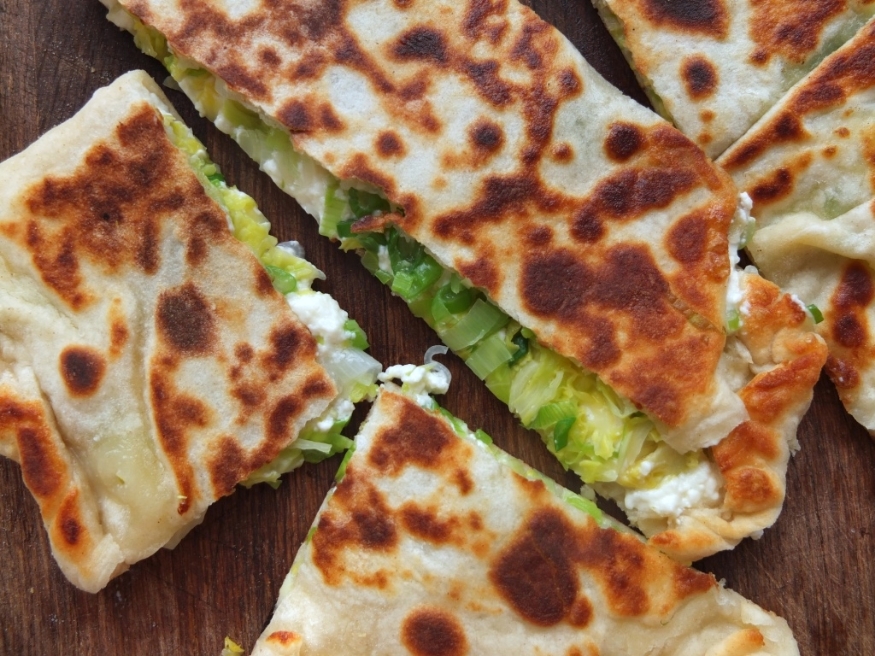
Gözleme is a delicious carb-heavy component of Turkish cuisine, of which there are many. Borek, pide, lahmacun, manti et al – I love them all. The hardest part of making these is rolling the dough thin enough, and you will need one of those skinny rolling pins, which you can buy in Turkish shops or online. It needs to be so thin it’s almost see through, but it’s not as hard as you think, nowhere near as hard as these snail borek, which made me feel completely incompetent. Sure, my finished gözleme were a bit scruffy, but hot and shiny from the pan, spotted umber and filled with greens and cheese they were a perfectly dangerous snack.

I used a weird white cheese which I bought in a Russian deli but I would suggest you avoid doing that, and instead use something salty and crumbly like Feta, or Tulum. What I must insist upon however, is the use of sprouts. Good, old fashioned, dependable sprouts.

Gozleme with Brussels Sprouts and Cheese Recipe

Gözleme with Brussels Sprouts and White Cheese Recipe

This recipe makes 4 gözleme, which you’ll easily eat between 2 people. 

250g self-raising flour
220g full fat natural yoghurt (not Greek style)
Large pinch salt
Oil, for frying
Around 6 sprouts, finely shredded
3 spring onions, finely chopped
200g white cheese, such as Feta

Put the yoghurt in a bowl and beat it until smooth. Add the flour and salt and mix together – it will come together into a ball. Cover with clingfilm and rest for 15 minutes.

Blanch the shredded sprouts for 30 seconds in boiling water, drain and refresh under cold water.

Divide the mixture into four pieces and roll out each on a floured surface, until very thin. I went for a sort of oval shape, but you can do an oblong, whatever. You’ll be topping half of the dough and folding it over, basically. The dough can be sticky so don’t be shy with the flour.

Scatter half of the dough with sprouts, spring onions and feta. Fold over and either seal by pressing with the tines of a fork or curl up to conceal the raggedy edges, as I did.

Heat a tablespoon or so of oil in a pan and cook the gozleme over a medium-high heat until cooked and spotted toasty brown. Flip and repeat. Serve cut into pieces. Watch out, they’re hot.

Ragu

You give me the richest ragu/That’s why I’m in love with you.

Those are Sade lyrics, in case I’ve lost any of my younger readers. She loved ragu, apparently. Couldn’t get enough.

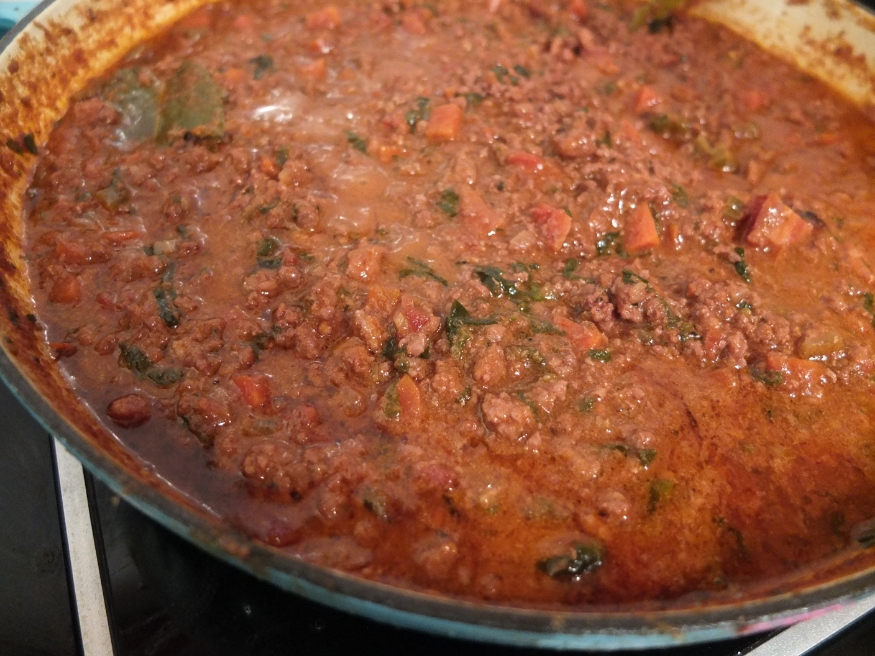
This recipe is from Kenji Lopez-Alt’s book The Food Lab. In case you don’t know him, he writes The Food Lab column for Serious Eats and is also their Culinary Director, whatever that means. Sounds good though, doesn’t it? We’re huge Kenji fans in this house, so much so that we considered building a shrine to him in our living room. Possibly.

His ‘thing’ is that he does lots of recipe testing, to the point where he’s comparing 30 eggs boiled for 30 seconds more each time, side by side, to see which is the best, and he delves into the science of cooking in a Harold McGee kinda way.

I wanted something I could get ready ahead of time since I had friends coming over, so gave his ragu recipe a go. It was fabulous, and had incredible depth of flavour, which is unsurprising considering it contained a paste consisting of anchovies, Marmite, soy sauce and chicken livers, and three kinds of meat. I also went to town with the quality of the ingredients, using Strianese tomatoes, the best Parmesan and hugely expensive pasta. It turns out that last move was a mistake.

Are you hungry? I asked my guests at around the 7.30pm mark. Yes, yes they were. “Magnificent!” I said, and proceeded to be very clever by adding my massively posh pasta to a pan of boiling water. Except it wouldn’t cook. It wouldn’t cook for like, an hour. Maybe more. Those attractive belts of flour and egg which had looked so appealing on the shelf turned into fat flaps of gummy gluten that just would not soften. We ate at around 9pm, after separating the pasta into two separate pans and burning ourselves twice. Someone was so hungry they went to the shop for spaghetti. “No!” I said, shaking from hypoglycaemia, “NO”. We will eat this f*cking clown shoes pasta, mainly because it cost me a tenner.” And so my friends suffered because I can’t control myself in expensive food shops.

Anyway, the ragu is fabulous and you must make it. I’ll admit that the blended chicken livers have one of the most unnerving textures I have ever come across in the kitchen, but you’ll just have to deal. This is an excellent recipe even if it is 100% faffier than any other ragu recipe you’ve ever made. I should also say that it took four hours to cook down, not two as stated in the recipe, which is quite a significant difference. One for the weekend.

Ragu Recipe

This recipe is from The Food Lab cookbook by Kenji Lopez-Alt, published by W.W Norton & Company. I halved the quantities in the recipe and converted them from American measurements, in some cases adjusting them very slightly. I also like to serve it with a gremolata (chopped lemon zest and parsley) which adds some freshness. The original recipe was for 8-10 servings, although I found this half quantity served 8, and you know how much pasta I can eat (at least 300g on my own. What?). 

60g chicken livers
2 anchovy fillets (more if they’re titchy, mine were a good size)
1/2 teaspoon Marmite
1/2 tablespoon soy sauce
250ml milk
125ml cream (Kenji specifies heavy cream but I used single cream)
250ml beef stock (Kenji specified chicken but I bought beef because I hadn’t written it down correctly)
1/2 packet powdered gelatin (haven’t looked into why he uses powdered)
30ml extra virgin olive oil
2 cloves garlic, grated or crushed
1 teaspoon dried oregano
Large pinch dried chilli flakes
Around 400g tinned tomatoes (I used slightly more in the end)
100g pancetta, diced
1/2 large onion, diced
1 carrot, diced
1.5 stalks celery, diced
2 tablespoons unsalted butter
225g minced lamb
225g minced pork
225g minced beef (Kenji said veal but I couldn’t get it)
8-10 sage leaves, chopped
1/2 bottle red wine
2 bay leaves
Handful basil, chopped
Handful parsley, chopped
1/2 tablespoon fish sauce
50g Parmesan, grated
Phew.

In a food processor, whiz up the chicken livers, Marmite, anchovies and soy. Set aside. In a bowl, combine cream, milk, stock and gelatin. Set aside.

Heat two tablespoons of the oil in a medium saucepan over a medium-high heat until shimmering. Add garlic, oregano, chilli flakes and cook for around 1 minute, stirring. Add tomatoes, with their juice and bring to boil over high heat. reduce to simmer and cook until liquid has reduced by about half. Set aside.

Combine remaining two tablespoons of oil in a large pot with a lid (you will cook the ragu in this) and cook the pancetta for around 6 mins until the fat is translucent. Add onions, carrots, celery and cook until softened but not browned. Transfer to a bowl.

Return the pan to the heat and add the butter, heat until the foaming subsides. Add the three meats and the sage and cook until meat is no longer pink (don’t brown it). Add livers mixture. Stir. Cook for five minutes. Add pancetta mixture. Stir. Add wine. Stir. Bring to boil, then simmer until wine is reduced by half.

Blend tomato sauce until smooth (easiest with stick blender). Add tomato sauce, cream mixture, bay leaves, half the basil and half the parsley to the pot. Stir. Bring to boil, reduce to very gentle simmer. Cover with lid left with slight gap. Cook for two hours. I cooked for two hours, then found it needed two more, one with the lid off. Use your instinct.

Add fish sauce and Parmesan. Season to taste. Remove from heat to cook for 30 minutes. Stir in remaining basil and parsley. Serve with sensible pasta and a gremolata of equal amounts chopped parsley and lemon zest.

Trifle

Ooof. So that’s that, then. Christmas is done. I’m convinced that all the over eating is due to the fact that the run up is so stressful. Presents, people, parties. It all adds up to a big ball of anxiety, no matter how much you enjoy the bits where you’re chucking gin down your neck or eating gravadlax in bed while watching Harry Potter.

New Year’s Eve also happened of course. I’ve stopped going out on NYE, as I expect many of you have. Now, it’s all about MASSIVE STEAKS. As usual I stood in my favourite local butchers, Flock and Herd, encouraging the nice meat man to inch the knife further and further along until the steak was borderline obscene before triumphantly announcing, “PERFECT! Two of those, please” then bouncing off to spaff more money on excellent cheese.  We cooked the steaks on the BBQ and ate them with bearnaise,  potatoes sauteed in goose fat and a herb heavy salad. After that, we had trifle. I wasn’t going to write about it, but it was my best ever, so here we are.

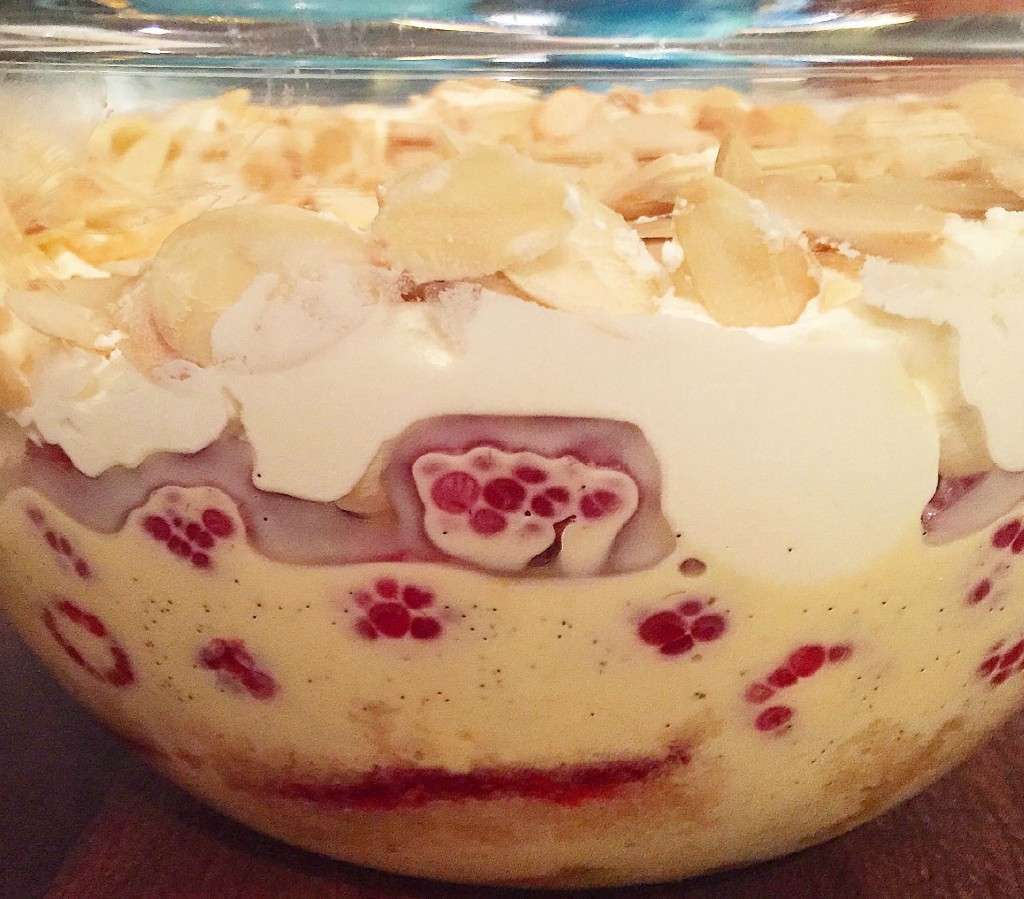
Trifles are often rubbish because they’re essentially very simple, so we end up with all kinds of variations which are arrangements of confited fruits, flavoured custards or (so 2015) salted caramel. I like them to be traditional, but this year I had a happy accident when I subbed in Madeira cake, because the shop had run out of the cake I wanted. It’s lovely and buttery-rich but also dense, so it soaks up the booze without going all wet and bitty at the bottom which is something that has always made me deeply uncomfortable. I sliced it and spread with raspberry jam a la Delia and Hoppy, as jelly in trifles is also gross, then soaked it in Marsala (picked it up by mistake instead of Madeira – again, lovely), topped with raspberries (their acidity is perfect with all the sugar), homemade custard (I’m not an animal), whipped cream, toasted almonds. Done.

This, for me, is the perfect trifle.

The Perfect Trifle

(serves 6)

300g Madeira cake
300g raspberries
Raspberry jam
300ml double cream
2 large handful flaked almonds
Marsala (about 150-200ml)

For the custard (this is Delia Smith’s recipe)

275ml double cream
1 vanilla pod
25g golden caster sugar
1 teaspoon cornflour
3 large egg yolks

Toast the flaked almonds in a dry pan or under the grill until golden. Set aside. Slice the Madeira cake into little fingers, then make sandwiches with the raspberry jam. Use it to line the base of a bowl (preferable clear so you can see the layers), then pour the Marsala evenly over the top and set aside for it to soak in.

Make the custard by putting the double cream in a saucepan and heating. Scrape the seeds from the vanilla pod and add them to the cream, along with the pod. In a bowl, mix together the egg yolks, cornflour and sugar. When the cream is hot, add it to the egg mixture, whisking it constantly. Return the mixture to the pan on a low heat and cook, stirring all the time until it is thickened. Set aside in a shallow dish with a piece of greaseproof paper on the top (touching the top of the custard, to stop it forming a skin), until cool.

Layer the raspberries on top of the Madeira cake, then add the cooled custard. Whip the cream to soft, floppy peaks and spoon on top. Finish with the almonds.


22551463248_e450c8a742_k

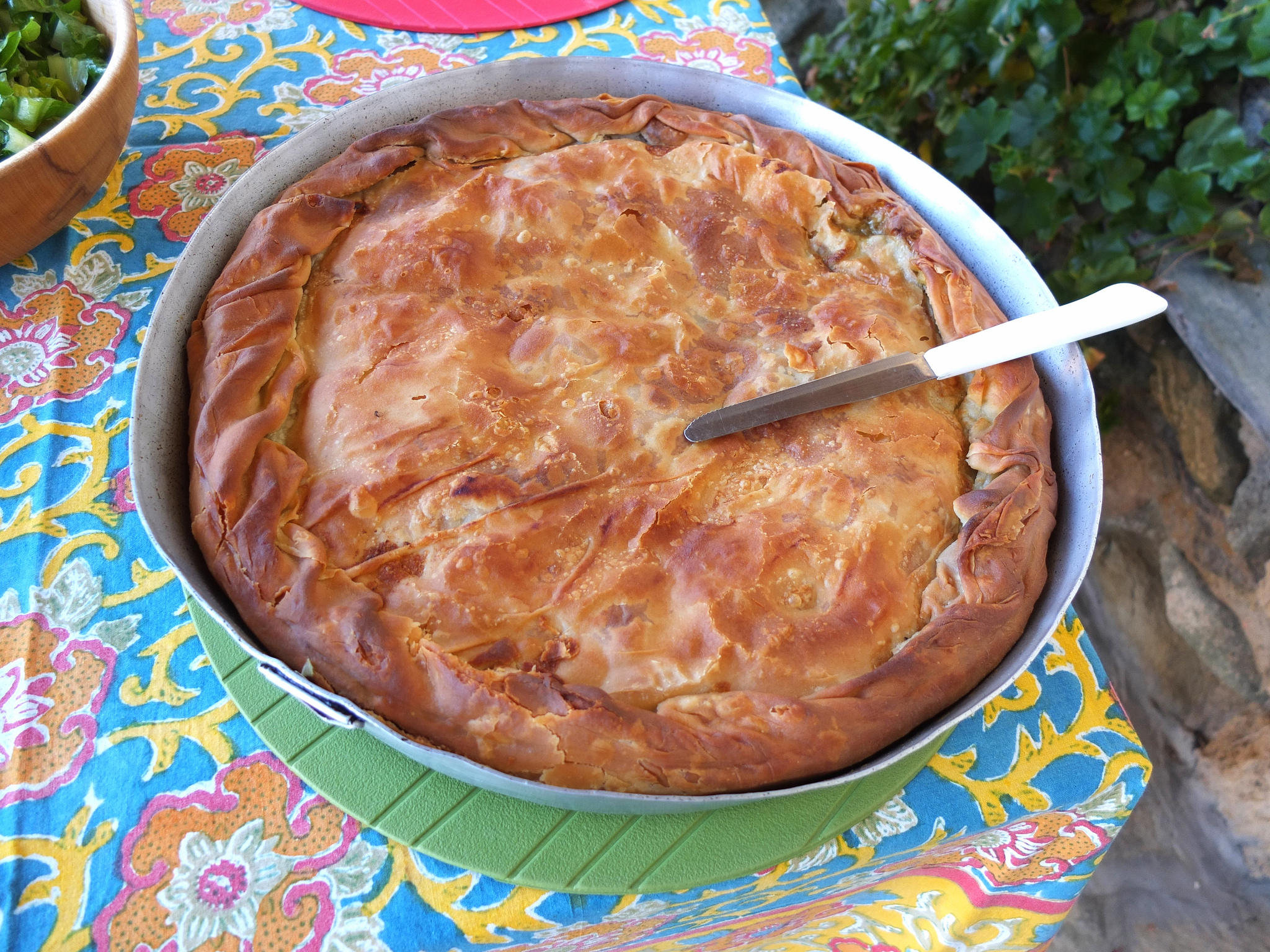
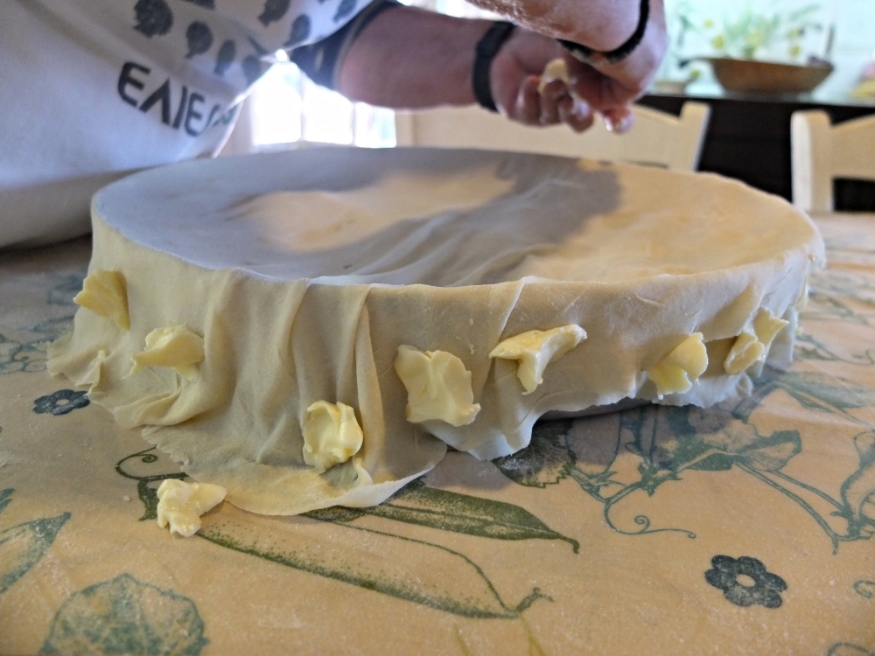
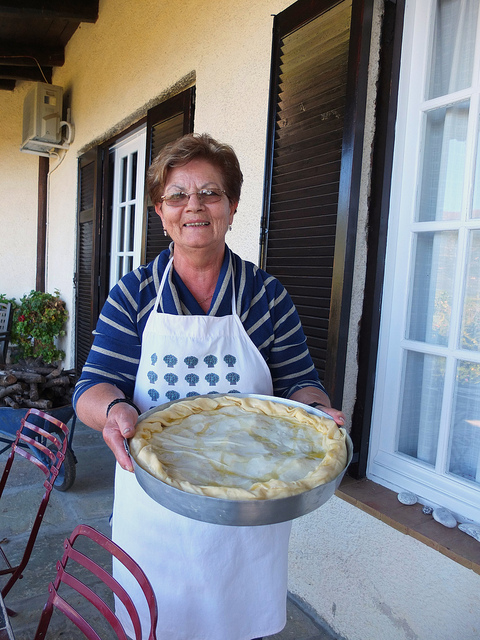
As I stood over Koula watching her roll the filo around her skinny rolling pin, stretching it out towards either end with her hands, unrolling it back into a flat circle, then rolling it again around the pin, I realised what I have been doing wrong all these years. There are certain recipes – Turkish borek, Lebanese fatayer and Greek pies like this one, which I read and think ‘now, if only I could watch an experienced home cook make this in her kitchen like she has done a hundred times before, then I’d understand’ and finally, this was one of those moments. I was incredibly lucky to have this lesson, given to me so generously and out of the blue (I was in Greece for another story entirely) so I feel I must pass it on.

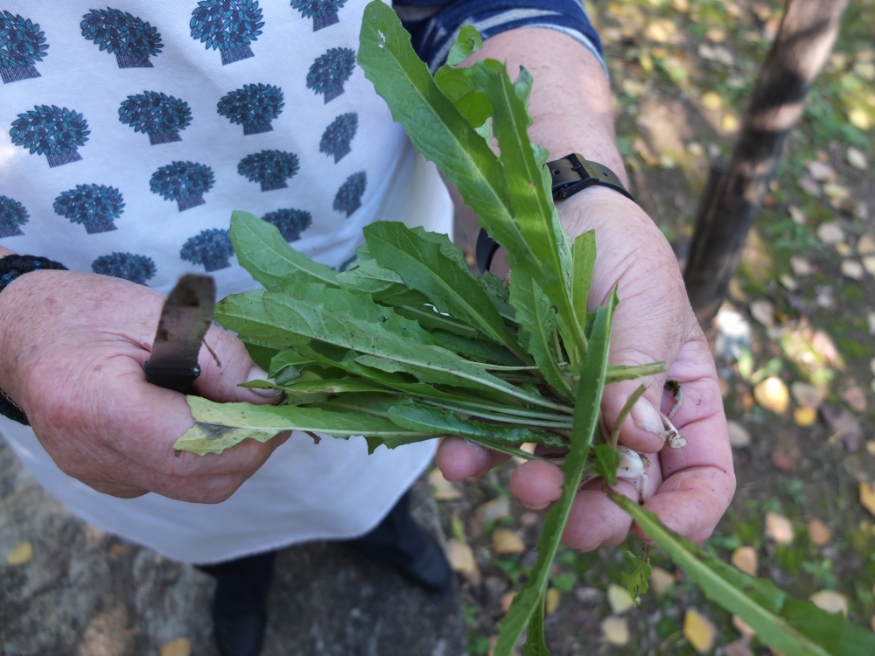
We’ve all heard of spanakopita, which is a Greek spinach and feta pie. This is a version using horta, which means wild greens, I think, or possibly mixed greens. In this case the pie was made with dandelions, which Koula simply stepped outside the front door to pick. Any bitterness is cooked away and the end result is a flavour very similar to spinach, but ballsier. First she blanched them very briefly, before mixing with leeks and onions and sautéing very slowly in the fabulous olive oil they have over there. The dandelions we have here seem very bitter in comparison, so I’ve suggested that you use a combination of spinach and dandelions, and do make sure that the dandelions are clean, e.g they’re not covered in fox piss. It’s one thing plucking them from an idyllic hillside next to the Aegean, another entirely next to a car park in Catford.

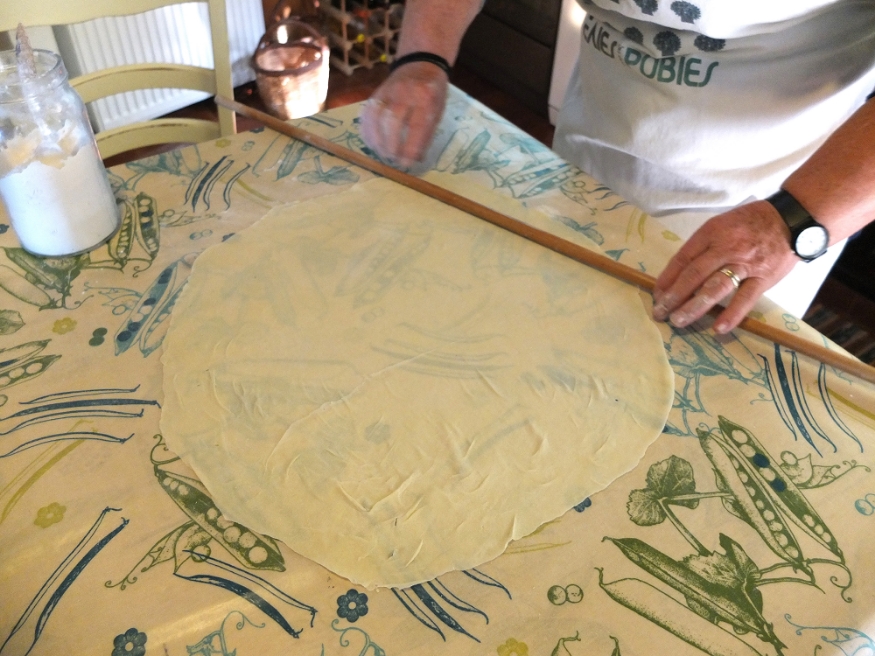
So, that pastry. It’s quite easy once you know how, but you need to get some of the very finely ground flour that is used for making borek and the like. We don’t stock such finely ground flour in our supermarkets in the UK so you’ll need to make a trip to a Turkish supermarket (or buy online) for some borek flour or similar. The other problem with recipes like these is that when you ask someone for quantities you typically end up with an answer along the lines of “I don’t know, just until it feels right” so remember, the quantities below are approximate, because pastry can vary each time depending on who is making it, the flour, what the weather is like, the mood of next door’s cat at the time and so on. The big breakthrough for me here was the method of rolling out the pastry, as I said. I’d been trying stretch the pastry when it was rolled out flat on the tabletop, which is completely wrong. What Koula did was roll it up around the skinny pin (which you will need in order to make this – again, Turkish shops sell them or online) and then used her hands to stretch outwards towards either end. I took a little video on my phone so you can get the idea.

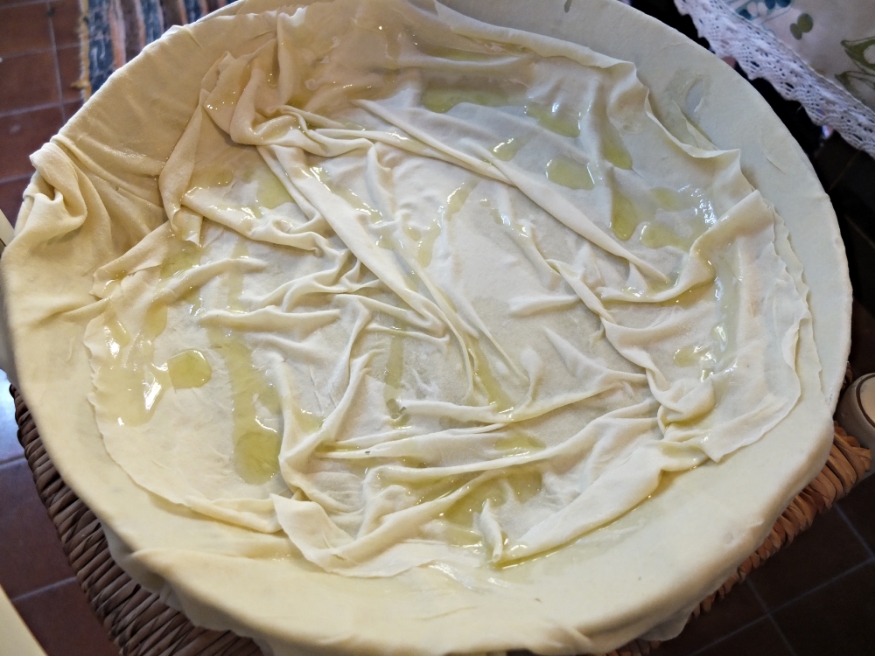
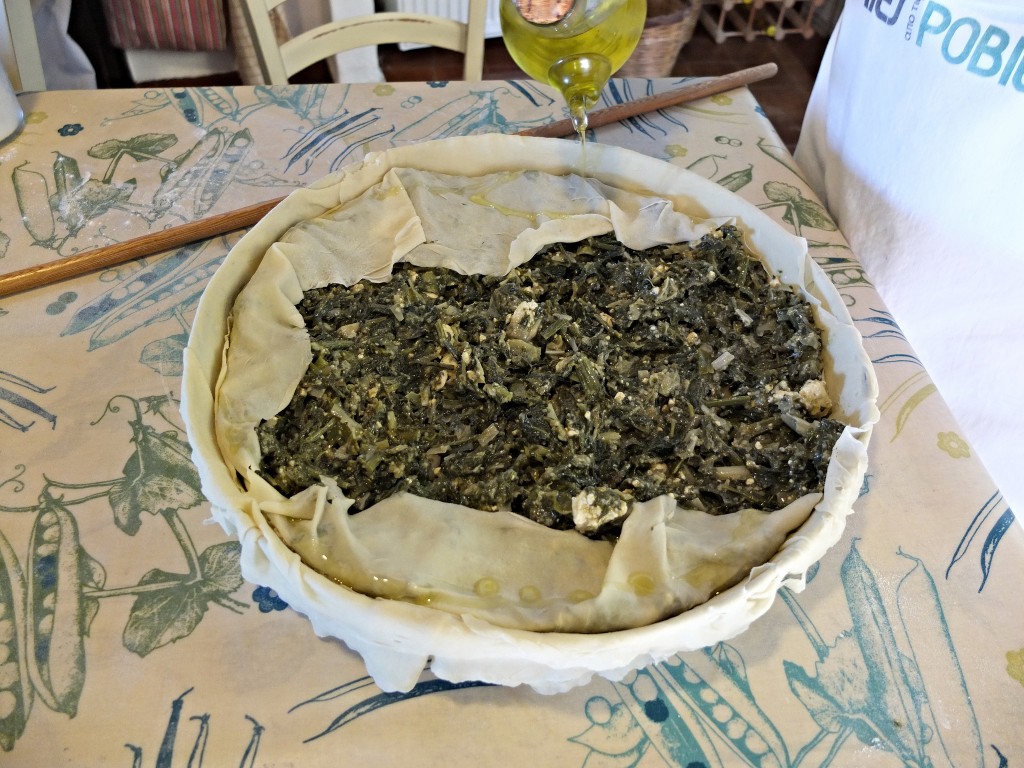
You see? It makes the whole task much easier, although I need a few more years of experience under my apron strings before I can see the pattern of the tablecloth through it like Koula. In her words, she can make it as  “thin as a cigarette paper.” She layered it up in the dish and poured olive oil between each layer (“no need to brush, the oil will distribute itself”) then she stuck clods of butter around the outside and folded the pastry over them to make the crust. In the oven it went, until golden.

We ate it outside in the November sun (surprisingly warm) overlooking a kalamata olive grove, as dragonflies zipped here and there above the table and the sun glittered on the sea. I ate a huge slice of hortapita, followed by several other dishes and then another huge slice for luck. Oh and then some tiganites, which are pancakes with honey and cinnamon. The Greek people are a very hospitable lot you see, and there was no question of me leaving there anything less than stuffed like a prize olive.

With huge thanks to Koula for her lesson and hospitality. 

22784160610_df21356361_z

Hortapita Recipe

(fills a 12 inch diameter round tin)

600g greens, including a mix of spinach and dandelions if you can get them, any large leaves chopped
1 leek, finely chopped
1 white onion, finely chopped
300g feta

Fresh Filo Recipe

350-400g finely ground white flour
Approx. 250ml water
A large pinch of salt
3 tablespoons olive oil
1 tablespoon lemon juice or vinegar
Butter

I haven’t blanched the greens here as Koula did, as I didn’t find it makes any difference either way. If this were a Greek dining table, we’d now have a heated debate about whether or not it is best to blanch the greens before sautéing.

In a high sided frying pan or saucepan, heat 2-3 tablespoons of olive oil, and add the leeks and onions. Allow to soften but not colour. Add the greens and let them wilt. Once cooked down and not too wet, season with salt (not too much, remember the feta) and pepper and set aside to cool. Once cool, crumble in the feta, leaving some larger chunks here and there. Set aside while you make the pastry.

Preheat the oven to 180C.

In a bowl, add 350g of the flour, and then the salt and lemon juice. Begin adding water until the mixture comes together, kneading and working all the time with your hands. It should be soft and silky, not sticky. Turn out onto the surface and knead briefly for just a few minutes (add more flour if it’s too wet) then divide into 10 equally sized balls. Rest the balls under a damp tea towel. On a lightly floured surface again, take one ball and begin rolling it out. When it gets to the size of a side plate, begin to roll it around the pin, stretching it outwards with your hands, so that your hands are moving towards the ends of the pin. Unroll the pastry, move one quarter turn around and roll up again. Repeat this until the pastry is as thin as you can get it.

Pour some oil into the tin (I would say that Koula poured in about a tablespoon each time from her little porcelain olive oil jug).  Roll the pastry up around the pin, then unroll it onto the tin. Pour on a tablespoon of olive oil, and begin rolling the next layer. As you layer up the pastry you want some layers to be nice and crinkled. Repeat this for six layers (saving four for the top), folding only two inside (leave the rest overhanging the edge of the tin for the crust).

Add the filling and spread evenly. If the mixture is too wet at this point, Koula adds a handful of trahana or bulgur wheat. Roll the remaining pastry and add to the tin, layered up with olive oil. When all the pastry has been used up, dot butter around the sides of the pastry and roll it up into a crust. Pour more olive oil on top and spread around.

Cook for approx 45 mins, or until golden brown and crisp. Let it cool before serving; it should be just warm.

Super Maltini

The martini is my cocktail. I always order it with a twist, and not too dry, because martinis in London come dry as a bone as standard. Shake it with ice and I will jump over the bar and have words (or perhaps ask you to make it again, properly, without diluting it like a numbskull). I also don’t like people faffing about adding extra flavours and what not. I can barely even handle them dirty, to be honest. And making it with vodka? Get out.

It was a great surprise then that this drink hit the spot for me, because it breaks all of my rules. All of them. It’s based on an espresso martini, which was apparently invented by bartender Dick Bradsel, after a particularly eloquent woman allegedly walked up to him at the bar and asked for a cocktail that would both wake her up and fuck her up.

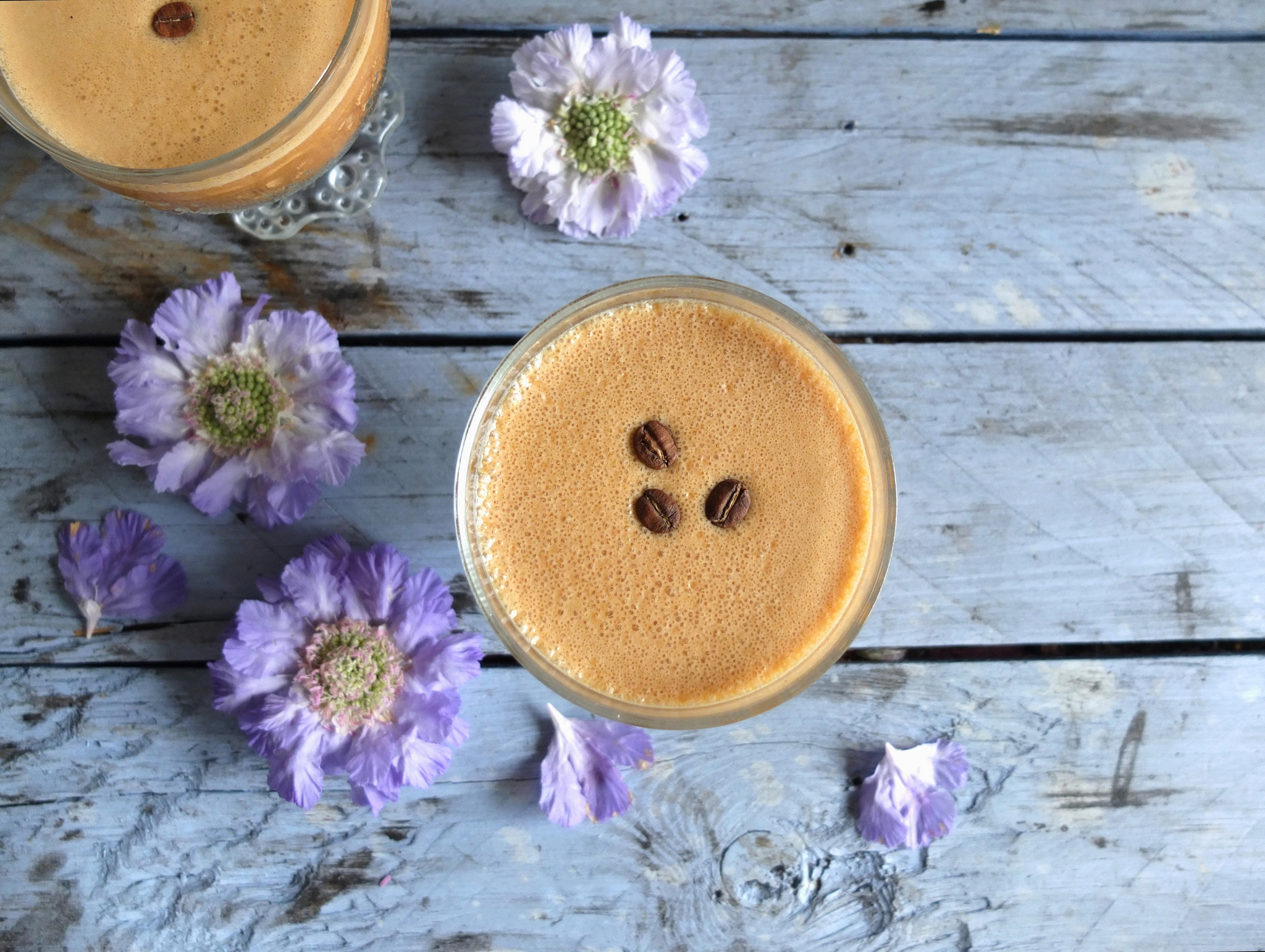
The cocktail recipe that follows (invented by my boyfriend) uses the espresso martini as a starting point, but it has a South London twist in the form of Super Malt. Not only will this drink wake you up with a dose of caffeine, it will dose you up with B vitamins. The booze will of course enliven the spirits. Garnish with dance hall.

The Super Maltini

(serves 1)

25ml Ketel One Vodka
25ml Supermalt
10ml Crème de Cacao Blanc (Sheridan’s)
10ml Crème de Cacao Noir (Sheridan’s)
Single espresso

Shake with LOTS of ice, pour into a low tumbler or whichever glass you prefer.