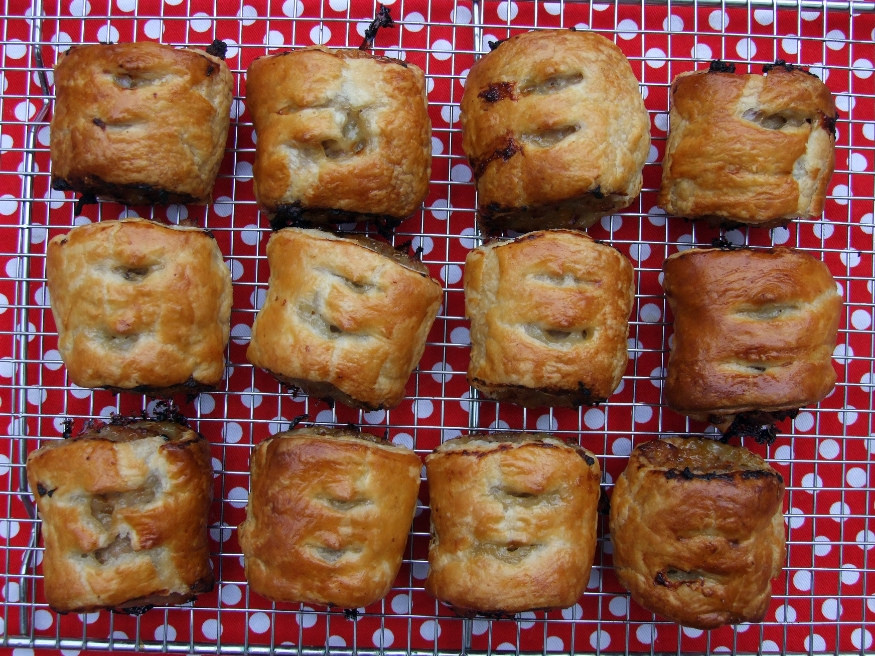
Sausage Rolls with Whisky Caramelised Onions

Last year, I was all about the quick and easy sausage rolls. This year, I have about a third of the spare time and yet I’m spending it caramelising onions with whisky. Such is the power of procrastination. Still, they’re no bother once you get them on and I’m definitely going to make a massive batch next time, to add to pies, sandwiches and, ooh! HOTDOGS!

Anyway, they’re incredible in these sausage rolls too, together with re-plumped dried apricots and a good pinch of chipotle chilli flakes to play off that smoky thing going on with the whisky. At first I was worried the rolls might be a little on the sweet side with the onions and fruit but god damn if they weren’t just boss. So good in fact that we ate all 12 between the two of us in the space of a few hours and the boyfriend claimed they were the best sausage rolls he’s ever eaten. High praise indeed.

Sausage Rolls with Whisky-caramelised Onions and Apricots

(makes about 12)

3 regular, brown-skinned onions, chopped in half and sliced
500g good quality plain sausage meat
A good slosh of whisky (I mean generous)
12 dried apricots
320g pack ready-rolled puff pastry
1 generous teaspoon fresh thyme leaves
A generous pinch of chipotle flakes
1 egg, beaten
Butter, for caramelising the onions

First, make the onions. Melt the butter in a large pan and add the onions plus a good pinch of salt, tossing them around to coat them evenly. Set the pan to the lowest heat and put a lid on, leaving a small gap at one side. Let the onions cook down for at least an hour but preferably longer, stirring occasionally. They’re ready when they’re very soft, golden and not too wet. At this stage, turn up the heat and add a really good slosh of whisky (the amount you add obviously depends on how much you want them to taste of whisky) and let it bubble down until there’s almost no liquid left. The onions are now ready, so set them aside on a plate to cool completely (this happens faster if you spread them out in a thin layer).

Soak the apricots in warm water for 20 minutes or so, then dice them. When you’re ready to make the sausage rolls and the onions are cool, preheat the oven to 200C. Give the onions a quick chop then add them to the sausagemeat mix, along with the thyme leaves, chipotle flakes, the apricots and a good seasoning of salt and pepper. Preheat a frying pan and make a tiny patty from the sausage meat mixture; fry it in the oil and taste it for seasoning. You may want to add more salt or chilli, depending on how it tastes.

When you’re satisfied with the mix, unwrap the pastry and lay it out on a lightly floured surface. It should be almost the right size, but I like to roll it out just a tiny bit thinner, making it easier to wrap around the meat. Cut the rectangle into two, lengthways, then make two long sausages with the meat down the centre of each strip of pastry. Brush one side of each pastry strip with the beaten egg, then fold each one over to make two long sausage rolls. Cut into two inch pieces and snip each twice in the stop, using scissors. Brush each with more beaten egg and cook on a baking tray for about 20 minutes, or until golden brown and cooked through.
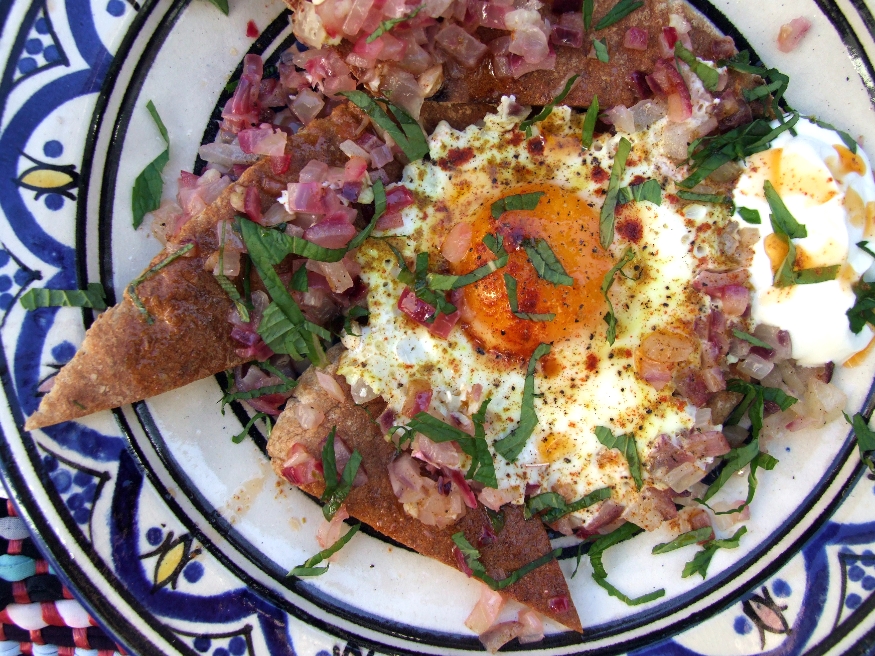
Baghdad Eggs

I first came across a recipe for Baghdad eggs in one of my favourite cook books, Jake Tilson’s ‘A Tale of 12 Kitchens’ (from which I also cooked a mummified chicken). Tilson discovered the recipe in the book ‘Medieval Arab Cookery‘, which describes eggs on a bed of spiced celery; my version however is more akin to modern recipes I’ve seen.

An egg is fried gently on a bed of softened onions, sizzled with lemon juice, sprinkled with cumin and paprika then slicked with melted butter. The whole lot is served on top of toasted pitta, which softens in places under the oozy egg. A dollop of yoghurt and a flurry of chopped mint contrast the richness.

This is quite indulgent considering the aforementioned butter, which is why it’s my new favourite Sunday brunch, Middle Eastern style.

Baghdad Eggs

(serves 2)

1 medium onion, diced
2 eggs
1 clove garlic, crushed
2 good generous knobs of butter
Cumin
Hot paprika
Yoghurt
Mint, chopped
Squeeze of lemon juice
2 toasted pittas

Melt a knob of butter in a frying pan and cook the onions gently until they start to soften. Add the garlic and cook for a couple of minutes. Squeeze in the juice of half a lemon, then crack in the eggs.

Dust each egg with a little cumin and paprika (use your fingers to do this and be conservative – you don’t want huge clumps of spice in there), plus some salt and pepper then put a lid on and let cook until the eggs are just set. Toast your pitta breads then split them apart and toast the er, untoasted side under the grill.

In a separate small pan, melt another knob of butter and sprinkle a little extra cumin and paprika into it. Leave this on a low heat to get a little brown and nutty.

When the eggs are cooked, cut up the pitta and arrange on a plate. Put an egg on top, making sure to get plenty of the onions too. Drizzle with some of the extra melted butter and garnish with a dollop of yoghurt and some mint.

Pork Pibil

Updated pork pibil recipe HERE.

A couple of weeks ago I did a stall at Ms. Marmite Lover’s Underground Farmer’s Market and found myself pitched up next to the Capsicana Chilli Company. Like a kid in a sweet shop I stocked up on loads of Mexican chillies and as I was packing up I heard a ‘psst’ from behind me; I swung around to find the chilli guy, Ben, offering me a pouch of achiote powder like it was illegal drugs, “hard to find in the UK” he whispered, “have a little play around with that.”

Achiote (annatto) is the seed of the achiote tree and is an essential ingredient in Mexican cuisine; I had a little ‘aha!’ moment when I first mixed it up into a paste – it smelled instantly familiar even though I’d never cooked with it before. It has a curious smell, almost like a cross between chilli and citrus. This was the flavour I was always trying to identify when I ate ‘proper’ Mexican food like Buen Provecho’s tacos.

I turned to Diana Kennedy’s classic tome, ‘The Essential Cuisines of Mexico’ for this pibil recipe, which calls for a pork shoulder to be smothered in the prepared achiote paste, wrapped in banana leaves, cooked for a torturous eternity and then doused in an incredibly fiery sauce. My butcher had no pork shoulder so I bought pork knuckles instead, allowing a bit of extra weight for the additional bones.

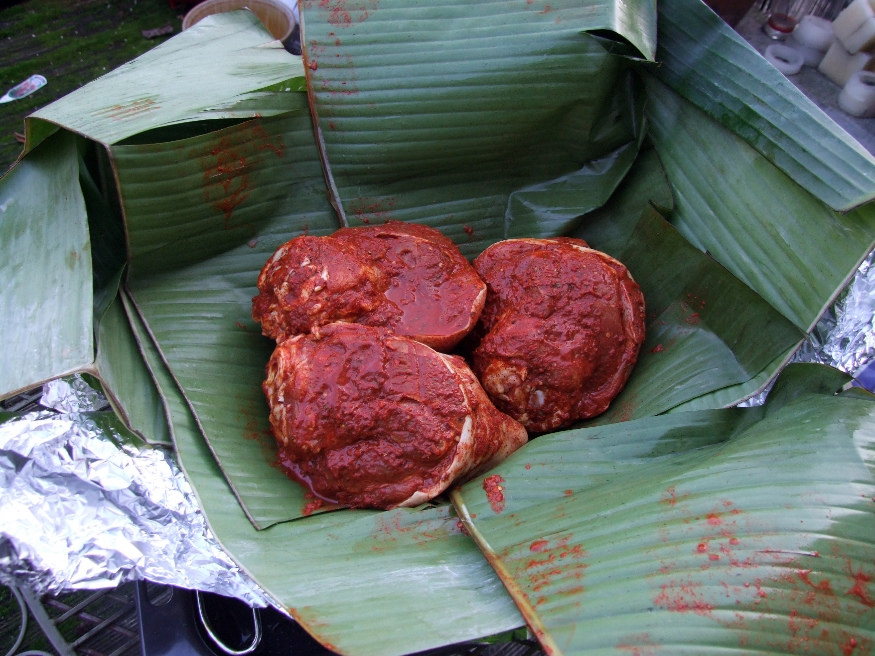
To make achiote paste I mixed the achiote powder, oregano, cumin, allspice and water to a thick red sludge which I smeared all over the pork as directed, having sliced it here and there to let the flavour get deep inside and given it an initial bath in salt and orange juice. There’s some garlic and ground piquin chillies in there too. The knuckles were wrapped in banana leaves, which Diana insists imparts a particular flavour; I have to say I didn’t notice it, but then I didn’t know what I was looking for and wrapping things in banana leaves is still fun. You can obviously use foil instead.

Pork Pibil


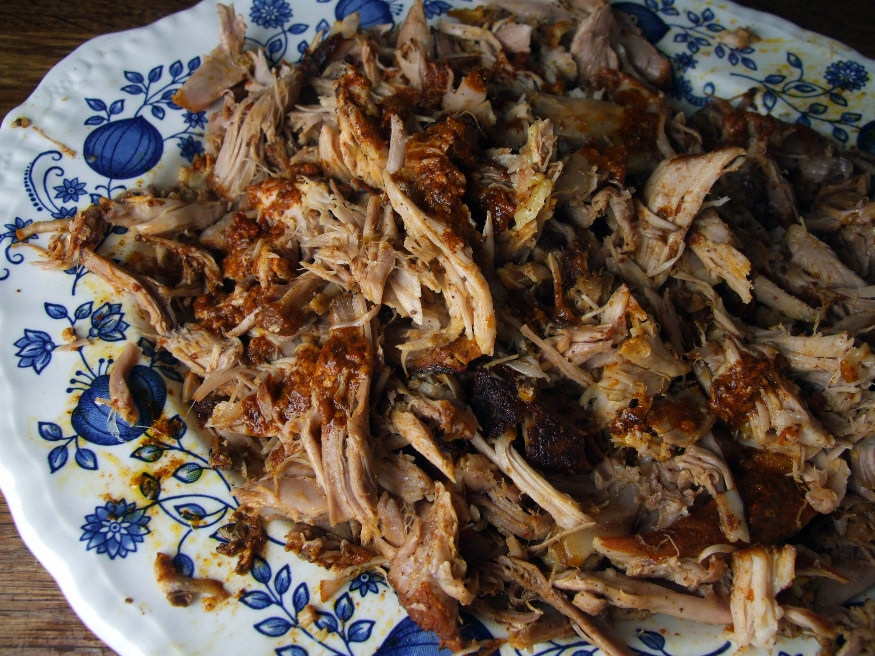
They were in the oven for 6 hours by which time I was going clinically insane with anticipation. I unwrapped the parcel and found the meat just slipping off the bone; there’s a lot more meat on a pork knuckle than I realised. The meat shredded easily and the achiote powder gave it an earthy flavour that is impossible to substitute. A word of warning to potential pibil cooks though: make sure that package is tightly sealed. I lost about half the juices when I turned the pork midway through cooking which was very traumatic; protect that precious cargo! Still, I had enough to play with and there’s a fantastic separate accompanying sauce, too. It is hot, consisting as it does of orange juice, red onion and THREE WHOLE SCOTCH BONNETS. I wimped out and settled on two which was enough. The acidity of the orange juice does cook the chillies a little though, taming their ferocity somewhat.

We made big, messy tacos, piling the meat on with our hands and topping with creamy guac and a spoon of that orange-chilli sauce. I almost cried when I took the last bite of the last taco and wiped the final bit of sauce from my food flecked face. One to firmly embed in the repertoire.

If you liked this you may also like the look of my pork cheek tacos with blood orange and chipotle or chipotles en adobo

Pork Knuckle Pibil Tacos

3 pork knuckles
2 teaspoons salt
2 tablespoons orange juice
1/2 teaspoon ground piquin chillies or other dried chillies, ground (Diana says you should use powdered ‘chilli seco yucateco’ or paprika)
4 cloves garlic
2 tablespoons orange juice mixed with 2 tablespoons lime juice

Banana leaves, for wrapping (you’ll need foil as well and you can leave out the leaves if you can’t get hold of them; they’re cheap in Peckham but can be expensive in shops elsewhere. If you do use leaves you’ll probably need to clean them with a damp cloth and make them more flexible by heating slightly over a flame)

For the achiote paste

2 tablespoons achiote powder
1/2 teaspoon dried oregano
1/2 teaspoon cumin seeds
Pinch black pepper
6 whole allspice
1.5 tablespoons water

Make deep cuts in the pork knuckles with a long knife then rub it all over with the salt followed by the orange and lime juice.

Make the achiote paste by combining crushing the allspice berries to a powder and mixing with all the other ingredients. Crush the garlic with the piquin (or other dried chillies), 1 teaspoon salt and 3 tablespoons orange juice, then mix with the achiote paste. Smother this all over the knuckles, rubbing well in. Make a parcel by first layering tin foil, then banana leaves and placing the knuckles in the centre; fold the package to seal it and wrap with foil. Refrigerate overnight.

The next day, remove the pork from the fridge about an hour before you want to cook it and preheat the oven to 165C. Get a big roasting tin and put a rack inside it (I just put a cooling rack in a tin) then put 125ml water in the bottom. Place the pork package on top of the rack and cover it tightly with foil. Cook for 4 hours then turn the knuckles over and baste them. Cook for a further 3 hours or until the meat falls easily from the bone.

Carefully remove the knuckles from the parcel, taking care to save those precious juices. Tip the juices into a bowl and set aside. Shred the meat from the knuckles and set aside in a bowl then pour the juices over and give it a good mix. This is now ready to serve with the sauce and guacamole.

For the sauce

1/2 a red onion, finely chopped
3 scotch bonnets, finely chopped
1/2 teaspoon salt
165ml orange juice

Mix all the ingredients together and set aside for 2 hours.

For the tacos

I always cheat and buy ready made corn tortillas then cut circles from them and warm them through in a dry pan.

Lamb Shanks with Figs and Pomegranate Molasses

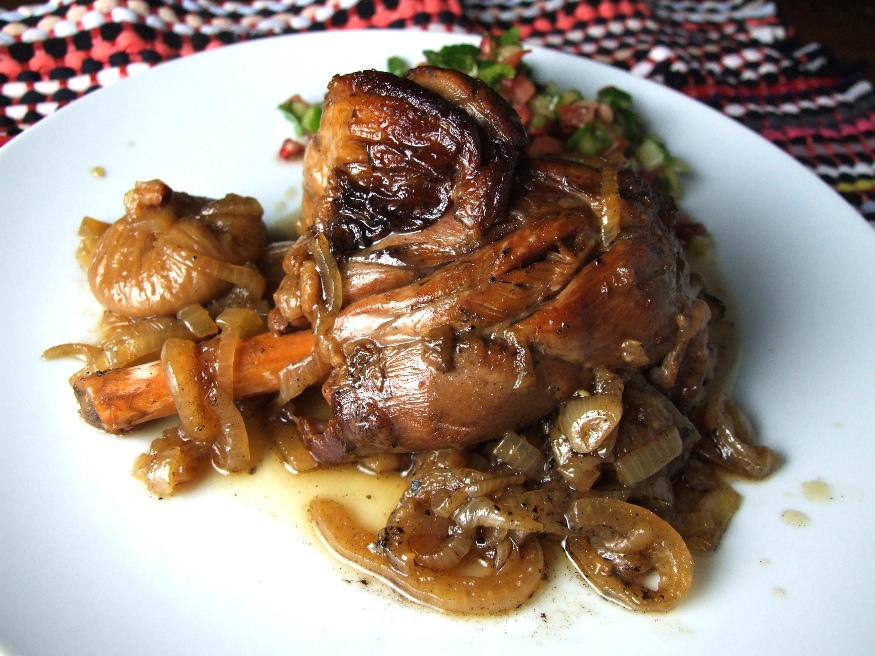
When I saw some lamb shanks going cheap, I snapped them up then scuttled away fast before anyone remembered to make me pay through the nose for them. I’m a bit in love with the flavour of lamb cooked with sweet dried fruits, especially for a long roast or braise; this time I decided on a mixture of squidgy semi-dried figs and pomegranate molasses. I added a quantity of sliced onions described in my scrappy notes as ‘a shitload’, which cooked down to a caramelised base; the figs plumped and leached their sticky treasure while the pom molasses licked everything it touched with that magical, Arabian Nights perfume.

A scotch bonnet was pinpricked to gently seep heat, riding the bubbling sauce for a good 3 hours until the meat was flopping off the bone in great silky lobes; it was all I could do to get them onto the plate in one piece.

We ate it with a pomegranate and cucumber salsa because we’d eaten rather a lot already that day (the perils of recipe writing: I’d done a dhal for AoL and a quiche for the new Lurpak Christmas site) but it would be lovely with something stodgy to soak up that sauce; rice, mash or even a chunk of Middle Eastern style bread.

Lamb Shanks Braised with Figs and Pomegranate Molasses

(serves 2, although you could divide up the meat and serve 4, with sides, if you have big shanks)

2 lamb shanks
Flour, for dusting the shanks
2 large onions, sliced into half moons
4 cloves garlic, peeled
400ml stock
1 scotch bonnet
6 semi-dried figs (the squidgy, ‘ready to eat’ ones)
4 tablespoons pomegranate molasses
1 tablespoon honey

Fresh pomegranate seeds to garnish (optional); some chopped coriander would also be nice, now I think about it.

Preheat the oven to 150C.

Cover a plate with flour and season it with salt and pepper. Roll the lamb shanks around in the flour until they are completely covered. In a large, oven proof casserole dish, heat a little oil and brown the lamb shanks well, all over.

Set the shanks aside and add the onions into the hot fat in the pan. Keep cooking and stirring until they start to colour. Add the stock, scraping around the bottom of the pan to get all the good caramelised bits to loosen then turn off the heat and add all the other ingredients plus some salt and pepper. You can cut open a few of the figs to encourage them to give forth their contents.

Put a lid on the pan and cook for about 2-3 hours, or until the meat is falling off the bone. You can then take the lid off an reduce the sauce if you want but I was too hungry so I just drizzled a bit over and chowed on down.

Daim Bar Ice Cream

I say this every year so I may as well say it again: it’s never too cold for ice cream. If you disagree with that statement, may I suggest that you turn up your central heating.

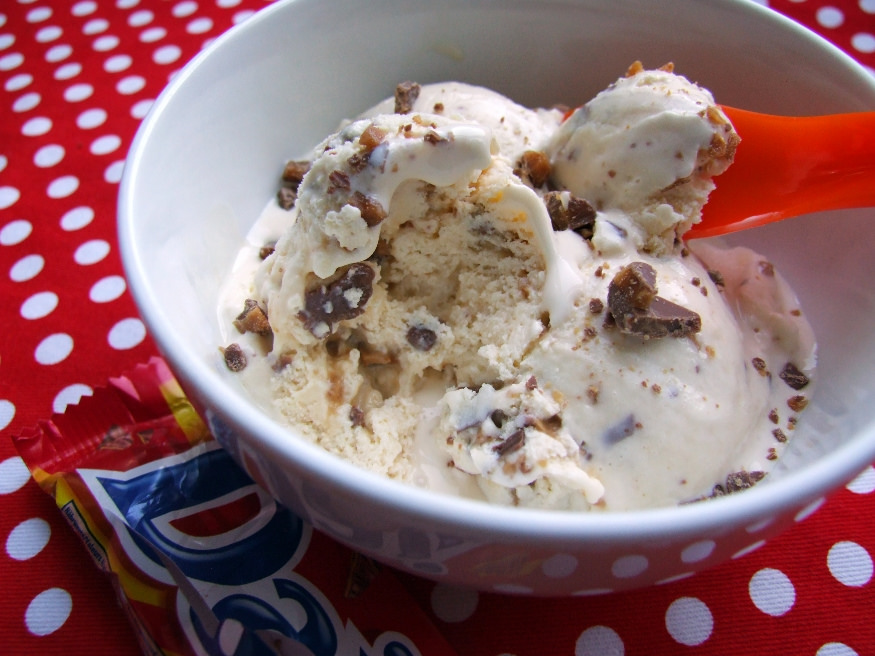
I’m always on the look out for new flavours and the inspiration for this one came from a bag of mini Daim that I picked up for my colleagues at Gothenburg airport. I’d forgotten how good they are and as always when I find myself enjoying something sweet, I immediately thought, ‘this could be good mixed into a shitload of frozen custard’.

It was very good indeed; a smooth ice cream with lots of crunchy, burnt-butter-caramel and chocolate pieces. It’s basically a posh McFlurry. Phwoar.

Daim Bar Ice Cream

600ml single cream
6 egg yolks
100g caster sugar
4 x full size Daim Bars

Whisk the eggs and sugar together until light and fluffy (this is easiest in an electric mixer). Heat the cream until almost boiling (watch for little bubbles forming around the sides) then pour the cream over the egg mixture in a thin, steady stream, whisking all the time.

Pour the custard into a clean saucepan and heat gently, stirring constantly until it thickens slightly to coat the back of a wooden spoon. It is important to do this gently – if you overheat it, the eggs will start to cook and you’ll get little blobs of egg floating about in the mixture. Heat to 80C.

Decant into a bowl and cover with a piece of greaseproof paper, pushing the paper right down to cover the surface of the custard (this it to stop it forming a skin). When cool, chill for half an hour in the fridge.

Pour into an ice cream maker and churn. While this is happening, take a rolling pin and bash the (unopened) Daim Bars into pieces. Set some pieces aside for serving and add the rest to the ice cream towards the end of churning.

Healthy Prawn Curry

This is adapted from a Madhur Jaffrey recipe (from her classic ‘Madhur Jaffrey’s Indian Cookery’ – donated by my mum) and it’s grown with me over the years as I’ve tinkered with the ingredients; every so often I turn to the tattered old notebook, to a familiar page covered in splodges, scribbles and crispy old bits of coriander that fall out like confetti.

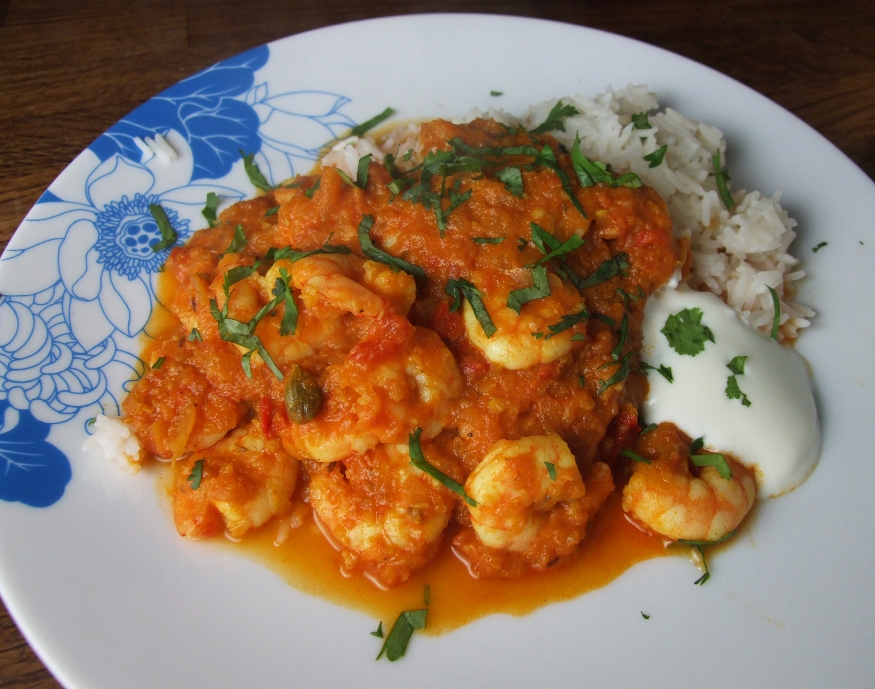
I love the recipe because the flavours remain very fresh and distinct and it’s quite cardamom heavy; Madhur uses 6 pods and I chuck in one of the big black smoky variety too because I’m rock’ n roll like that. I don’t even remove the cardamom pods at the end in fact, as I love the burst of flavour when you bite into one; all softened and bloated with sauce.

The final result is wonderfully fragrant, it’s fast and simple to make and you feel virtuous yet satisfied. Tick, tick and tick.

Fast and Healthy Prawn Curry

(adapted from Madhur Jaffrey’s Indian Cookery; serves 4)

1 large white onion
5 cloves garlic
1 inch cube ginger
2 red chillies
1 cinnamon stick
6 regular cardamom pods
1 large black cardamom pod
2 bay leaves
2 teaspoons cumin seeds
1/2 teaspoon coriander seeds
1/2 teaspoon turmeric
1 teaspoon cayenne pepper
5 tablespoons natural yoghurt
1 tin chopped tomatoes
A pinch of sugar
450g large prawns (raw or cooked is up to you)
Vegetable or groundnut oil

Fresh coriander
1/4 teaspoon garam masala

Put the onion, garlic, ginger and chillies in a blender with 3 tablespoons of water and blend to a paste. Put the coriander and cumin seeds in a dry pan on a low heat and heat them, moving them around, until they start to smell fragrant. Tip them into a pestle and mortar or spice grinder and grind to a paste (you can use ready ground if you like but the results will not be as delicious).

Heat 2 tablespoons of oil in a pan and add the cinnamon stick, bay leaves and cardamom pods. Stir for about 30 seconds and add the paste from the blender. Cook, stirring often for about 5 minutes, until the liquid has cooked off. Add the cumin and coriander and cook, stirring, for 30 seconds or so. Add the chopped tomatoes. Stir and keep cooking until you have a reddish-brown paste. This takes a while – around 10-15 minutes.

Take the pan off the heat and add the yoghurt, 1 tablespoon at a time until it is all incorporated. Add the turmeric, cayenne and sugar along with half a pint of water. Bring to the boil then simmer vigorously until thickened. Taste, then season with salt and pepper. Add the prawns – if you are using raw prawns, cook until they have turned completely pink. If using pre-cooked prawns, add them for a few minutes only, just to warm through.

Stir in the garam masala then serve, sprinkled with fresh coriander.

Aubergine and Lamb Pide

I’ve got a new oven. This is brilliant for 2 reasons. Firstly, it’s all clean and shiny; I mean, how often does your oven look clean and shiny on the inside? Not very often I think you’ll find. Not if you’re a slovenly layabout like me anyway. Second, my old oven was, quite frankly, a piece of shit. It had no numbers on the temperature dial and no symbols for the oven settings and it cooked unevenly so that everything had to be turned around halfway through or it would burn on one side – not exactly ideal.

So, I cooked pide in my swanky new oven; I made nice, evenly cooked pide and I knew exactly what temperature I was cooking them at by means of the lovely little digital display (imagine my panic when I saw the temp dial had no numbers around the outside). That’s 15 minutes at 220C, in case you’re wondering.

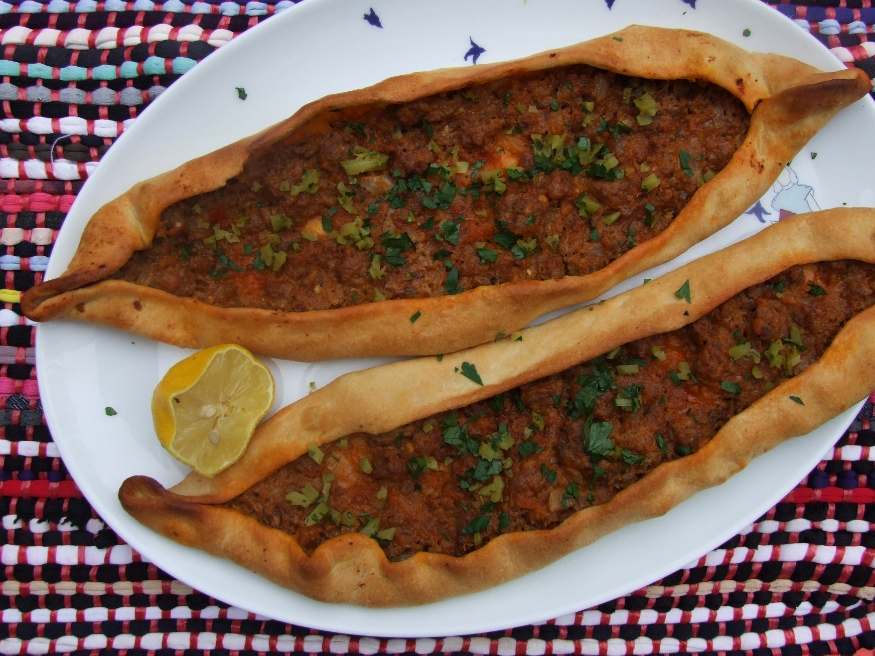
Pide are rather similar to lahmacun* and are apparently sold on every street corner in their homeland. I topped mine with aubergine (which I blackened on the gas hob before scooping out the smoky flesh); lamb, minced; spices like coriander, cumin and cinnamon; onion, garlic and a little tomato. At one point I was feeling particularly rock and roll and recklessly squeezed in some incredible  Le Phare du Cap Bon harissa (from The Good Fork – they have some great stuff, like sardine spread, which is impossible to stop eating). Very spicy indeed. You could also use the fiery red pepper paste found in Middle Eastern shops or failing that just a decent amount of chopped red chilli.

I garnished the finished pide with diced Persian pickles (dill pickles would make a nice substitute), a sprinkle of lemon juice and some parsley. These things are essential for distracting from the richness of the lamb. The dough is a piece of piddle too. Well, it is if you have an electric mixer, anyway. It was thin, yet soft – extremely easy to demolish.

The end result is a bit like a banana shaped pizza. A delicious, meat-smeared boat of soft, spicy flatbread. Very evenly cooked.

*If you like the look of this, you’ll probably also like the look of my similar, Peckham Pizza.

Smoky Aubergine and Lamb Pide

(makes 4)

For the topping:

1 large-ish aubergine
250g minced lamb
1/2 onion, finely chopped
1/2 teaspoon coriander seeds
1/2 teaspoon cumin seeds
Pinch ground cinnamon
1 clove garlic, crushed
2 tomatoes
A squeeze of tomato puree
2 red chillies (or a squeeze of very good quality, hot harissa)

To garnish:

Chopped pickled cucumbers, chopped parsley and lemon juice

Place the aubergine on the ring of a gas hob on a low heat (or under the grill), turning often, until completely blackened and collapsed. I think the hob gets a more smoky flavour but it sure as hell makes a mess. Once cool enough, scrape out the flesh, taking care to avoid any pieces of black skin. Finely chop the flesh. Set aside and discard the skins.

Skin the tomatoes by scoring a cross in the bottom and covering with boiling water for a couple of minutes. Drain, peel away the skin and chop finely. Toast the cumin and coriander seeds in a dry pan over a low heat, moving them around; when they start to smell fragrant, tip them into a pestle and mortar or spice grinder and grind to a powder.

Sauté the onions in a little oil and when soft, add the chilli and garlic and continue cooking for 30 seconds or so, stirring. Add the spices and stir again for another 30 seconds. Add the lamb and cook, breaking up the meat with a spoon, until it is all brown and cooked through. Add the tomatoes and aubergine flesh and cook for about 10-15 minutes, until any excess liquid has cooked out. Taste and season with salt and pepper. The topping is now ready so allow it to cool.
For the dough:

For the dough I used a recipe I found online which I now can’t locate for the life of me. If it’s your recipe, I’m sorry! I’ll reproduce it here anyway.

1 x 7g sachet fast action dried yeast
1 teaspoon sugar
150ml warm water
300g plain flour
1 teaspoon salt
2.5 tablespoons olive oil + more for brushing

Mix the yeast and sugar with the warm water. You want warm water, not hot, as it will kill the yeast. Leave it to one side to activate. When it’s ready (in about 5 minutes), it should be very frothy on top. If not, your water wasn’t warm enough or it was too hot – start again.

Sift the flour and salt into the bowl of an electric mixer or large mixing bowl. Add the yeast mixture and oil. If using a mixer, set it on low speed for 10 minutes until you have a smooth, elastic dough. If mixing my hand, you’re going to have to knead it until you have the same result.

Put the dough in a lightly oiled bowl and cover with a damp tea towel. Let it rise for about half an hour, or until doubled in size. Knock back the dough then cut into 4 pieces. Roll each piece out into a rectangle with tapered ends (much easier than it sounds – they don’t need to be neat at all).

Preheat the oven to 220C

Put each rectangle onto a baking tray lined with baking paper and then smear the topping over each, spreading it evenly. Fold up the sides of each pide and crimp at the ends. Brush the edges with olive oil and bake for 15 minutes. Brush the crust with olive oil once more when cooked. Sprinkle with the garnish and serve.

Baccala

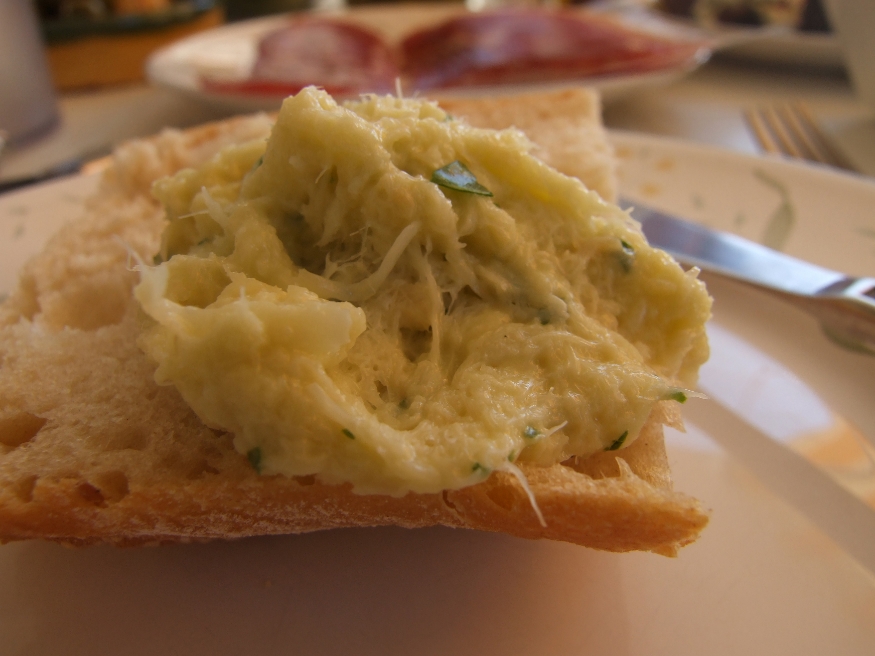
My friend Lizzie and I recently went to check out the new menu at Polpetto and fell head over heels for a blob of salt cod whippy fun called Baccalà Mantecato. The cod had been transformed into a very light, mousse-like paste and we enjoyed trying and failing to guess how it had been made. The revelation was that it had been beaten with oil, in the same way as one would make mayonnaise. “It’s very labour intensive” we were warned but on holiday in Spain with so much salt cod at our fingertips we just couldn’t resist having a go.

We bought pre-prepped fish to skip the soaking/water-changing faff part then pounded it up in a pestle and mortar with garlic and parsley. Oil was added in a steady stream while the other person emulsified furiously then, when we had a good thick mixture, a couple of tablespoons of milk was used to loosen.

It was a lot more rugged than the Polpetto version but the taste was definitely there; smeared on bread it was the perfect sunshine snack.

Baccalà Mantecato

250gr salt cod, rehydrated. I think this involves a lot of soaking and changing of water over several days – we bought ours already soaked.
A pinch of salt – the salt cod once soaked isn’t super salty
1 fat clove of garlic
A handful of parsley
2 tbsp milk
A squeeze of lemon juice

Oil, for emulsifying (we used vegetable as that’s what we had to hand; groundnut would also work but don’t, whatever you do, use extra virgin olive oil as it will overwhelm the cod)

Simmer the cod in water for 5 minutes, then leave to cool. While warm, break into pieces as small as possible.

In a mortar and pestle, pound the garlic and parsley into a paste. Add the cod and mix vigorously. Roll back your sleeves and get pounding and smooshing as someone else dribbles the oil in, until you get a thick, smooth paste. It needs quite a bit of oil. Add just a squeeze of lemon juice, then loosen with the milk – add on tbsp at a time until it is incorporated – if you feel it’s necessary. Serve with toasted bread.

Spaghetti with 'Nduja

‘Nduja is a spicy, spreadable, Calabrian sausage up there with the trendiest of ingredients. For months I’ve resisted its porky charms, the only reason being that my only other experience with a (different) spreadable sausage (at a very popular East London restaurant) ended in 3 days of food poisoning hell. The very idea of spreadable meat made me queasy, until I came across a ‘nduja stall in Borough Market last week. The giant red lobes glistened seductively in the sunlight, I approached cautiously for a taste, then promptly kicked myself for being such a wuss and missing out on what is one of the most delicious pork products I’ve tasted in a very long time.

It is made mostly from bits of the head, super-charged with outrageous quantities of fiery red Calabrian chilli pepper (at least 60% according to some websites) which gives it the most intensely savoury umami addictive quality. You can just taste the sun in the bitter-sweet intensity of those red peppers. I can’t get enough.

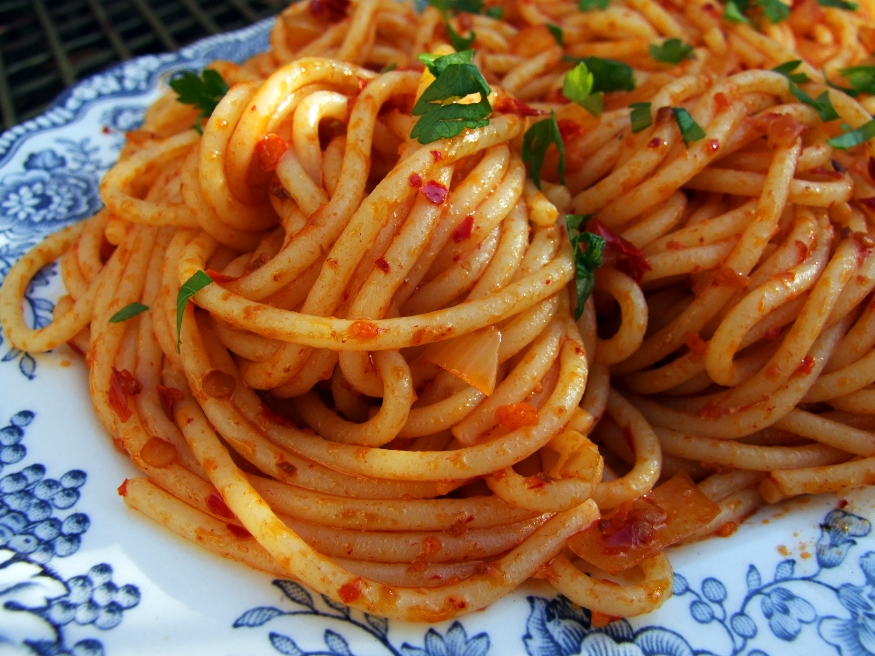
It’s wonderful melted and scrambled into eggs, or used as a dip for bread (as the Calabrians apparently eat it). Tim Hayward likes it with crab. My favourite way to eat it is melted into pasta sauce, with or without tomato. Its power to enrich a basic tomato pasta sauce is second to none but now I prefer it stirred into just a little onion and butter; the sausage melts away to a hundred flecks of scarlet pepper swirling in heavenly porcine oil. Mixed through spaghetti, with just a squeeze of lemon, this may be one of the most perfect pasta sauces of all time.

Spaghetti with ‘Nduja

(some people say this amount of pasta should serve 2 people; I can eat the lot no problem)

200g spaghetti
1 generous heaped tablespoon nduja sausage (it will keep for months in the fridge, too)
Half a small white onion, finely chopped
A knob of butter
A squeeze of lemon juice
A few leaves of parsley, chopped
Salt and pepper

Cook the spaghetti in plenty of boiling salted water. Meanwhile, melt the butter and soften the onions it. When they are translucent, melt in the nduja. Add a squeeze of lemon and some salt and pepper.

When the spaghetti is cooked, spoon 2 tablespoons of the cooking water into the sauce, then drain the pasta. Mix the sauce with the spaghetti and serve, scattered with the parsley.

Figs, feta and hazelnuts

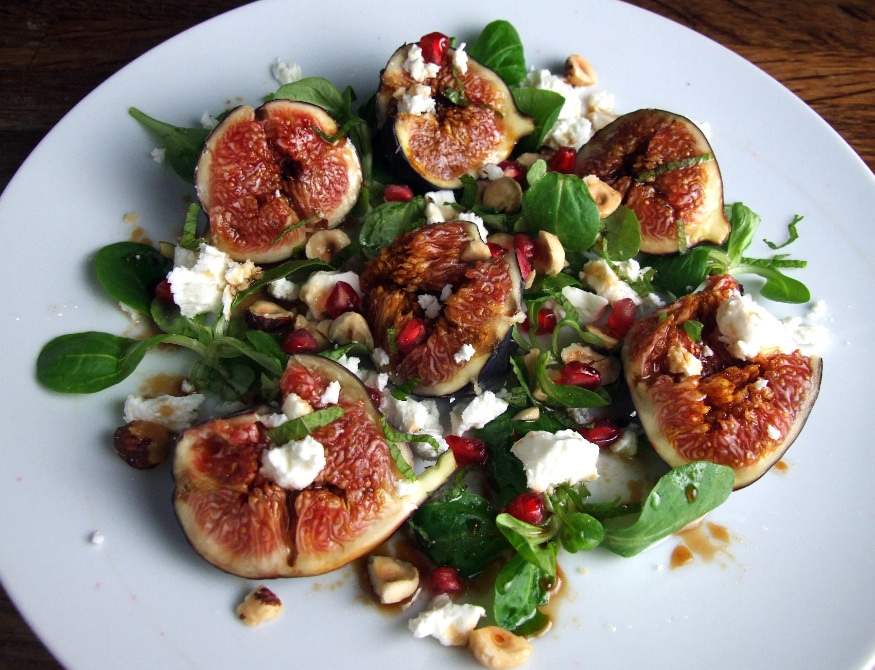
I recently fell for the idea of combining figs, hazelnuts and pomegranate molasses. I’ve ramped up the sweet/sharp thing already going on with the pom syrup and figs by adding a little feta and some pomegranate seeds, for fleshy pops of juice. This took a few minutes to assemble and although it’s not filling enough on its own as a main meal, it is one of the most perfectly delicious ways to begin; a total triumph in the contrasts department.

Figs, Feta and Hazelnuts with Pomegranate Molasses

3 ripe figs
1/2 a pomegranate
A little feta
Small handful blanched hazelnuts
A few leaves of lambs lettuce
1 scant teaspoon pomegranate molasses
1 tablespoon light olive oil

Mix the pom molasses and oil together in a small bowl. Arrange the lambs lettuce on a plate. Halve the figs and add them also. Break the hazelnuts slightly in a pestle and mortar and scatter over the figs, along with the feta. Hold the pomegranate half over a bowl and bash the skin with a wooden spoon until all the seeds fall out (remove any white bits that fall in). Sprinkle a few seeds over the salad and eat the rest. Spoon over the dressing. Serve.

Kofta Curry

I ended up making this curry because I woke myself up the other night shouting “MEATBALLS!” I am just as fixated on food during slumber, it seems. As a child, I’d often wake up clawing at the air above my head, trying to grab whatever cake/sandwich/biscuit/ice cream treat had been accompanying me in my sleep. That’s a cruel moment when you wake up and realise Dream Dessert only existed in your greedy imagination, I can tell you.

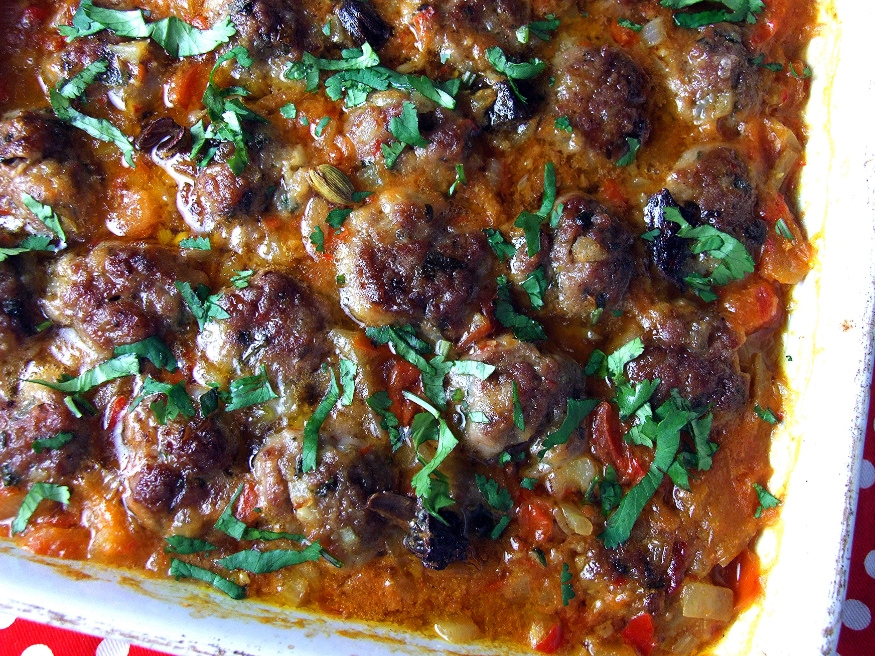
Anyway, this is a very nice little lamb meatball, or kofta curry. I based the spicing on a Madhur Jaffrey Curry Bible recipe but added more meatballs, swapped in some fresh green chillies, omitted a few things I couldn’t care less for and garnished with crispy onions. To make the meatballs really light, I took the apparently inauthentic approach of adding bread soaked in water; this is a trick I use with all meatballs you see, because it makes them LIGHTER THAN AIR, put simply. You can happily shovel away a dozen without feeling like you’ve eaten a bag of protein pebbles for your dinner.

If you make this, do try to get hold of the fat, wrinkled, black cardamom pods; they add an unmatchable smoky undertone to the curry. We ate this wrapped in parathas with a Gujarati carrot salad, raita and a fresh mango chutney.

Lamb Kofta Curry

450g minced lamb
3 small slices crappy, ready-sliced white bread, crusts removed
1 small onion, very finely chopped
1 tablespoon ground coriander
2 teaspoons ground cumin
2 cloves garlic, crushed
1 green chilli, finely chopped
A small handful coriander leaves, chopped

For the sauce

1 onion, finely chopped
A thumb of ginger, finely chopped
2 cloves garlic
2 green chillies, finely chopped
2 tomatoes, de-seeded and finely chopped
1 teaspoon tomato puree
2 teaspoons ground coriander
Pinch turmeric
1 pint veg stock
1 cinammon stick
2 black cardamom pods
2 green cardamom pods
5 black peppercorns

Put the slices of bread into a small bowl and cover with a couple of tablespoons of water until soaked through. Squeeze out the moisture using your hands until you have a little wet ball of bread. In a large bowl, mix all the meatball ingredients together (including the bread), using your hands. Season with salt and pepper.

Wet your hands and fashion your meatballs; the size is up to you but I like mine fairly small and I got 38 from this mixture. Refrigerate the meatballs for an hour, or as long as you can. The longer they rest, the better they will taste.

Put the garlic, chillies, ginger and 3 tablespoons water in a blender and blend to a paste.

Heat a couple of tablespoons groundnut or other frying oil in a heavy-based pan. When hot, put in the onions. Fry them for about 5 minutes until they are starting to colour. Add the paste from the blender and fry briefly. Add the tomatoes and fry until they are starting to break down a bit and thicken the mixture. Add the tomato purée and cook out briefly. Add the coriander, turmeric and salt. Stir for 30 seconds then add the stock and bring to the boil.

Add the whole spices to the sauce, reduce the heat and gently add the meatballs. Cover and let simmer very gently for 40 minutes, turning the meatballs around every now and then.

Garnish with crispy onions (if you wish) and fresh coriander (essential).

The first time I made hot wings they were good, but not hot enough. I wanted try again using the authentic, not very secret ingredient, Frank’s Original Hot Sauce. I also wanted to try my hand at smoking them so I sensed the opportunity for an Amazon binge and bought: 3 bottles of Frank’s, a tub of Old Bay Seasoning, a Weber chimney starter and a pack of hickory wood chips.

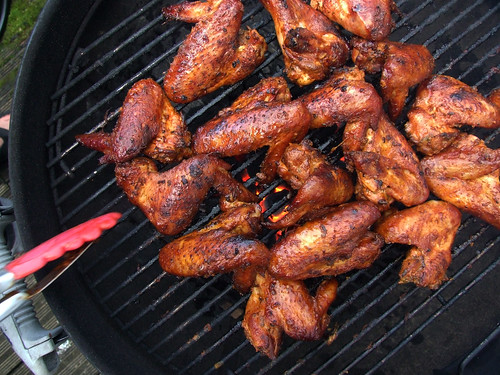
 I would encourage anyone who owns a half decent BBQ with a lid to buy some wood chips for smoking immediately, if you haven’t already. There were almost tears of joy when we lifted the lid to find a rack of wings turned orange with hickory smoke; I was amazed at the results you can achieve with just a regular home kettle BBQ.

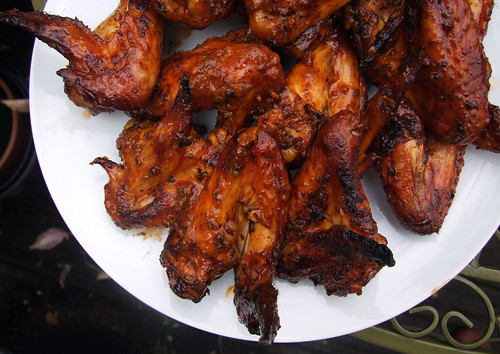
I’d marinated the wings overnight in herbs and seasonings, then smoked them for 25 minutes a side over indirect heat with the hickory chips thrown in. They emerged crisp and burnished brown, ready for a good plunge into a combo of Frank’s Original and melted butter before going back on the grill, over direct heat for another 20 minutes. To finish, a final lick of that sauce and straight onto the plate.

 The smoking, together with the sweet, vinegar-chilli punch of Frank’s (it’s like a thick Tabasco) cut with velvety butter, makes the flavour incredibly intense – not to mention sticky. A mound of discarded kitchen paper stained orange with sauce rose before us as we worked our way, just the 2 of us, through 24 wings.

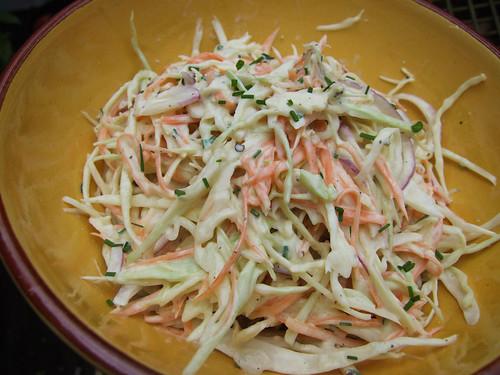
 It seemed appropriate to cut the heat and umami with something a little sharp, a little creamy; a cool, crunchy pit stop between wings. Slaw. This is a classic mix of carrot, white cabbage and red onion; the sauce a mix of sour cream, natural yoghurt, a smidge of American mustard and my secret ingredient – a slosh of juice from a jar of dill cucumbers, which adds a lovely spiced-sweet pickled note.

Later on, we deep-fried more pickles and shoved them into a sandwich with shredded wing meat and slaw. So gluttonous. So unhealthy. So. Good.

Hickory Smoked Hot Wings

 26-30 chicken wings

For the marinade

2 cloves garlic
1 white onion
3 teaspoons thyme leaves
3 teaspoons dried oregano
1 teaspoon Old Bay Seasoning
1 tablespoon salt
1 teaspoon paprika
1.5 teaspoons ground black pepper

For the sauce

1 bottle plus 2 tablespoons Frank’s Original Hot Sauce (that’s about 12 tablespoons in total)
125g butter

You will also need hickory chips for smoking the meat.

Begin the day before by marinating the wings. Put the onion in a blender with the garlic and 1-2 tablespoons water and blend to a paste. Put into a large bowl (the one you will use to hold the wings) and add all the other marinade ingredients. Mix well. Add the wings and mix really well to make sure they are all evenly coated. Refrigerate overnight.

When you’re ready to cook the wings, remove them from the fridge to bring the temperature up and set up your BBQ for indirect cooking; this means lighting the coals to one side (you will cook the meat on the other side). Take a couple of handfuls of hickory chips and soak them in cold water for at least 30 minutes.

When the BBQ is ready, sprinkle a handful of chips directly onto the coals and put your wings on the other side in a single layer (you may need to do 2 batches as I did). Put the lid on (leave the holes half open) and smoke for 25 minutes. After this time, turn the wings and sprinkle on a few more chips.

Melt the butter and hot sauce together in a pan (don’t be alarmed at the strength of it, this will be tamed somewhat once on the wings). Remove half of it to a bowl and dunk the wings in it, then return to the grill, this time directly over the coals for about 10 minutes each side, until well charred. Dunk again in the sauce before serving. Get the kitchen paper ready.

Sour cream slaw

1/4 white cabbage, very finely shredded
1 medium sized carrot, grated, julienned or shredded in a processor
1/2 red onion, finely sliced
3 heaped tablespoons sour cream
3 tablespoons natural yoghurt
1 teaspoon American mustard
1 tablespoon snipped chives
2 tablespoons juice from a jar of dill pickled cucumbers
Salt and pepper

If you can use a food processor to finely shred the vegetables, do. I used a julienne peeler for the carrot and just finely sliced the onion and cabbage by hand. Put the veg in a large bowl. In another bowl, make the dressing by mixing together all the remaining ingredients. Mix this well with the vegetables. Season with salt and pepper.