Corned Beef

When I ate corned beef as a kid, it was the stuff that came in tins, set with a sheen of white fat, and I’ve often wondered what a decent home made version would be like, if such a thing could exist. I decided to have a bash, then, at making my own salt beef and corned beef at home.

Often, when I’m buying a salt beef sandwich, I watch them slicing that big, wobbly pink hunk and always think, ‘I wish I had all of that to myself’. It was kind of daunting though, the idea of making it. Can we really eat it all? What if it goes off and poisons everyone?

Well neither of those things happened, and it is genuinely easy, so long as you plan it properly to start off with. All you need (apart from the actual ingredients, obviously) is space to brine the brisket, time to let it happen, and then the means to cook it afterwards. I didn’t think that last bit through properly, but I’ll get to that.

First you need to buy the beef brisket. I got mine directly from Smithfields, which is obviously a LOT cheaper than buying from a butcher. This is how I ended up with a 3kg monster in my fridge. Thankfully it did fit, since my fridge is the size of a small cottage but if you have a normal-sized appliance then you can keep it submerged in a non-reactive bucket or tub (nothing made from copper, aluminium, cast iron or brass) in a cool place. Apparently. I’d rather keep it in the fridge.

Secondly you need to work out how to brine the thing. Salt beef comes out pink because either saltpetre or curing powder is added to the brine. If this isn’t added, it will come out a sort of manky grey colour, which isn’t very appetising. I found it quite hard to work out what to use from the advice online so let me lay it down for you here. Saltpetre isn’t used any more really because of health concerns so just forget that. What you want for this job is something called ‘Prague Powder No.1′ which is readily available online. It’s still poisonous though, so you need to get the amount right. I was too scared to do this so I asked my friend Lap and he told me what to do. Thank you, Lap. I then chucked in spices and flavours as I fancied. Once it’s in the brine, you leave it for a week, turning every day.

After this time, you need to cook that beast. If you were to rub it with spices and smoke it, it would become pastrami. Salt beef is simmered. This is where I screwed up because I forgot – I’m not entirely sure how since it’s such an inconvenience – but I forgot, that my gas hob is broken and I’m currently using a portable induction hob. This caused problems because the pan I had intended to cook the beef in would not work on the induction hob. I had to therefore use two induction compatible pans, and cut the brisket in half. Problem solved? No. They still didn’t fit. I stressed. I fretted. I moaned on Twitter and received some great advice from Tim who suggested using an induction pan as a conductor and sitting the giant pan inside it. I did that, then he noticed my conductor pan was non-stick, before I’d noticed the kitchen was filling with an unpleasant plastic smell…look just make sure your pan is big enough yeah?
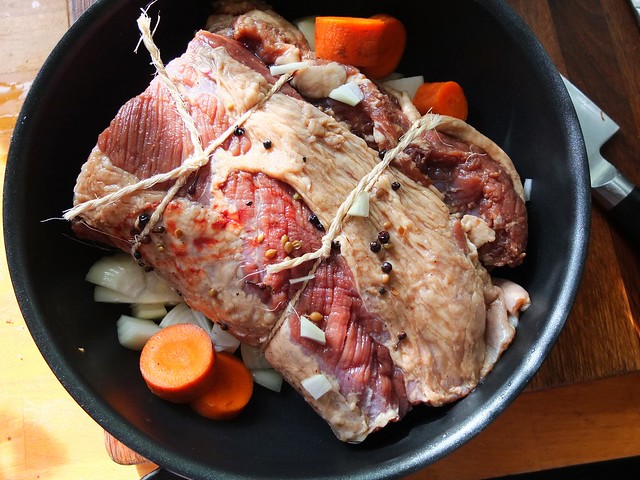
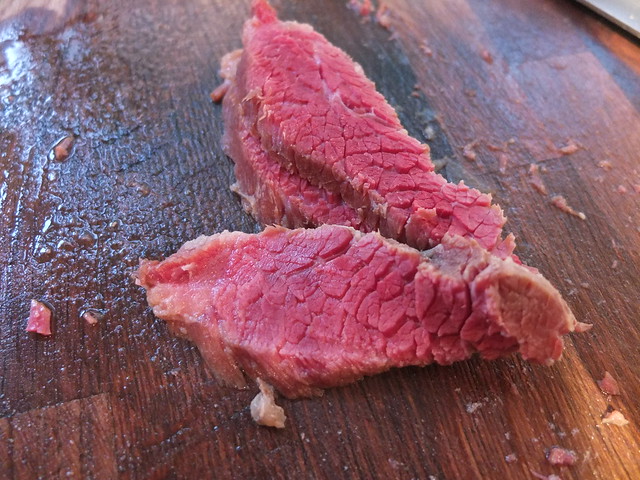
S0196100The brisket finally cooked after 7 long hours, during which I boomeranged back and forth to the kitchen, adjusting the heat and turning the meat over and over but then…oh man is it worth it for the results. My very own wobbly hunk! And all with lovely big pieces of fat still clinging to the outside. At this point you must eat some, obviously, and then you must put some inside a bagel or rye bread with mustard and eat with a pickle alongside.
S0256108

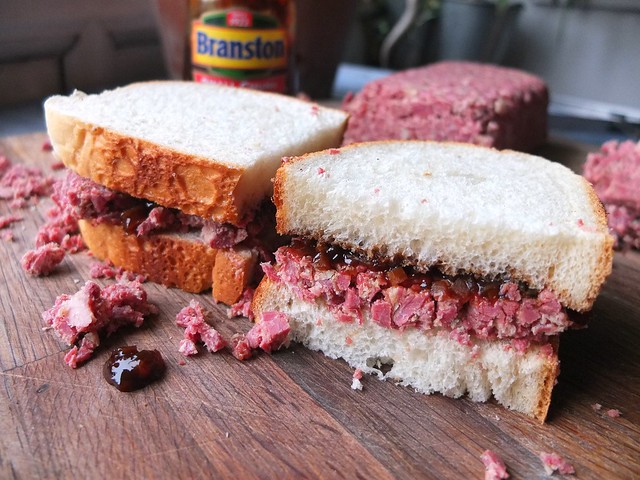
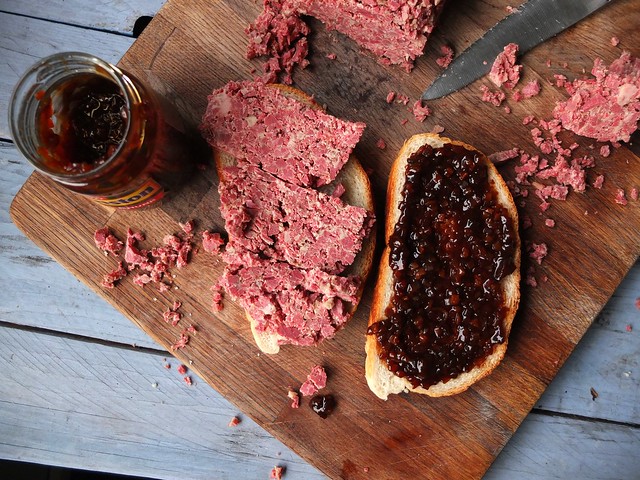
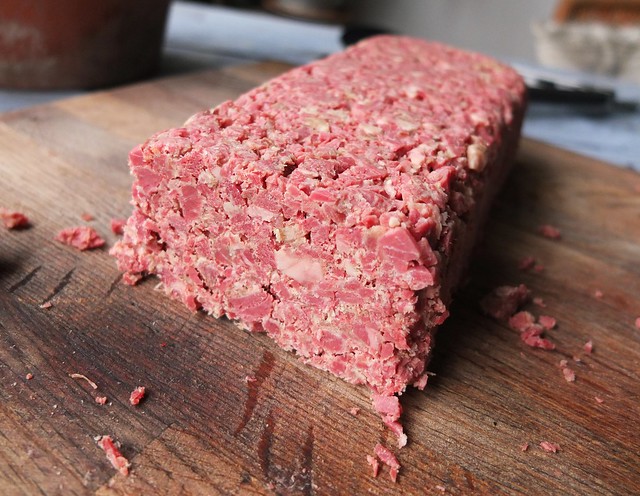
If you want to carry on and make corned beef, then you want to set some aside for that, and I heartily recommend that you do. Remember, British readers, the tinned corned beef of your childhood? Well this is that but about 10 times tastier. It’s basically chopped salt beef which is set in melted butter. Yes. This, in a sandwich, with Branston and a bit of extra butter for good measure is like the lunchbox of dreams.

Corned Beef

Corned Beef

Corned Beef

Huge thanks to Lap-fai Lee for his advice on ratios in this recipe.

For the brine

330g salt
300ml vinegar
1 tablespoon brown sugar
36g Prague Powder No.1
4 cloves garlic
1 teaspoon coriander seeds
5 black peppercorns
Large pinch of mustard seeds
3 bay leaves
4 allspice berries
1 dried chilli
2 cloves

For simmering

1 carrot
2 sticks celery
2 bay leaves
2 onions

For the corned beef

Unsalted butter

Heat all the brine ingredients in a pan with 2.75 litres of water until it comes to a boil. Turn it off and allow to cool. Place the brisket and brine in a tub, making sure it is completely submerged. You may need to weigh it down. Leave this in the fridge for 7-10 days.

After this time rinse the beef briefly and pat it dry. Put into a pot with the vegetables and simmer for about 6-8 hours, until a knife sinks into it like its butter. Remove from the pot and eat some while still warm. Save half for the corned beef.

To make the corned beef, chop half of the brisket finely and melt some butter. You will need just enough to bind it together. Line a loaf tin with cling film and pack it in. Fold the film over the top and allow to set overnight in the fridge. Slice thickly and pile into sandwiches.
Pickle Shelf

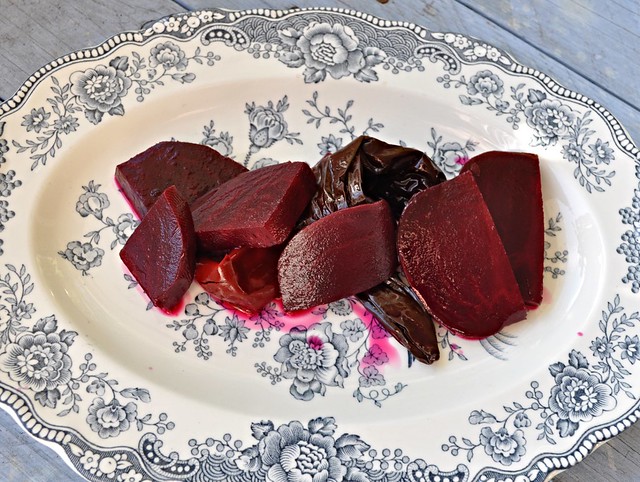
I find the sweet earthy intensity of beetroot hard to deal with. In fact, most sweet vegetables do my head in nowadays unless they’re steeped in a hefty amount of vinegar and spice. So here we are.

This will give you a result a mile away from those astringent crinkle cut slices that strip the tongue. The flavour is fairly sweet for a pickle, with a perfumed note from the hibiscus flowers – my new favourite ingredient since making this BBQ lamb leg – and a smoky buzz from the chillies.

Beetroot pickle with hibiscus and chilli

I created this recipe for Rix Media to promote their monthly competition.

Beetroot Pickled with Chilli and Hibiscus Recipe

1 kg beetroot, roughly similar in size if possible
300ml white vinegar
200g caster sugar
12 hibiscus flowers
2 ancho chillies
2 bay leaves
2 allspice berries
1 teaspoon salt

Simmer the beetroots until just tender, then drain and set aside to cool a little before peeling and cutting into pieces that will fit easily into the jar. In a saucepan, combine the vinegar, sugar, hibiscus flowers, ancho chillies, bay leaves, allspice berries, salt and 200ml water. Heat gently, stirring, until the sugar has dissolved.

Pack the beetroot into sterilised jars and try to divide the hibiscus flowers, bay leaves and chillies evenly between the jars, then pour over the liquid and seal. Leave for at least a few weeks before eating.

Edit: I’ve just eaten these after 6 months and they taste better than ever!

Brunch

I like my brunch to work an Eastern European vibe. Think eggs cooked up with the kind of spiced sausages that leach dangerous, stain-making fat onto pyjama tops.

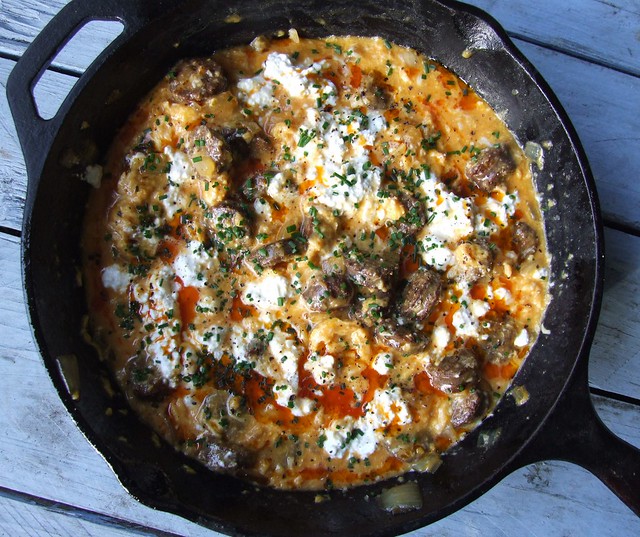
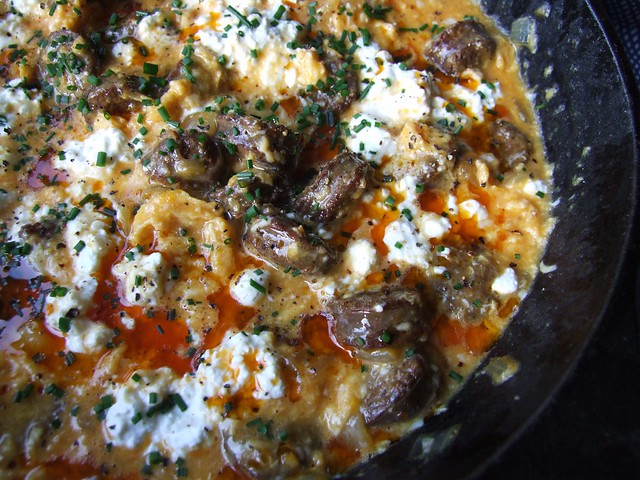
Now you may be asking yourself, quite understandably, why the hell I’m suggesting mixing eggs and sossidge of a morning like it’s something new. Well the reason is this: cottage cheese. No, honestly. I am perfectly aware that in the hierarchy of ‘secret magic breakfast-enhancing ingredients’ cottage cheese is generally…nowhere, but I promise you, this a game changer. Firstly you need to get your hands on some decent cottage cheese – none of that watery guff they sell in the supermarket. I’ve been using the Longley Farm brand which is creamy and re-assuringly dense in the pot. It brings some freshness to the dish, as yoghurt would, but it’s more substantial. Fantastic with eggs. Yes, ‘fantastic’. Who knew?!

The dieters can keep their watery cottage cheese for topping salads. I shall get on with lobbing scoops of it into my brunch.

Brunch

Brunch Eggs with Spiced Sausage and Cottage Cheese

There are loads of ways you can take this actually, by using smoked Hungarian sausage for example, or omitting the meat altogether and serving with pickled beetroot for a Russian flavour. Russian brunch! Fancy that. If that becomes a trend then remember where you heard it first.

Sometimes I add garlic, too, but it depends on how you feel about that kind of thing at brunch.

1 small onion, diced
6 eggs
4 spicy sausages (Greek, Turkish, whatever you like). I used sucuk, sliced into chunks
Cottage cheese
Chives

Heat a heavy based skillet and lob the sausage chunks into it. Once the fat starts to leach out, add the onions and cook gently until the onions are soft and the sucuk is cooked.

There will be a lot of fat in the pan at this point, so drain most of it off but reserve it.

Lightly beat together the eggs in a bowl, season them, and add to the pan and just sort of break them up a bit and encourage everything around the pan on a low heat so it doesn’t stick – you want nice big soft clumps of egg, not bitty over-cooked scramble.

When it’s almost done (the eggs should still be a bit under), add some dollops of cottage cheese. Give it barely a minute, as the residual heat will finish off the eggs. Take a teaspoon or as much as you like of the reserved sausage fat and drizzle over the top. Sprinkle with chives and serve with bread if you like. I don’t usually bother as it’s so filling but it would probably serve 6 if you did.

Cochinita Pibil Tacos

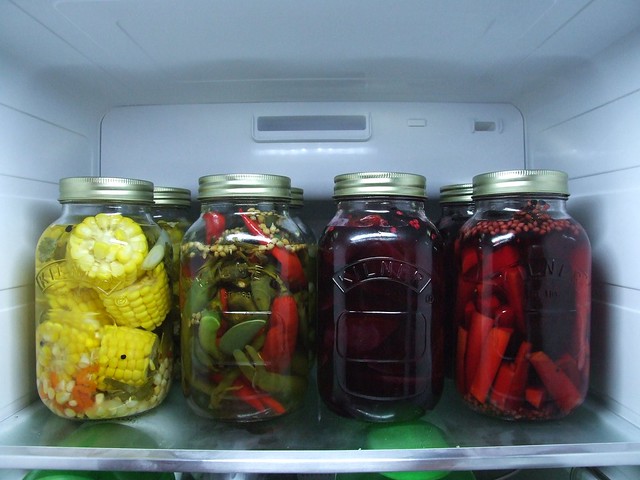
I’ve been thinking hard about how I’m going to use up my three huge jars of pickled corn. I’ve been gnawing the kernels straight off the cobs but it’s starting to feel like a missed opportunity.

I thought they’d make an excellent taco topping and originally wanted to do some kind of breakfast tacos, before realising that the idea of breakfast tacos is kind of gross, actually. I feel the same way about breakfast burritos. I love eggs, but I don’t want them all squished inside a tortilla like a big farty roll up.

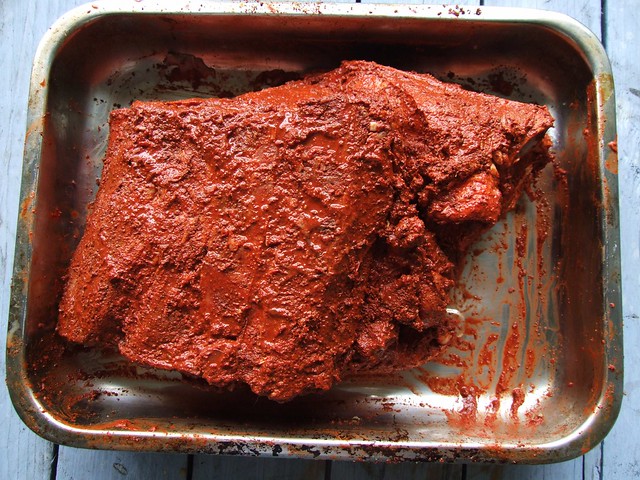
So here we are with cochinita pibil, a Mexican dish of slow cooked pork – traditionally a whole suckling pig – rubbed with annatto and sour orange juice, wrapped in banana leaves and cooked in a pit. Annatto is a seed which colours everything orangey-red. In Mexico it is used in cooking but also to make dyes and body paints, and in the UK it has been used to colour cheese (such as Red Leicester) for centuries, as it was thought that the more orange the cheese, the better the quality. There’s a rather obvious lesson here, which is that annatto is extremely effective at colouring things, particularly hands, clothes, cats, whatever happens to be nearby. I wouldn’t advise accidentally snorting it either, as I did when I was enthusiastically smelling my spice blend; it reminded me of a time in Iceland (THE COUNTRY) when I was given some snuff by a man in a bar and I thought I’d ‘give it a go’. Possibly the most painful half hour of my life.

Anyway, this recipe for cochinita pibil is made with a pork shoulder, and cooked in the oven wrapped in foil, although you could do it on a BBQ. Quite why it has taken me so long to re-create a recipe I thought was so, so fine the first time around I have no idea. This version is even better as I’ve tweaked it here and there. If you’ve never made it then get yourself some annatto off that there internets and get rubbing (after you’ve put your gloves on). You’ll inhale the results.

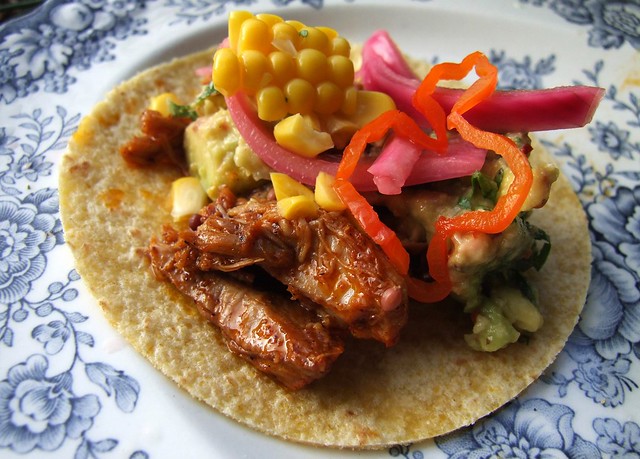
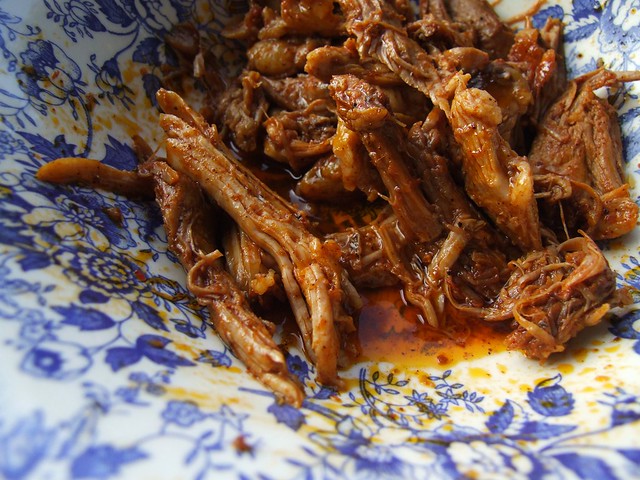
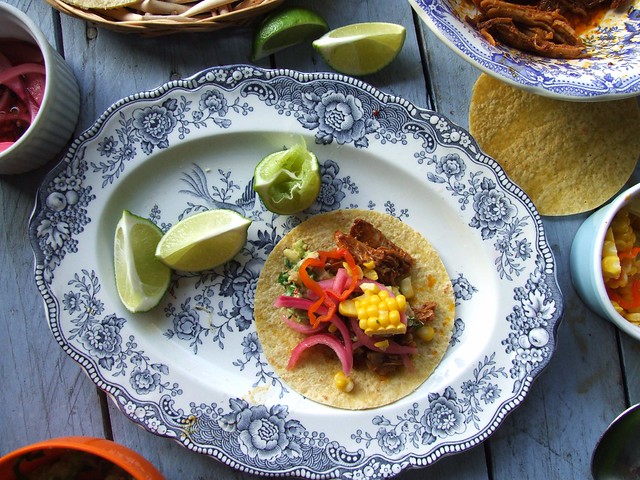
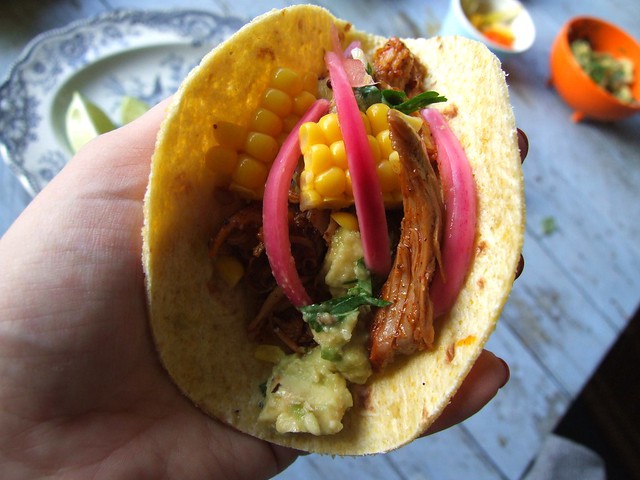
Once we’d pulled the meat apart, and rubbed it around in the glorious juices, it went onto tacos with a dollop of guac, some mild red onions and that pickled corn, which is sweet, sour and spicy enough to give you electric tingles. New. Favourite. Pickle.

Cochinita Pibil Tacos

Cochinita Pibil Tacos

Cochinita Pibil Tacos

Cochinita Pibil TacosCochinita Pibil with Pickled Corn

(can also be cooked on the BBQ using indirect heat)

1 x 3.25 kg pork shoulder

For the paste

2 tablespoons achiote powder
2 teaspoons dried oregano (decent leaves, not the dusty stuff)
1 teaspoon cumin seeds
2 teaspoons salt
6 whole allspice
6 cloves garlic, crushed in a pestle and mortar with a large pinch of sea
1/2 tablespoon ground piquin chillies or other dried chillies, ground (Diana Kennedy says you should use powdered ‘chilli seco yucateco’ or paprika)
3 tablespoons orange juice mixed with the juice of 6 limes (should be about half and half) for rubbing the pork and making the paste. This mixture is a substitute for sour orange juice. If you can get sour oranges, then obviously use them.

Rub the pork all over with the orange and lime juice followed by the salt.

Make the paste by grinding the allspice berries, cumin seeds and piquin chillies to a powder and mixing with the crushed garlic and a tablespoon of the orange juice and lime mix, the pork should be quite moist so the paste doesn’t need to be that wet.

Smother this all over the shoulder, rubbing well in. Make a parcel by layering tin foil, put the shoulder into it and refrigerate, preferably overnight. Bring out of the fridge for a couple of hours before cooking.

Preheat the oven to 135C. Get a big roasting tin and put a rack inside it (I just put a cooling rack in a tin) then put enough water in to fill the base of the tin to about 0.5cm. Place the pork package on top of the rack and cover it tightly with foil. Cook for 7 hours, refilling the water occasionally.

Carefully remove the shoulder from the parcel, taking care to save those precious juices. Tip the juices into a bowl and set aside. break up the meat and set aside in a bowl then pour the juices over and give it a good mix.

This is now ready to serve with the sauce, guacamole, and pickled corn.

Pickled corn recipe here.
Guacamole recipe here.

Pork Belly Steamed Bun from Yum Bun

I have an intense, borderline unhealthy affection for bao buns peddled by the likes of Yum Bun and Bao London; there’s just something about that pudgy steamed bread that is so addictive. I can’t get enough of them, so last weekend I went to a cookery class at School of Wok in Covent Garden to learn some tricks which would hopefully enhance my buns.

The dough needs kneading until very smooth; the idea is to work the gluten so that it becomes nice and stretchy. When it’s done you should be able to push your fingers gently into the surface of the dough without it cracking straight away. Once risen it’s rolled out into an oval shape, then oiled and folded over a chopstick; the oiling is important to stop the dough sticking together during steaming.

We try steaming them two ways for comparative purposes, firstly in a bamboo steamer over a wok full of water, and secondly in a snazzy steam oven which I am fascinated by. The steam oven has more of an all-engulfing heat, obviously, which surrounds the buns and cooks them evenly – best for the sandwich bread. The bamboo steamers are over direct heat, which makes the dough more likely to crack as it cooks – this is desirable when cooking buns like char siu bao, when you want that classic split-open top.

Red Cooked Pork

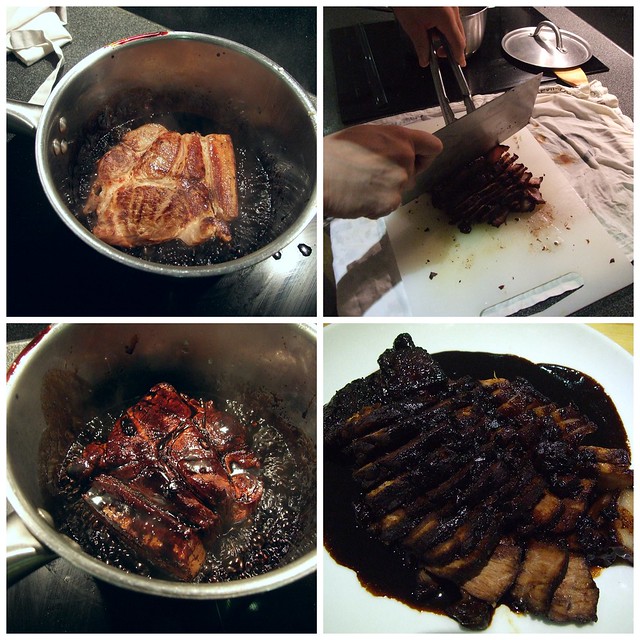
Red cooked pork with fermented tofu

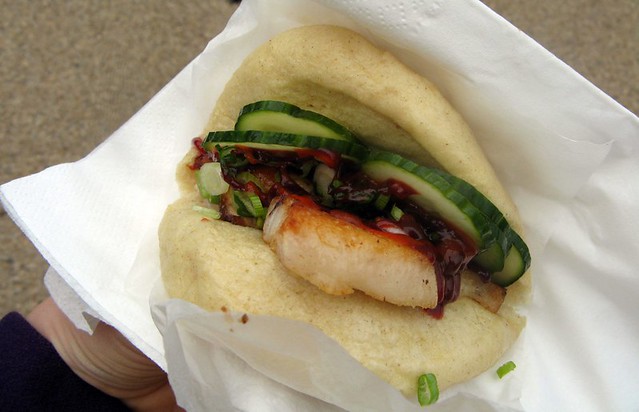
After 8 minutes we had perfectly steamed, if not quite perfectly shaped buns, ready to be rammed with pork braised in a fermented tofu sauce, a quick cucumber pickle (recipes below), lettuce and Japanese mayo. I ate three and felt the oof; despite their fluffy appearance they are incredibly filling and considering that we also made char siu and custard buns… if someone had pushed me out of the door I could’ve rolled to the bus stop.

The steamed bun class is the most technical of all the classes at School of Wok, and I learned a huge amount, including some dim sum techniques which Jeremy, our teacher, said experts generally refuse to demonstrate until people have had much more experience. He’s all about making this kind of cooking more accessible, is our Jez. The class is very relaxed, friendly and fun, and there were only three of us there, so everyone got lots of attention (I believe the maximum class size is 8). I was on the course with two young guys who wanted to start a street food stall selling bao, having made them only once before. Considering their limited knowledge of cooking, and the fact they were both knackered by lunchtime, I’m not sure how well that venture is going to work out. One of them did say however that the class was the first time he’d EVER enjoyed cooking, which is a damn good advert for Jeremy’s classes, if perhaps not the foundation for a successful street food business…

Bao Bun Recipe

(recipe courtesy of School of Wok)

530g medium gluten wheat flour
5g dried yeast mixed with 100g warm water to activate
50g milk
3 tsp sugar
½ tsp salt
120g water
1 tbsp oil
1 tsp baking powder
Flavourless oil

Activate the yeast and then add to rest of the ingredients and knead well.

Allow to rest in a warm place covered with a damp cloth for 2 hours, or until the dough has doubled in size.

Just before shaping, add 1tsp baking powder to the dough and knead well.

Roll the dough into a cylinder, then cut pieces off this, and roll out into oval shapes. Lightly oil the top of the dough, then put a chopstick at the half way mark, fold over and remove. Allow to rest in a warm place, under a damp cloth, for 30 minutes or until 1.5 times the size.

Line a bamboo steamer with greaseproof paper and steam for 8 minutes. Do not lift the lid in the first 4 minutes.

Braised Pork Belly in Fermented Tofu

(recipe courtesy of School of Wok)

300g Pork belly
2 cloves garlic (finely chopped)
1 cube of fermented bean curd
1 tbsp fermented bean curd liquid
3 tbsp dark soy sauce
Dash of sesame oil
1 tbsp black vinegar
1 tbsp sugar
Roughly 450ml hot water

Finely chop the garlic and place in a small prep bowl. Using the base of a teaspoon, crush the fermented bean curd into the sauce until a
thick paste is formed. Mix the soy sauce, black vinegar, sugar and sesame oil together.

Heat 1 tbsp vegetable oil in a saucepan to high heat. Add the garlic to the pot and stir.

Turn the heat down to a medium heat and then add the fermented bean curd paste.

Sear the pork belly piece on all sides in a separate pan, ensuring the skin is well
sealed and golden brown. Once seared, place the pork into the saucepan and stir until the whole piece is
covered in sauce.

Add the soy sauce/black vinegar & sugar mixture to the pork and bubble through for
2-3 minutes. Now turn heat down to low.

Turn the pork over so that the skin is touching the bottom of the saucepan. Pour enough hot water over the pork to just about cover. Stir well and then cover with lid. Simmer on low heat for 1 ½ hours – 2 hours until the pork is soft and succulent and full of colour. Turn occasionally to allow sauce to absorb into the whole piece.

Cucumber and Spring Onion Pickle

(recipe courtesy of School of Wok)

3 spring onions, finely sliced into strips
½ cucumber, finely sliced
Pickling liquid
4 tbsp honey
½ tsp salt
4 tbsp red rice vinegar
2 tbsp hot water
15 crushed sichuan pepper corns

Combine everything and let sit for half an hour or so.

S0395951

I have a Big Green Egg BBQ. I know. It’s okay, you can hate me. In all fairness, you should be grateful, actually. You heard. You should be grateful I haven’t been boasting about this for the past year because that’s just about the amount of time I’ve owned this piece of exceptional BBQ equipment. I’ve actually been very kind, if you think about it properly. I can contain it no longer, however: BGE’s are incredible. Everyone should sell an organ (might need two actually) in order to buy one.

Anyway, this recipe. I’m always seeing hibiscus flowers around Peckham but I’d never bought them. I knew that they’re used to flavour the ‘sorrel drink’ that one finds in Caribbean takeaways but…yeah that was the limit of my knowledge. They also love them in Mexico though I’ve since found out, which is where my flowers actually came from, brought back as a gift by a friend. Apparently they use them a lot more in cooking there, and also eat them candied as sweets.

The amount of flavour and shocking red colour that leaches from a handful of the dried flowers once soaked, is staggering. The flavour is a bit like red berries, with a tart, lemony edge and it occurred to me that this might work very well indeed with lamb.

S0145922

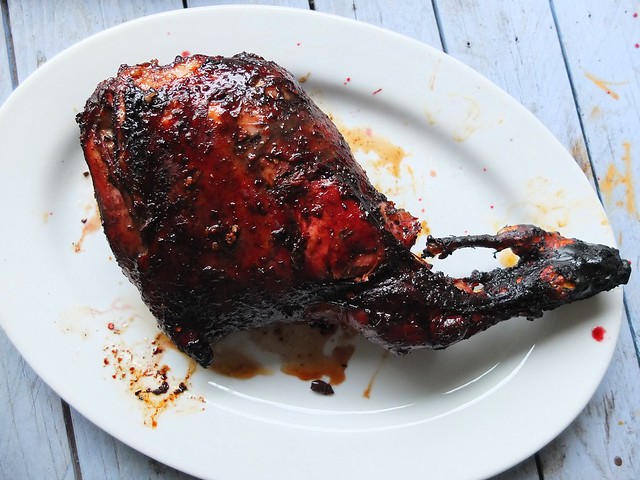
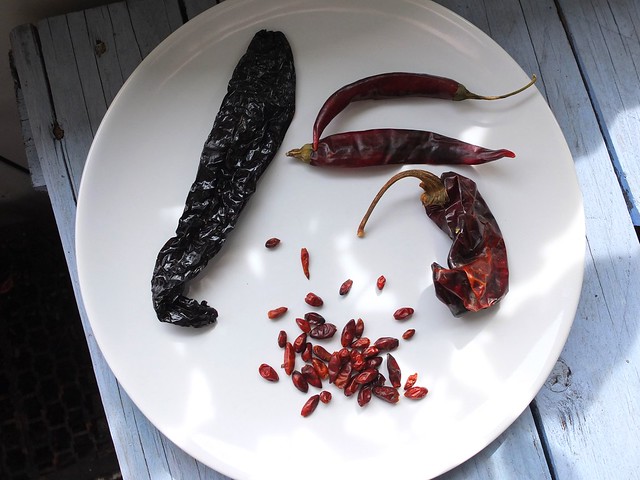
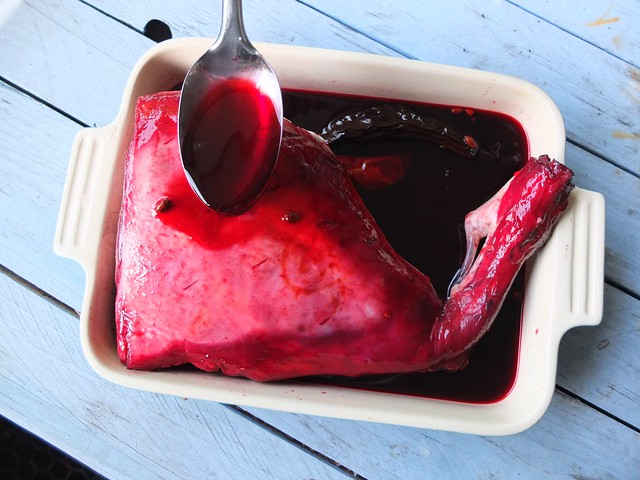
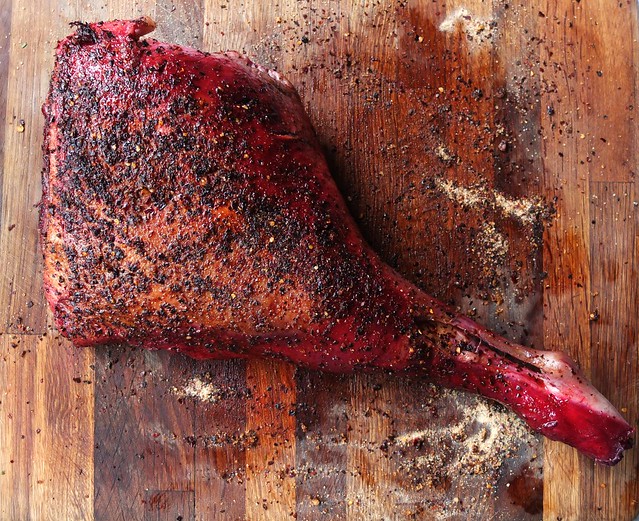
I steeped the flowers with an assortment of Mexican chillies: piquin (quite hot), guajillo (fruity), puya (similar to guajillo but hotter) and pasilla (literally: ‘little raisin’). Then I added garlic (because it’s lamb, and it’s the law) and bay. The resultant liquid was a frankly terrifying shade of red which stained the meat the colour of those curly pigs’ tails, tongues and penis shaped things (penises?) you see piled up in Brixton market. Thankfully, it was also extremely tasty: a sort of fruity, floral (yes I know), smoky thing going on.

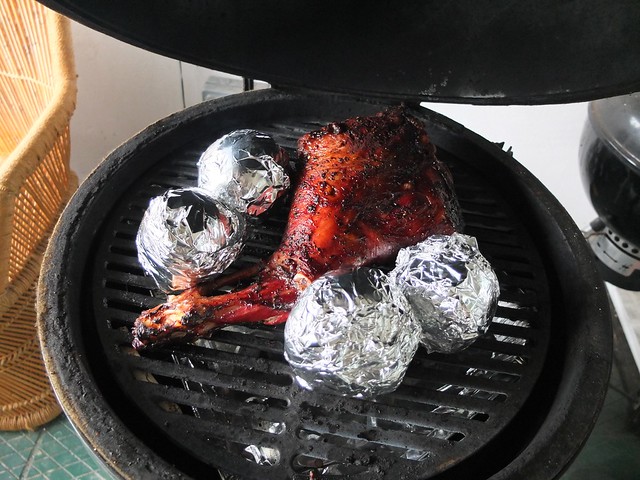
I dunked the lamb into its bath for 24 hours, then drained it, rubbed the meat with more chillies and rammed with more garlic before cooking low and slow in the Egg. The marinade I reserved, reduced until syrupy and used for basting. That gave it a lovely sticky glaze. The leftovers were mixed with juices from the drip tray to serve at the table. We ate it in a sort of feverish caveman style, hunched over, fingers in, after-dark.

Oh and those things wrapped in foil around the outside of the lamb? Yeah they’re called ‘Death Star Onions’. They need work.

S0105917

S0225930

S0375949

BBQ Leg of Lamb in a Hibiscus Marinade Recipe

The idea here was to get a subtle flavour seeping in from the marinade, then add the rub for more of an aggressive ‘crust’ to form during the first part of cooking, then add the glaze after that. Seemed to work.

1 x 2kg bone-in leg of lamb

For the marinade and basting liquid

50g dried hibiscus flowers
2 bay leaves, torn in half
4 cloves garlic
A few peppercorns
1 dried guajillo chilli
1 teaspoon dried piquin chillies
1 dried puya chilli
1 dried pasilla chilli
100g golden caster sugar, plus 2 tablespoons

For the rub

1 dried guajillo chilli, de-seeded
1 teaspoon dried piquin chillies
1 dried puya chilli, de-seeded
1 dried pasilla chilli, de-seeded
2 tsp sea salt
10 black peppercorns
2 cloves garlic

In a saucepan, combine the hibiscus flowers with 1 litre of water, plus 2 cloves of garlic peeled and bashed a bit, the bay leaf, sugar and the chillies. Simmer this mixture for 5 minutes. Allow the marinade to cool then make slits all over the lamb, submerge it and refrigerate overnight. I had mine in there for 24 hours and I turned it once and basted it a few times.

When ready to cook the lamb, remove it from the marinade, pat dry, then strain the marinade into a bowl through a sieve. Add the extra sugar and reduce the marinade by about half until it starts to look thicker and more syrupy.

Prepare the BBQ. You want it at about 150C. You want to set up a drip pan too. This is going to be different depending on the type of BBQ you have.

Blitz the chillies, salt and peppercorns for the rub in a spice grinder. Rub this all over the lamb. Slice the 2 cloves of garlic and push the slices into the slits in the lamb.

Cook the lamb for about 2.5-3 hours until tender. After the first hour start basting it with the marinade mixture every 20 minutes or so. There will be marinade left over, so mix this with the lamb juices from the drip tray and serve at the table.

Courgette Meze

I go through 1kg tubs of yoghurt at an alarming rate. I love its cool creamy blandness, which can take on many other flavours, be they salty, spicy or sweet. It’s no wonder it’s so important to so many cuisines. One of the reasons I love Turkish food so much for example, is that every meal is accompanied by yoghurt based dishes; cucumber, purslane or celeriac are my favourites, swathed in thick, whippy clouds. They beg to be dunked into with too much fluffy bread. It would be impossible to do a no-carb diet in Turkey unless you have some seriously steely willpower. I put on about half a stone in the week we were there, which just goes further towards proving that bread should be considered as the One True Evil if you are ever trying lose any weight. It obviously had nothing to do with the all the kebabs and künefe I was scarfing three times a day. 

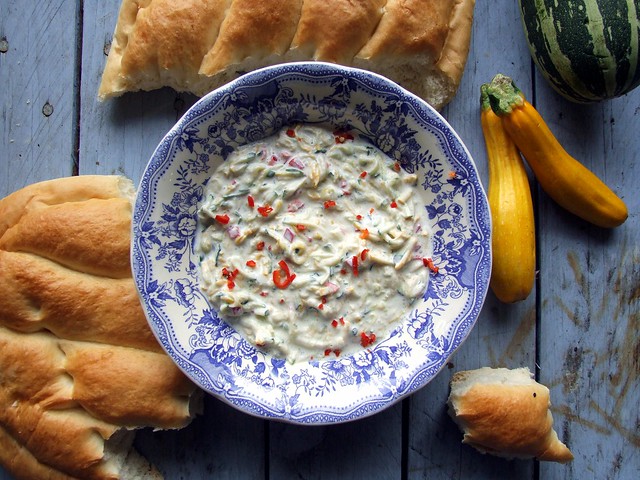
I can’t believe this tastes so good, because it has only a few ingredients: courgettes, chilli, yoghurt, salt and an optional squeeze of lemon. The key really is in the method. The courgettes must be salted and allowed to drain their liquid, otherwise you’ll have a soupy disaster on your hands. If you want to take this in a slightly different direction, with more of an Iranian bent, then a little chopped mint would be lovely.

Courgette Meze

Courgettes with Yoghurt and Chilli

(serves 4 with other dishes)

450g courgettes, young if possible (different colours make it look extra pretty)
1-2 red chillies, seeded and finely sliced or chopped
Enough natural Greek style yoghurt to combine (about 5 tablespoons or so)
Salt
Squeeze of lemon (optional)
Bread, to serve

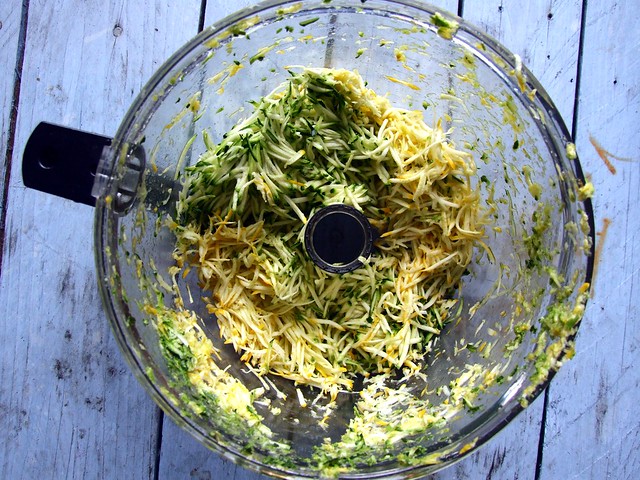
Grate the courgettes (most easily done in a food processor with grating attachment). Put them in a colander then sprinkle with about a level teaspoon of good salt and toss well. Set over a bowl or the sink for about half an hour, to drain their liquid.

Put the yoghurt in a bowl and beat it a bit with a fork until smooth. Put the courgettes in a separate bowl and add the chilli then gradually add some yoghurt until it’s all nicely bound together. Taste for seasoning, it will probably be salty enough. Add the lemon if you like. Scoff with bread and kebabs.

18th Century Indian Sandwich Recipe

It’s hard to resist making a recipe that looks really weird on paper. This is from ‘The Road to Vindaloo, Curry Cooks and Curry Books‘ by David Burnett and Helen Saberi, which is a charming little book crammed with recipes collected from various sources, spanning several centuries. There are two sandwich recipes in it, both equally as baffling. I hope you will understand that I simply had to know what the combination of hard-boiled egg yolk, butter, curry powder, anchovy and tarragon vinegar tasted like as a sandwich spread.

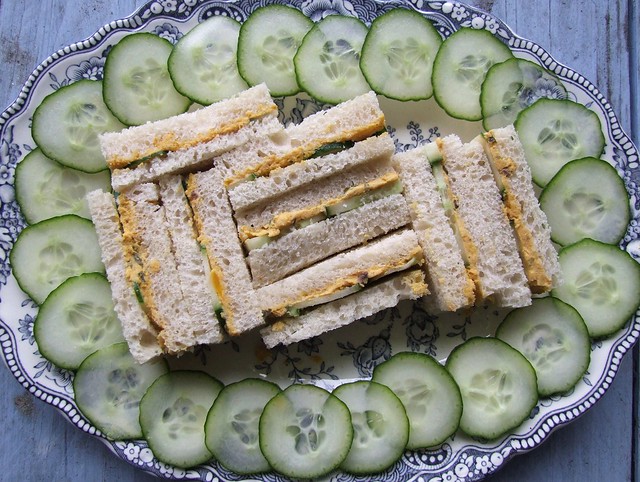
I can see what they were trying to do here, which was make something with a hella shitload of umami. It is definitely not lacking in that respect. I’d even go so far as to say that it was rather nice, once I got over the whole bright orange mush thing. I was going to bust out that almost-cliché about not being able to taste the anchovies and them just being a seasoning but to be honest they’re fairly obvious. The egg and curry powder works as you’d expect and so does the tarragon; just think of fennel seeds in a curry and you’ll get the idea. The cucumber slices are my addition; the crisp freshness is very welcome. I also decided to cut them into dainty fingers due to the erm, intensity of the paste.

I want you to make these sandwiches, and it annoys me that you probably won’t. No-one has the cahoonas to make a sandwich spread like this any more. It deserves to be served.

Curry Sandwiches Recipe

(by someone called Theodore Francis Garrett (from The Road to Vindaloo, by David Burnett and Helen Saberi, Prospect Books, 2008)

3 hard boiled eggs
1 oz butter, plus extra for spreading if desired
1 teaspoon curry powder
Anchovy (no quantity specified so I used 2 fillets)
Tarragon vinegar (again no quantity specified so use those buds)
Salt to taste
White bread, thinly sliced
Cucumber slices (my addition)

In a pestle and mortar, mush up the egg yolks only with the butter, curry powder, anchovy and salt if desired. Gradually work in a little tarragon vinegar. Butter some bread (I think this was perhaps overkill considering the butter in the paste but knock yourself out) and spread this delightful concoction over it. Layer with cucumber slices. Sandwich with the other slice of bread, remove the crusts, cut into fingers and serve.

Turkish Style Liver and Onions

This is a nifty wee dish to bash out on the BBQ. What? No it’s not raining, you’re imagining things. Okay it is, but this is Britain; stick a brolly over it. The flavours here aren’t for the faint-hearted anyway; there’s liver, which some people are against, and a large amount of onions. Oh and an extremely spicy dressing. I have warned you about the last bit.

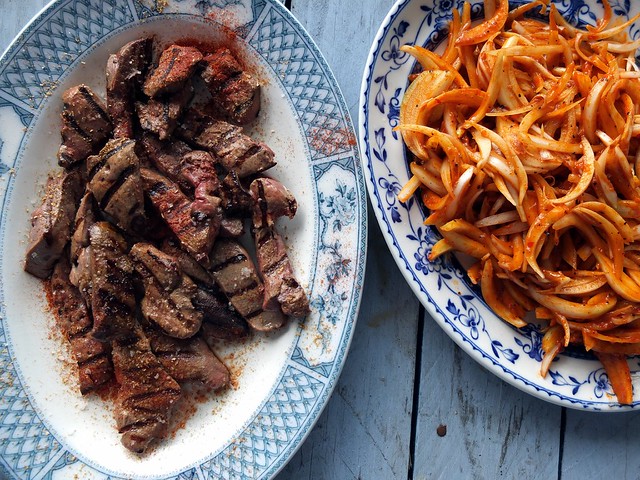
In case you hadn’t noticed, I recently went to Istanbul. The Turkish absolutely love their liver, and I’ve been hankering after some of those deftly cooked cubes, hot off the grill, charred without and softly offaly within. This is similar to many preparations we ate in that glorious city and it’s very easy to make as the liver is grilled simply and the spices dusted on afterwards. The onions are dressed in fierce Turkish chilli paste and pomegranate molasses, the latter giving a sort of curious perfumed back note against the fire of the biber. Addictive stuff.

Liver and Onions, Turkish Style

For the onions

2 onions, cut into half moons
2 tablespoons Turkish chilli paste
2 tablespoons pomegranate molasses
1 tablespoon black urfa Turkish chilli flakes
2 teaspoons hot chilli flakes
1 tablespoon lemon juice

Soak your onions in iced water for 30 minutes. Mix together the dressing ingredients. Dry the onions on kitchen paper and mix with the dressing. Leave for 1 hour before serving. They’re even better the next day.

For the liver

Lamb’s liver (this works with any amount as you’re just dusting it with spices)
Oil
Ground chilli
Ground coriander
Flaky salt

Give the liver a rub with a little oil and whack it on a BBQ for a couple of minutes each side, or until charred on the outside and still a little pink within. Once cooked, transfer to a warm plate and dust lightly with ground coriander, chilli and plenty of flaky salt. Serve immediately with the onions.

Turkish Lamb Meatballs with Rhubarb

Istanbul spans two continents, separated by the blustery Bosphorus. I’m sure you knew that already. Apparently tourists are often reluctant to cross over from the European to the Asian side, which is weird, because you can do it on a boat and boat rides are fun. Also, why on earth would you miss an opportunity to travel between continents in the space of half an hour-ish? I think I possibly liked the Asian side more than the European, actually. Or maybe I liked them the same. Or perhaps I liked the European more. Argh! It’s such an exciting city.

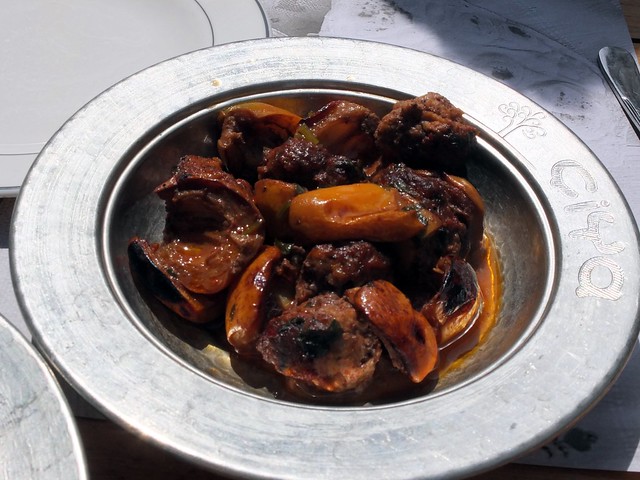
Anyway, this recipe was inspired by a restaurant on the Asian side called Çiya which, like Çukur Meyhane, had a few dishes on the menu that jumped out at me as being things I absolutely had to eat. There are three branches of Çiya, and to quote Rebecca Seal who kindly gave me lots of excellent recommendations, ‘you want the one that does more than just kebabs’. We sat outside, blinking in the high, bright sunshine on a wobbly table set on a steep cobbled street. Service is rapid and brusque; before we knew it silver dishes clattered onto the table. The mezze appears to be self-served from a buffet inside the restaurant, which I didn’t realise until we’d eaten our main courses. No booze either but it was worth the visit for this dish alone – rich, sweet meatballs, cooked with soft, gently acidic plums.

Ciya Meatballs with Plums

Original dish with plums at Çiya, Istanbul

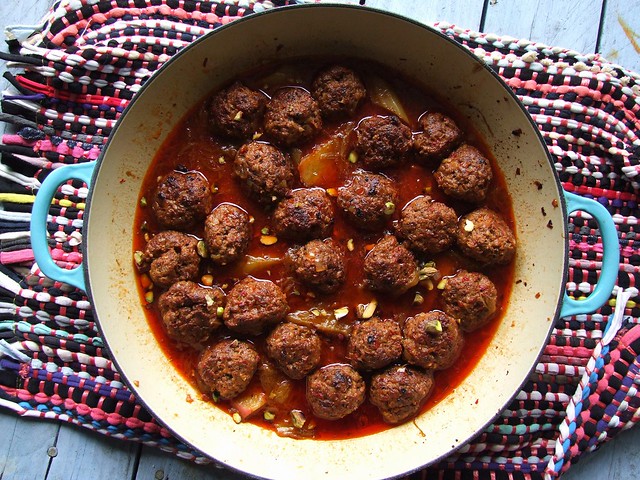
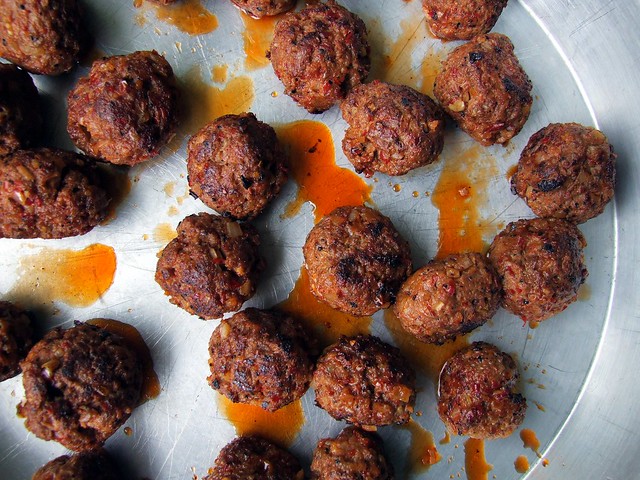
I wanted to re-create the dish and rhubarb seemed like an interesting seasonal variation. The meatballs are rich with Turkish chilli paste, which turns the oil bright amber as they cook, and those Urfa Turkish chilli flakes are so small and dark they look like slate chippings. The sauce is heady, sweet and sour with pomegranate molasses and of course, the rhubarb.

Turkish Lamb Meatballs with Rhubarb

Meatballs

This was perfect served with saffron rice and a dollop of yoghurt. The only thing missing was the sun (pissing rain outside, naturally) and the opportunity to amble over to the bar opposite for a cheeky raki and a tooth-achingly sweet noodle dish with cheese in the middle.

Turkish Lamb Meatballs with Rhubarb

(makes approx 25 meatballs)

500g minced lamb
1 smallish onion, very finely chopped
2 cloves garlic, crushed
Generous tablespoon Turkish pepper paste (biber salcasi)
1 tablespoon Urfa chilli
1/2 teaspoon cinnamon
1 slice bread soaked with water until completely wet, then excess water squeezed out

For the sauce

2 sticks rhubarb (approx 350g), cut into evenly sized chunks
1 tablespoon pomegranate molasses
2 cardamom pods, crushed lightly
Generous splash white wine (in the past I’ve used water, stock and once even ginger kombucha – don’t laugh)
1 tablespoon caster sugar

1/2 teaspoon ground ginger

Greek yoghurt, to serve

Make the meatballs by combining the lamb mince, onion, garlic, Turkish pepper paste, Urfa chilli, cinnamon, bread and some salt in a bowl. Mix really well using your hands, then shape into 25 balls. Heat a large frying pan (you won’t need oil as the lamb is fatty). Fry the balls in batches, about 5 or 6 at a time, until browned, then set aside.

De-glaze the pan with a good glug of the wine. Add the rhubarb, cardamom pods (crush them a bit), pomegranate molasses, sugar, ginger and some salt. Add a generous splash of water, bring to a simmer, put the lid on and cook for 8 minutes or until the rhubarb is completely soft. Return the meatballs to the pan and cook for a further 8-10 minutes with the lid on. Serve with bread or rice and yoghurt.

Istanbul Cat

Istanbul cat picture…seems to have become standard practice

Why are seasonal sandwiches so rubbish? Last year, on a whim, I did a mad dash around Holborn collecting all the Christmas sandwiches from the major high street chains for a seasonal sandwich show down and it was just so depressing, I didn’t bother to repeat the experience this year. It got me thinking though, what exactly is it that’s so bad about most of them?

The main problem is the fact that they are generally stuffed with as many different elements of the Christmas dinner as possible. Why? The overall effect is a sandwich with a horrible generic taste that is unique to the time of year but not very pleasant. This is a sharp contrast to the sandwich made from your ACTUAL leftover Christmas dinner which is always truly bloody lovely, the reason being that it is made from nice ingredients that have been recently and properly cooked, which brings me nicely to my next point…

The ingredients in pre-prepped Christmas sandwiches are generally a bit gross. Who really eats turkey that often? More to the point though, who eats cheaply produced turkey that smells like farts and squeaks against your teeth? Who eats bacon that has been infused with a fake smoke flavour instead of actually smoked? Who eats sickly lurid red cranberry sauce that looks like it should be used to get really ingrained dirt off builders’ hands? PEOPLE WHO EAT CHRISTMAS SANDWICHES.

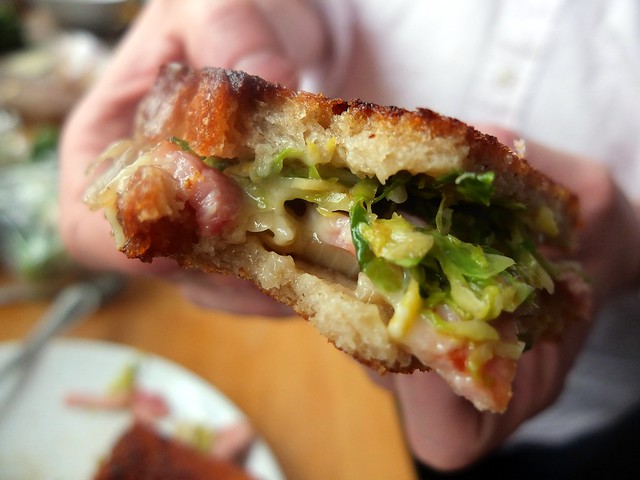
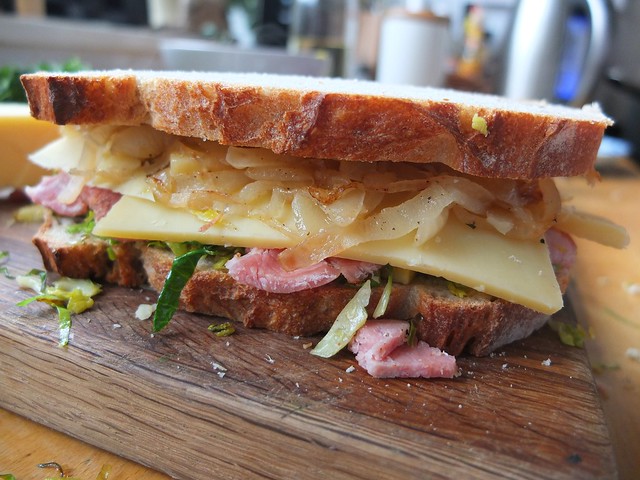
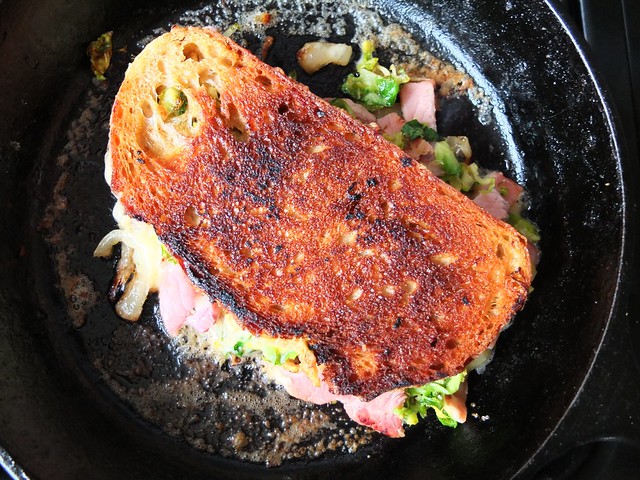
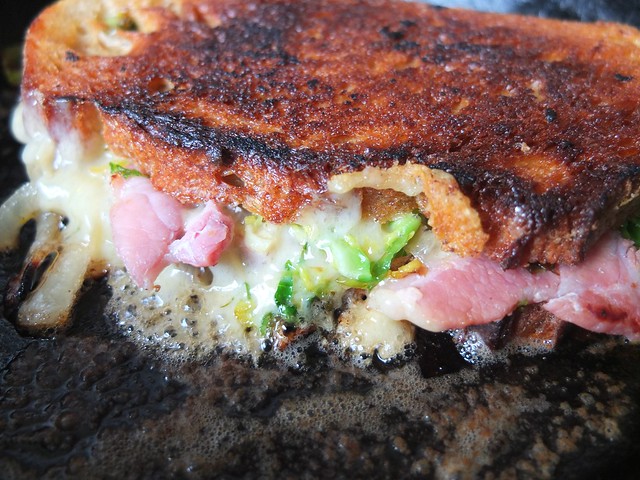
So anyway I thought I should have a bash at making a seasonal sandwich that actually tastes nice. It’s on sour dough, because there’s a lot of filling, and it needs to have some good sturdy scaffolding around the outside. Next, a layer of shredded sprouts, which I fried a little to get some colour on them, followed by a layer of proper, treacle cured, smoked bacon. I would have preferred streaky but smoked back I had so smoked back I used. The bacon is chopped before going into the sandwich, so it doesn’t come out in one long annoying strip when you try to eat it. Some good sharp cheddar next (I used Keen’s) followed by a layer of caramelised onions, which, despite being a bit 2001, bring much needed sweetness to the sandwich. A slick of wholegrain mustard and then, on the side, a pot of gravy (more of a stock really), made with partridge carcasses.

So it’s essentially a sort of festive toasted cheese sandwich French dip. Further proof that the toasted cheese is a sandwich which fits seamlessly into pretty much any situation.

Christmas Toasted Cheese Sandwich with Partridge Gravy

(this served 2. I know, I’ve changed)

2 slices sourdough bread
Several thick slices good quality cheddar cheese
1 onion, cut in half and sliced
A handful sprouts, finely sliced
3 slices back or 4 slices streaky smoked bacon (again, good quality)
Wholegrain mustard
Butter, for frying

For the gravy (you could of course use other bones or stock)

4 partridge carcasses
1 onion, halved
1 large carrot, roughly chopped
2 sticks celery, roughly chopped
A handful parsley stalks
A few peppercorns
Salt

To make the gravy, roast the carcasses and vegetables in a hot oven for about 30 minutes. Add to a stock pot with the other ingredients and cover with water. Simmer for a couple of hours. Skim off any scum from the surface. Strain and reduce a little further if desired.

For the sandwich, first caramelise in the onions very slowly, in butter. Stir them often but keep on the lowest heat. They will take about an hour. A splash of booze wouldn’t go amiss here come to think of it. Don’t forget to season them. In a frying pan, fry the sliced sprouts in a little oil over a fairly high heat, stirring all the time, until beginning to colour. When ready to assemble the sandwich, grill the bacon until the fat is crisp. On one piece of bread, add a layer of onions. Roughy chop the bacon and add it on top. Follow with a layer of the cheese, and then the sprouts. Cover the other piece of bread with mustard and put it on top.

In a heavy based frying pan or skillet, melt a generous amount of butter and add the sandwich. You don’t want the heat too high or it will burn but it should be sizzling. Take a heavy object (I used a Le Creuset pan and plonk it on top to weigh it down). After a couple of minutes (keep an eye on it), flip it over to toast the other side.

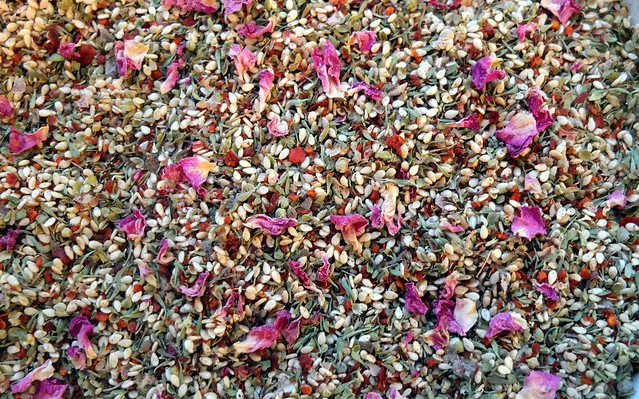
The word za’atar means ‘thyme’ in Arabic, and I generally find that shop-bought blends are way too heavy on the herb for my taste; too many dusty green flecks, mixed with some sesame seeds and not enough sumac. This recipe contains poky Turkish chilli, and rose petals, which apart from adding a bit of Turkish delight fancy, also look the bomb. Salt is important too; proper, pyramid-crystallised sea salt and plenty of it.

Za’atar Recipe

150g toasted sesame seeds
20g sea salt
30g sumac
30g red chilli flakes
30g dried thyme
15g dried oregano
1 tsp ras el hanout
1/2 teaspoon rose petals

Toast the sesame seeds either spread out on a baking tray in a low oven or in a dry pan. They will darken slightly in colour and smell all, well, toasted. Keep an eye on them. Allow them to cool and then mix with all the other ingredients.