Fried Chicken

Fried chicken has to be one of the all time best comfort foods, right? I mean good fried chicken of course, not the stuff that teenagers pick at on street corners and then so thoughtfully leave the remains of on the floor of the bus. That stuff is clearly the beginning of the end for modern society, ruining appetites at dinner time, increasing obesity, destroying relationships, contributing to climate change and upping the chances of an imminent zombie apocalypse.

I think I came across the idea of brining chicken in iced tea in Bon Appetit, and a little light Googling revealed that it is most definitely ‘a thing’. I’ve come around to the idea of brining chicken since I wrote a (buttermilk brined) fried chicken recipe for my book 101 Sandwiches; it really does increase the juiciness of the meat and of course is another opportunity to introduce flavours. The thing to watch out for is over-brining, because that makes the meat obviously watery and frankly, just a bit weird. Get it right, and it’s fabulous.

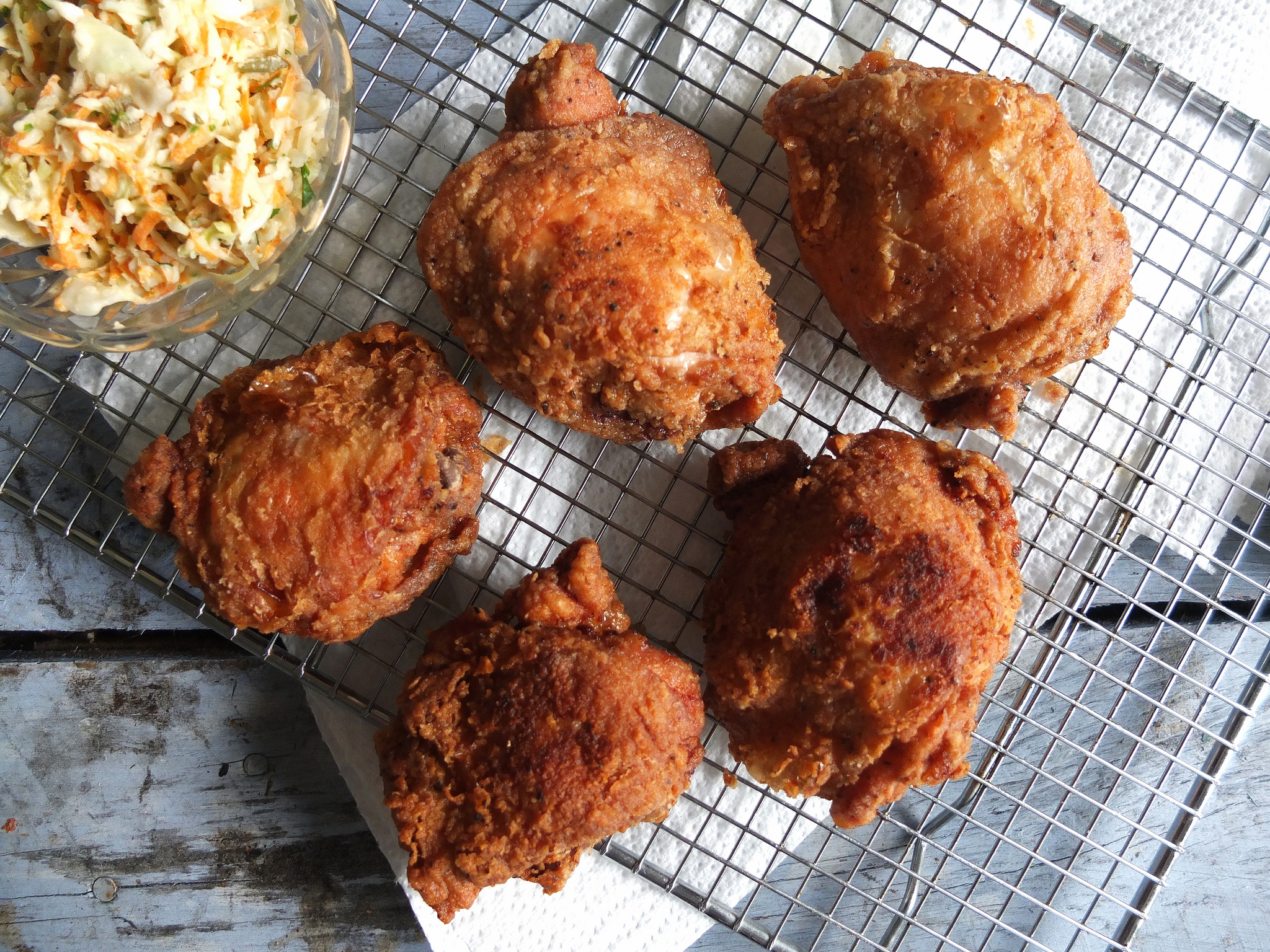
Using iced tea just seems so brilliantly Deep South. It gave the meat a sweetness and flavour that was surprisingly complex. I modified my original coating recipe slightly and it all worked out very well indeed. The buttermilk jalapeño slaw is a must alongside as the acidity and bite of the jalapeños does great things in your mouth with the full-on fried chicken.
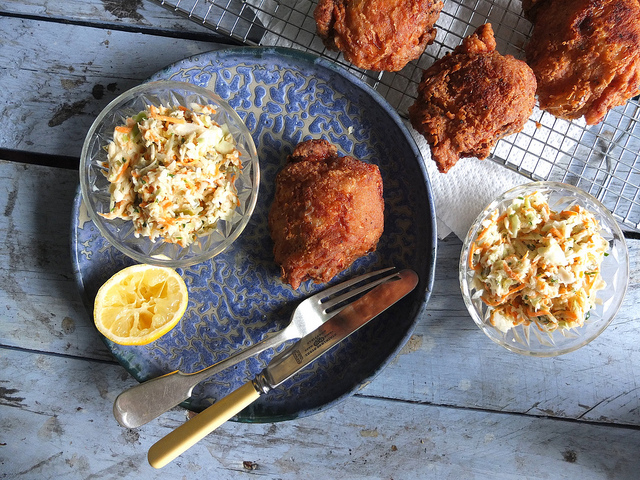
Fried Chicken

Iced Tea-Brined Fried Chicken

6 bone-in, skin-on chicken thighs (good quality, free-range)
1.5 bottles Lipton Iced Tea, original flavour (enough to just cover the chicken, approx 750ml)
1 level teaspoon sea salt

For the coating:

150g plain flour
1.5 teaspoons black pepper
1 teaspoon smoked paprika
1/2 teaspoon cayenne
1 teaspoon garlic powder
2 teaspoons Old Bay seasoning
1 teaspoon sugar
2 teaspoons salt

Oil, such as groundnut, for frying

Dissolve the salt in the iced tea and submerge the chicken in it. Cover and refrigerate for 8 hours. Drain.

Make the seasoned flour by combining all the ingredients in a bowl. Heat some oil for deep frying to a temperature of 160C. Pat the chicken with kitchen paper, then dip it into the seasoned flour, coating well all over. Cook the chicken 2 pieces at a time in the hot oil for about 5-6 minutes each side, until the internal temperature reaches 75C. Drain on kitchen paper.

Buttermilk Jalapeno Slaw

1/2 white cabbage
1 large carrot
1 small red or white onion
2 tablespoons jalapenos, chopped (I used the ones that come sliced in a jar)
4 tablespoons buttermilk
2 tablespoons mayonnaise
1 teaspoon Dijon mustard
1 teaspoon sugar
Juice 1/2 small lemon
Salt

Use a grating attachment for a food processor to chop/shred the cabbage, carrot and onion finely. You can of course do this by hand too. Mix in the other ingredients, season with salt and serve with the fried chicken.

19538616880_b2dff68b5a_k

I’ve never really been a soup person. I think this stems back to living in shared houses when someone would always make a vegetable soup with all the leftover rubbery carrots and cabbage cores that had been quietly seeing out their final weeks in the salad drawer. This ‘soup’ would always end up too thick – a vegetable sludge – which is down to the fact that everyone, when they first make a soup, thinks that it’s just about sticking everything in a pot and then blending it up. The novice soup maker has no care for the balance of flavours in the soup, nor the consistency of it. We’ve all made that vat of murky brown/green paste and been stuck with it for a week. If you’re a student then it’s preferable to leave it in the fridge for months until the smell is reminiscent of The Bog of Eternal Stench. Finally, someone else throws it away. That involves a combination of forcing down the sink (it’s too solid) and dribbling into the bin (it’s too liquid). I am scarred.

Only certain hot soups are acceptable to me now (tomato, French onion, bisque) but I am very much into most of the cold ones (gazpacho, ajo blanco and all those that fall into the yoghurt category).

This soup uses courgettes, as you’ve probably gathered. It’s light, summery, fresh and cooling. You can warm it gently though if you prefer, particularly since the weather is so unpredictable. A few edible flowers (chives, pansies) on top would look very pretty as a garnish if you have them.

Chilled Courgette and Yoghurt Soup

(serves 4-6)

Approx. 1kg courgettes halved, seeds removed and diced
3 shallots, diced
3 cloves garlic, crushed
1 teaspoon chilli flakes
1/2 teaspoon cumin seeds
300ml good chicken stock
3-4 tablespoons whole fat natural yoghurt
Olive oil and chives, to garnish

Sweat the shallots in a little oil until translucent, then add crushed garlic and spices. Cook for a few mins, stirring. Add the courgettes, then cook on a medium heat until softened. Add the stock and cook briefly until it smells awesome. Season with salt and pepper.

Blitz in a food processor (you know the rules here, right? Don’t put too much in at once). Allow to cool, then add the yoghurt. Blitz again, then pass through a sieve. When fully chilled, check the seasoning again, ladle into bowls, garnish with a dribble of olive oil and the chives, snipped. Serve.

19147462602_4f4aadcae2_k

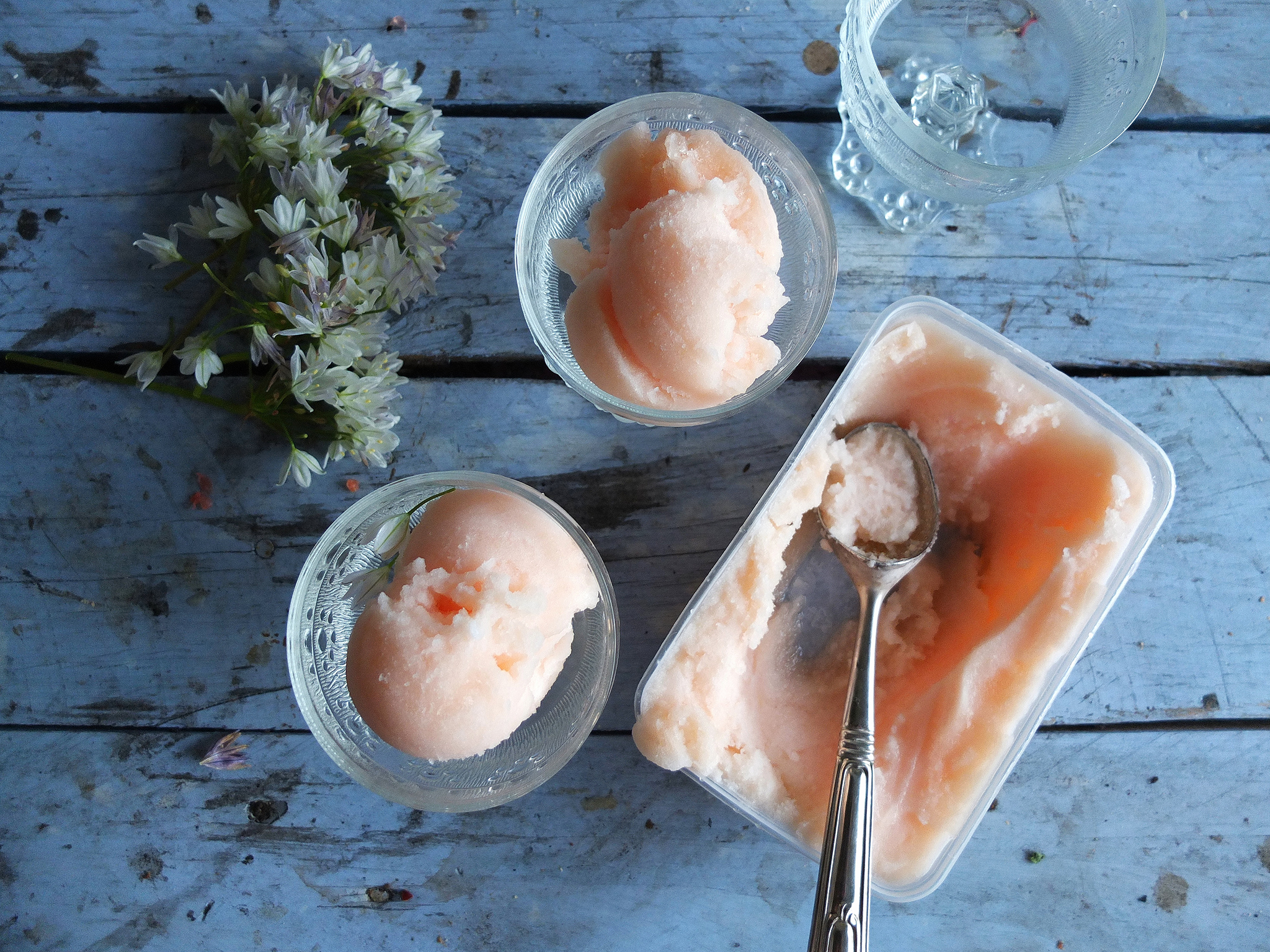
Hot, isn’t it? Yes yes. Very hot. At times like these, a sorbet in the house is a life-saver. I’ve been standing in front of the freezer door, the chilly mist spreading over my face, eating this straight from the tub. It’s wonderful.

I am often of the opinion that recipes can be improved, flavour-wise, with a touch of alcohol. In the case of sorbet though, it has the added benefit of smoothing the texture, as it lowers the freezing point making the sorbet easier to scoop. How many times have you made a sorbet, frozen it a while, then removed the tub to find a rock hard block of ice? Yeah. The egg whites make things lighter and the filtered water is as pure as you like. Churn on!

Gin and Pink Grapefruit Sorbet Recipe

Juice of 3 grapefruits
Juice of 1 orange
225g caster sugar
2 egg whites (or just one if your eggs are large, mine were very small)
100ml gin

Put the sugar in a saucepan with 450ml BRITA filtered water. Bring to the boil, cook for 5 minutes, then allow to cool completely.

Juice the grapefruits and orange, then strain through a sieve into the cooled syrup. Stir in the gin. Whip the egg white to stiff peaks in a clean, dry bowl, then mix into the liquid using a metal spoon. Transfer to an ice cream maker and churn. Freeze for a few hours before serving.

I created this recipe for the Better with BRITA campaign. 

18964883718_aed2bc2936_k

I, like you, have spent many years attempting to perfect the steak sandwich. At first I made all the silly mistakes because I didn’t know how to cook a perfect steak, or I was using the wrong bread, or the wrong condiments. Then came the phase of adding too many bits and pieces, like tomatoes (watery and too far into BLT territory) or worse, peppers (bit TGI Friday’s). Then there’s the caramelised onion phase, which is just Ready Steady Cook circa ’93. They’re just horribly jammy. I mean you may as well just go ahead and put some goats’ cheese and thyme in there while you’re at it. You what? Oh you didn’t. Come on now.

The mustard phase follows next, which is fine and dandy because it does, in fairness, taste great. Sometimes I even whack a couple of different types in there – English for heat, wholegrain for tang. There’s horseradish, of course, but it does take things somewhat in the direction of Sunday lunch in a sandwich, and that never really feels right unless it’s actually your Sunday lunch in a sandwich, in which case, rock on.

So anyway in the end I worked it out, and so, by the way, did the steak restaurant Hawksmoor, who now use cream cheese in their ‘7 year steak sandwich’, so called because it took them seven years to get it exactly right. Sound familiar? Uh huh. Well anyway now I’ve nailed it and I’ve nailed it because of the existence of flavoured cream cheese.

I’m not going to wang on about the combination of hot steak and cream cheese because I’m sure your beautiful little brains can conjure that mental imagery without much prompting.  It just falls to me then, to stress that for this you must be generous with the Boursin. You need a whole pack for this baguette. No skimping now. Here’s what you do.

Steak

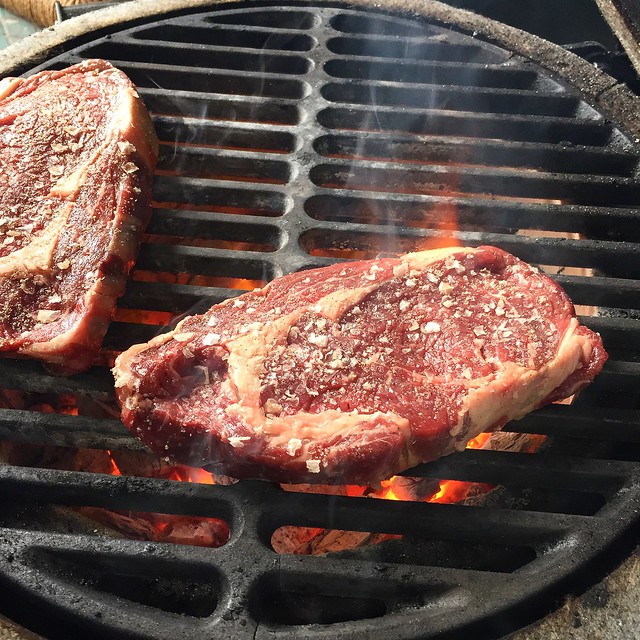
Take two very good 225g rib -eye steaks, season highly and cook on a BBQ for about 2.5 mins each side, flipping every 30 seconds (or cook to your liking).

Steak and Boursin Sandwich
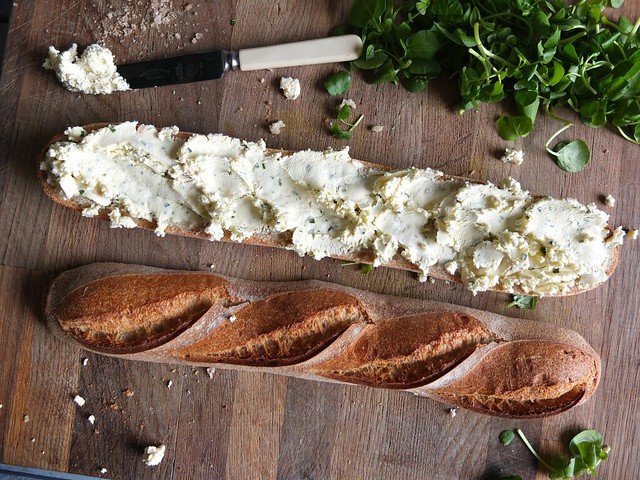
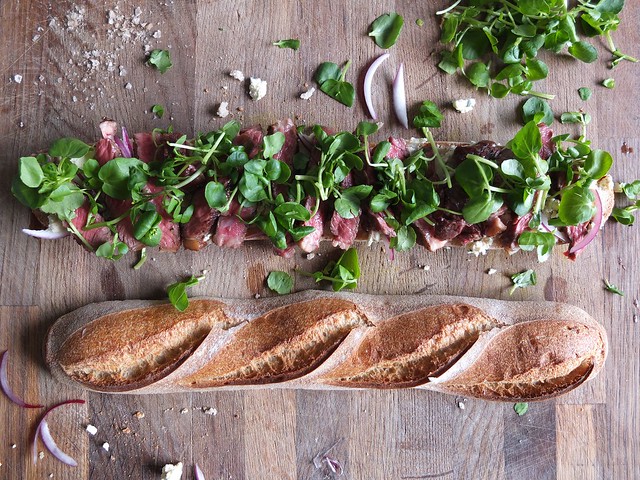
Get yourself a baguette of exceptional quality. Split it, and spread one half with shallot and chive Boursin (or garlic and herbs), and I mean GENEROUSLY. Don’t mess about. Use the whole packet.
Steak and Boursin Sandwich

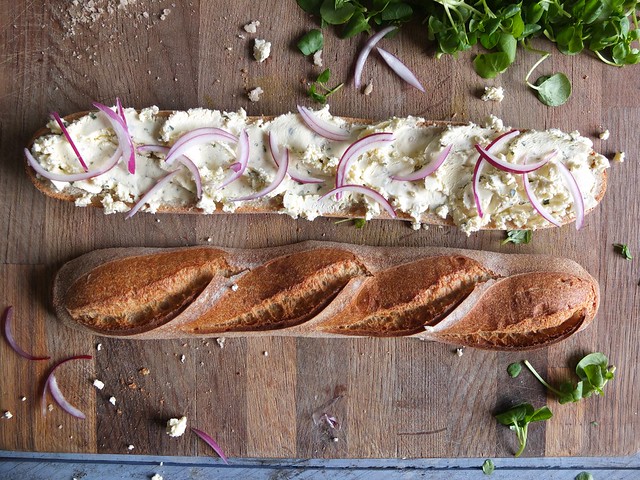
Thinly slice half a red onion and sprinkle it artfully on top.
Steak and Boursin Sandwich

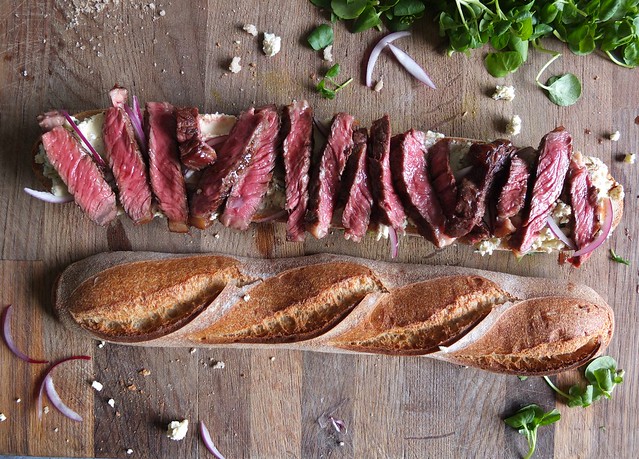
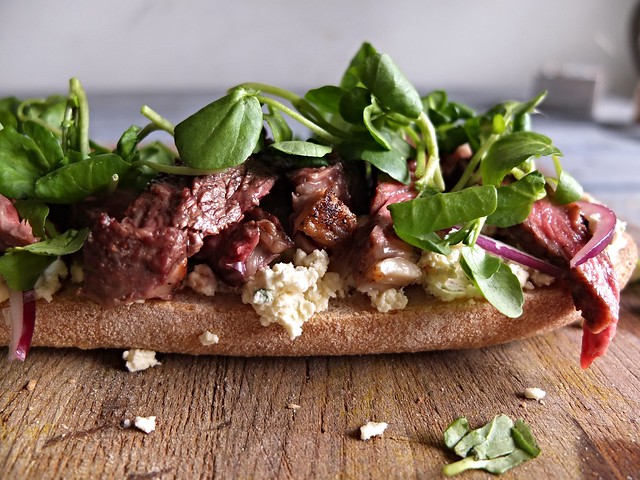
After your steak is cooked and rested, slice it and arrange on top of the Boursin. Pour over the juices that have accumulated on the resting plate.

Steak and Boursin Sandwich
Top with watercress.

Steak and Boursin Sandwich

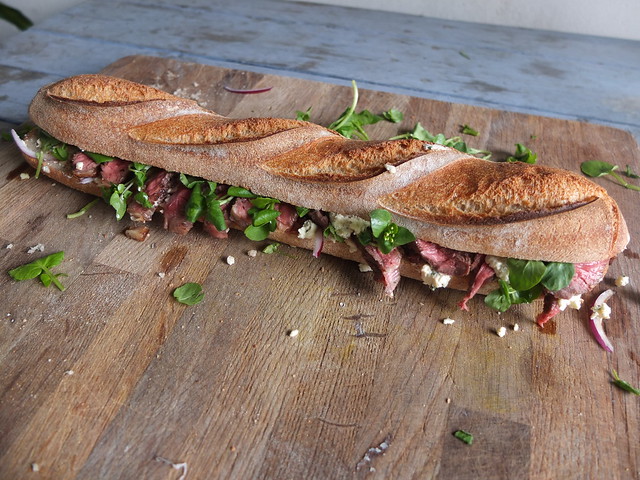
Now you have the best steak sandwich ever, and it is massive. Slice and serve.

16333388409_514dc65621_k

When I was in San Diego recently, I had an impromptu mole making lesson with a Mexican friend of a friend. We’re not talking about subterranean dwelling creatures here, we’re talking about mole-AY, which is basically a Mexican sauce. In Mexico, apparently, the term mole can mean any number of sauces but generally, and certainly outside of Mexico, it mostly refers to mole poblano, a dark reddish-brown sauce which is served with meat. The ingredients typically include chillies, chocolate (just a little bit, this isn’t a chocolate sauce as is often assumed), and…well after that people start to argue.

The making of mole is typically quite a long and complex process, and I’ve read lots of stories about the roasting of chillies, which are ground laboriously by hand as part of a preparation process that takes days. From what I can tell that’s fairly standard, but only for special occasions such as weddings, or festivals, when it is often served with turkey. There’s a lovely little anecdote in Diana Kennedy’s ‘The Essential Cuisines of Mexico’ where she says:

I can remember that just before Christmas, during my first years in Mexico, the traffic would be held up on the Paseo de Reforma while flocks of turkeys were being coaxed along by their owners. One by one they would be bought and for the rest of the week a constant gobbling was heard on the azoteas, flat roofs, of the apartment blocks and houses around us.

She also explains how, for celebrations like this, everyone in the area would be assigned a different task, one to toast the chillies, another to grind them, and so on.

Non-celebratory moles, however, are typically made with bought-in pastes, which people use as a base, then build on until they have something they feel fits the current purpose. Something else I have learned, is that there are countless variations on mole, which vary by region but mostly by household, as Enrique Olvera, chef at Pujol in Mexico City, points out in this piece for Lucky Peach.

The mole poblano I’m going to tell you about doesn’t fit with either the painstaking prep versions, or the ready-bought paste versions, but it is interesting. As a cook, there’s obviously nothing better than having someone teach you their version of a dish that is so famous, even if you do have a massive hangover and can barely stand up (that San Diego craft beer is dangerous).

So I thought you lot would be interested, because I was. It may not be the most ‘authentic’ or the best, or whatever, but it was very tasty, which is the most important thing. We couldn’t really communicate so well because I don’t really speak Spanish and like I said, I wasn’t on top form, but here are the interesting bits. It’s kinda like a quick n’ dirty mole, I have to say. You’ll see what I mean.

San Diego

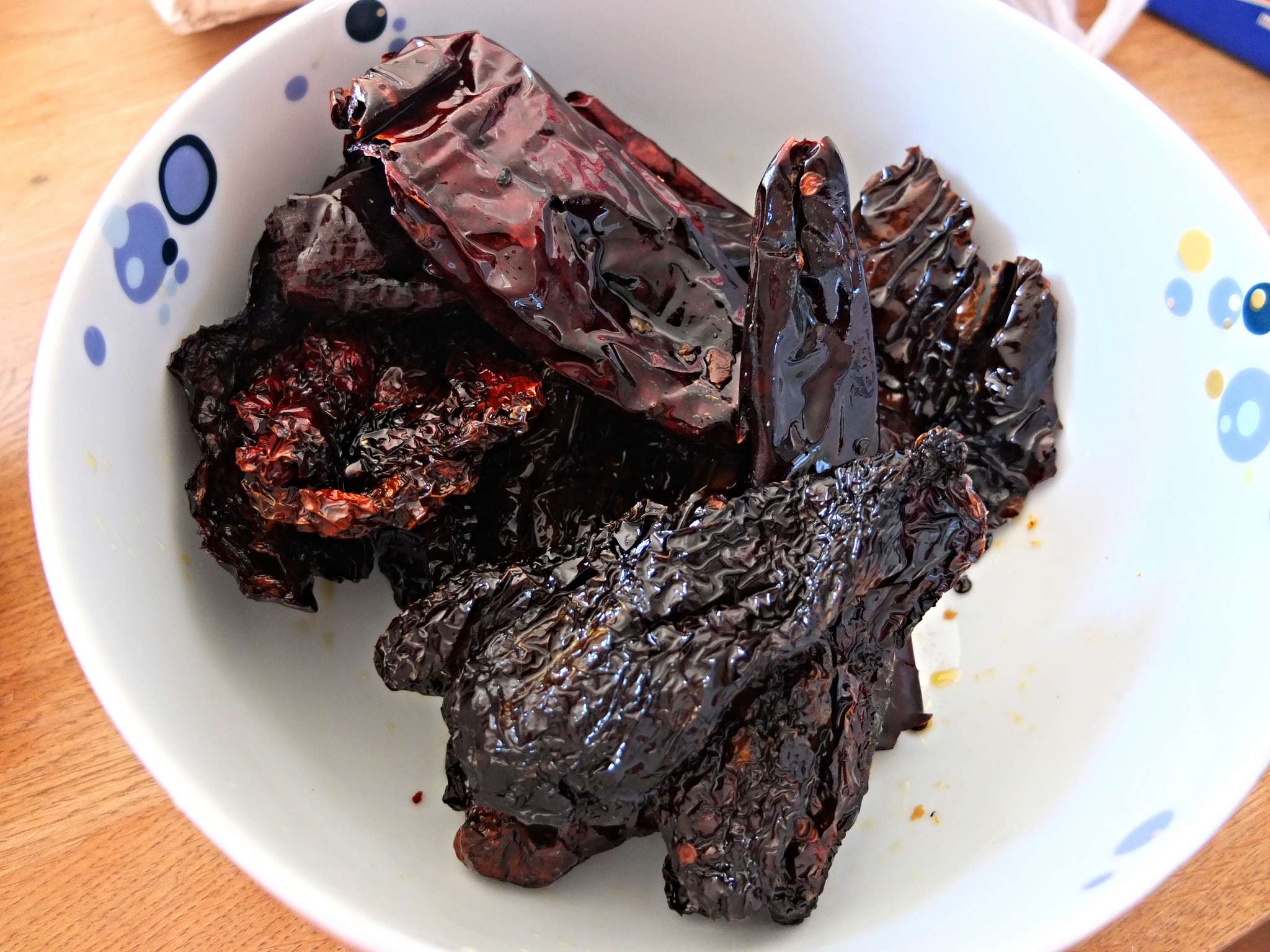
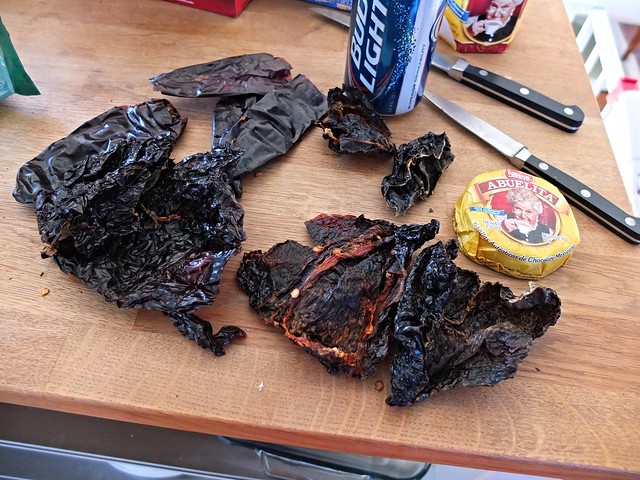
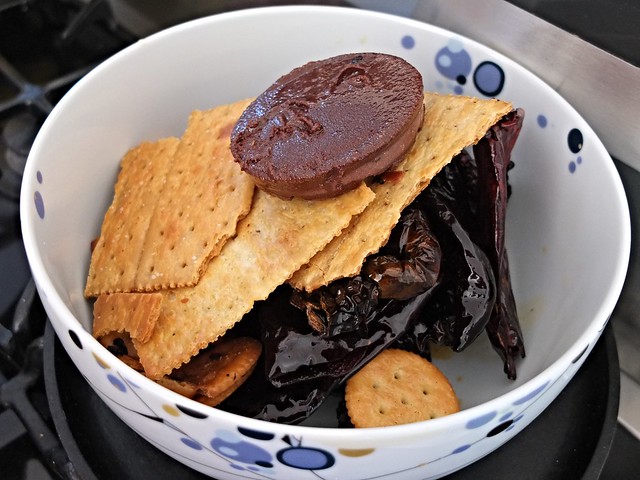
We removed the seeds from the dried chillies (pasillo-ancho and California chillies).

San Diego

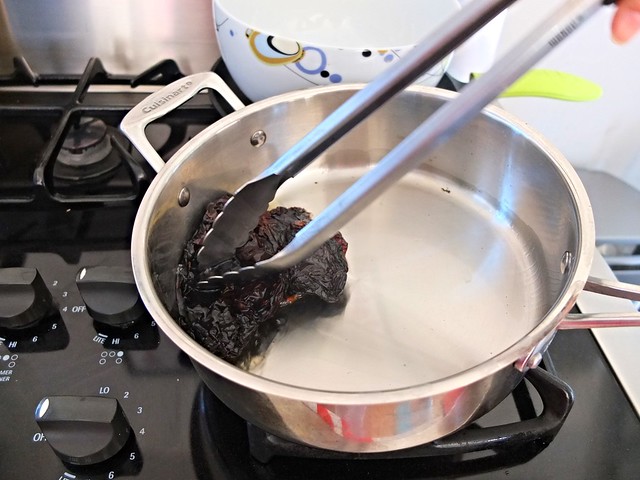
We fried the chillies in hot oil until they puffed up and blistered. This happened really quickly; I’d say it took around 30 seconds.

San Diego

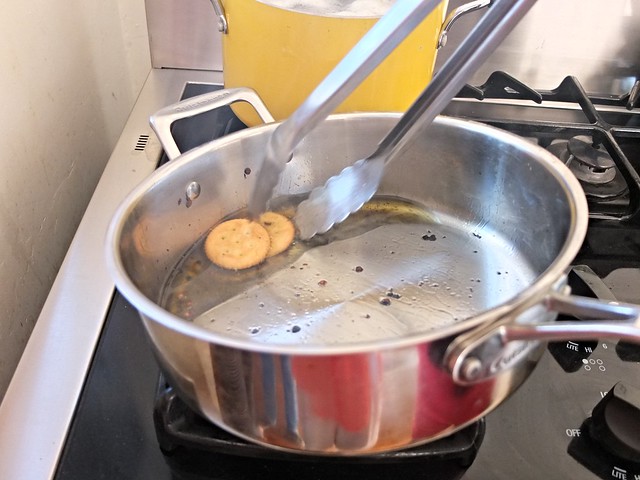
Then, unexpectedly, not one, but two types of Ritz style crackers were produced. It took us ages to work out what was happening here, but it emerged that basically, they’re used as a way of transferring the chilli-flavoured oil to the blender with the chillies (and eventually all the other ingredients). If the oil was just poured directly into the blender, then it wouldn’t emulsify with the other ingredients, it would just split out into its own separate layer. At least, we think this is what was happening. I am under the impression that some recipes might use a tortilla to do this.

San Diego

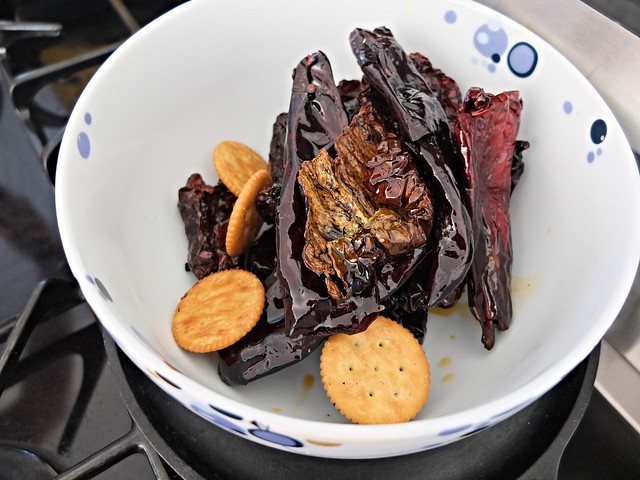
Fried chillies and crackers.

San Diego

Even the chocolate was given its own little shimmy in the oil. It was Nestle ‘Abulita’ which is a brand of drinking chocolate.

San Diego

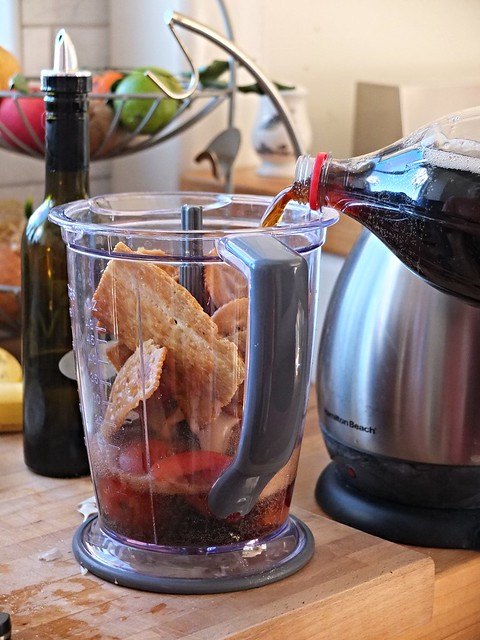
It all goes into a blender with tomatoes, garlic…etc and…Coca Cola. Yuh huh. I’m guessing this is replacing some of the raisins and spices that would usually be added separately. She also simmered chicken legs with garlic cloves and bouillon and used some of the liquid from that.

San Diego

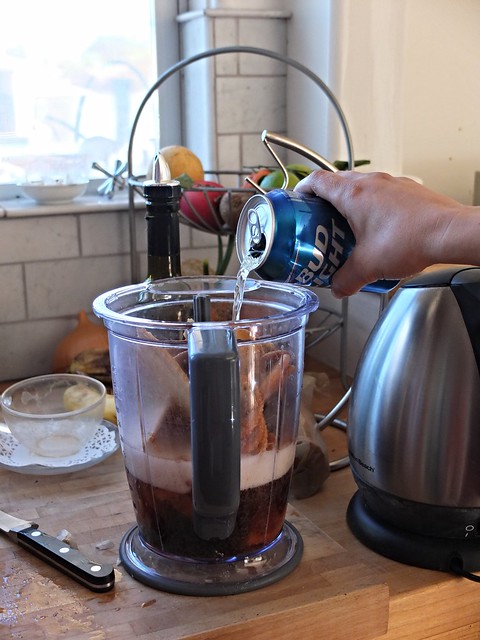
Not entirely sure how to account for the beer…but we like beer. Beer is good. After this was blended, there was a huge amount of sieving to get a smooth mixture.

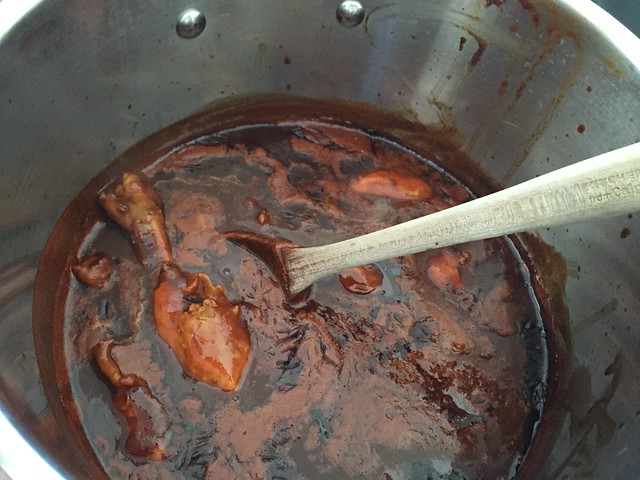
The lot is then added back to the pan with the chicken and served with Mexican rice – fry up uncooked rice in a decent amount of oil until it browns then add stock and sieved tomatoes and peas, carrots corn etc (from a tin or frozen).

Interesting, huh? I’m off now to make tomato soup with Lilt and Super Malt. Jokes!

With huge thanks to Angeles Magana for the lesson and recipe, and to Caroline for her help with remembering it. 
Mole

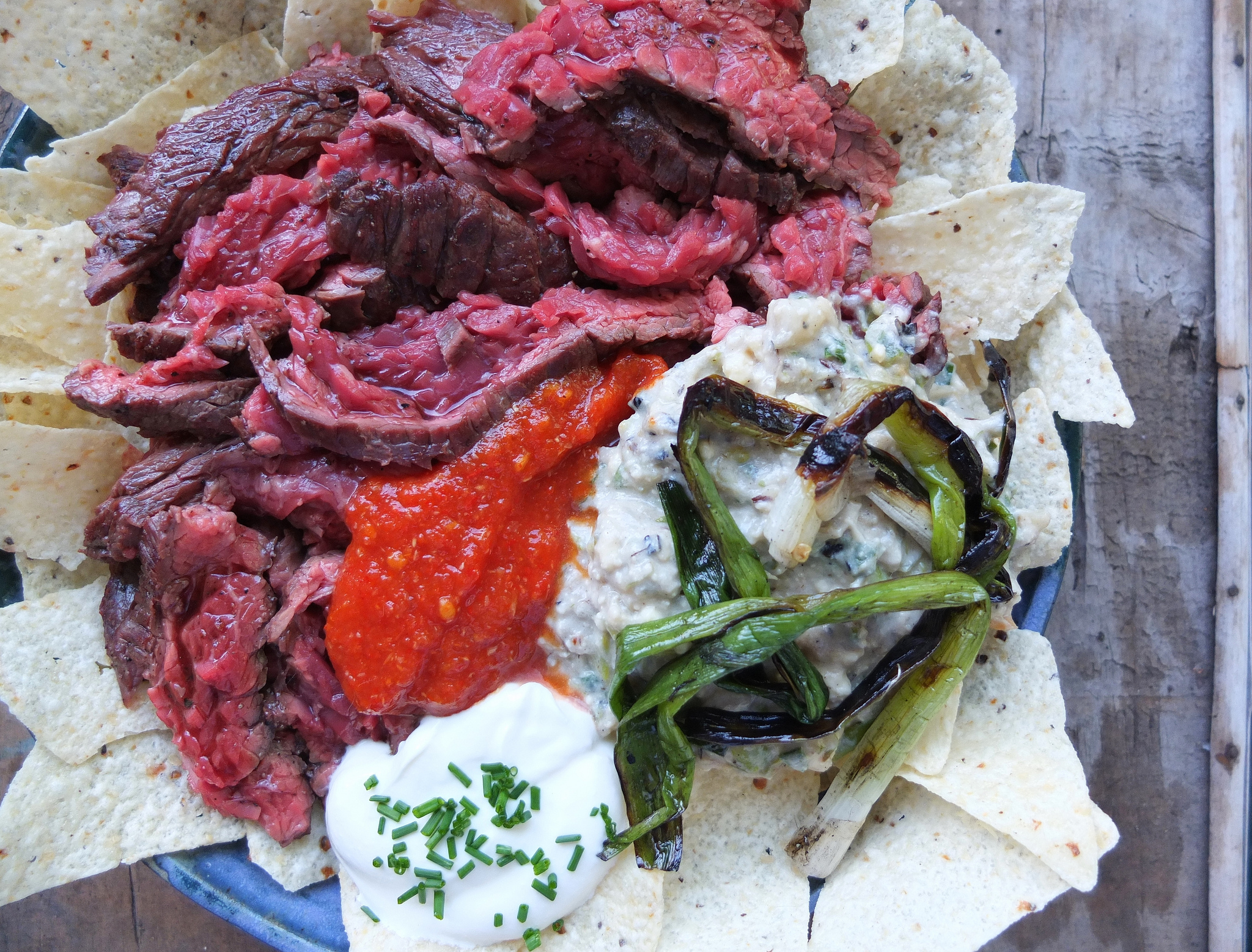
Steak Nachos

I could have titled this post, ‘how to begin using up 34 kg of spring onions’. Not 3.4, THIRTY FOUR. Don’t ask. Just don’t. Let’s just say there will be lots of spring onion recipes coming your way very shortly. If you don’t like spring onions, you’re a bit screwed really. You’re also a little bit weird because spring onions are fabulous.

THIRTY FOUR KILOGRAMS.

Anyway these nachos are great. I imagine you could go to the shops and buy some spring onions in order to make them. A distant memory for old muggins here. After you’ve done that, the first step is to get some decent tortilla chips in – no Doritos. Save those for your hangover or whatever late-night toasted cheese and crisp concoctions may surface from the depths of your sick, sick mind – just leave me out of it. Then you want to get a load of tomatoes, garlic, scotch bonnet chillies and peppers and put them in the BBQ for half an hour or so with the lid on, then blend them up. That’s your tomato sauce. Then the spring onions – char them on the BBQ, chop them, mix them with crème fraîche and cheese as per below to make an awesome dip. Save a few onions for garnish. The steak is a steak – sirloin, bavette, whatever you want – grill it to your liking. Rest, then slice and place on top of the tortilla chips, pour over the juices. Add sour cream. Point face-ward. These were so good I’m almost pleased I was forced to come up with the recipe.

***Spring onion usage: – 300g. Only 33.6 kg to go***

Smoky Steak and Spring Onion Nachos Recipe

Tortilla chips (good quality, plain)
Steak (sirloin, bavette, even fillet if you’re into that kind of thing. I wouldn’t use a heavyweight like rib eye for this though)
Sour cream
A few chives, snipped

For the tomato sauce

5 tomatoes
2 scotch bonnet chillies
2 red peppers
2 whole heads of garlic
Couple of sprigs of thyme
Juice 1 lemon

When your BBQ is up to temp and looking ready, whack everything in a tray except the lemon, with a splash of oil, some s and p and leave it in there for about 45 minutes. Allow to cool a little, then remove a bit of the pepper and tomato skin if you can, and also the seeds from the scotch bonnets. Squeeze the half the garlic cloves from their casings and blend it all up. Adjust the seasoning as necessary. You can keep this in the fridge – add a layer of oil on top to lengthen shelf life. I’ve frozen my leftovers.

For the spring onion dip/nacho sauce (whose sauce is it? Nacho sauce! Ha aha haha *eye twitch*)

20 spring onions
3 tablespoons crème fraîche
The remaining head of garlic from the tomato sauce
2 tablespoons Tulum cheese, or feta (crumbled), or other similar white cheese

Coat the spring onions with a little oil, then char the on the BBQ (this is very quick). Chop them up and mix with the other ingredients. Season.

To assemble the nachos

Arrange the chips in a suitable fashion on the plate. Grill the steak (that means get the grill very hot, then season the steak very highly with salt and pepper, then grill it, flipping it regularly to form a nice crust). Rest it, slice it. Put it on the chips. Pour over the juices. Add the other bits and bobs. You know what to do.

DSCF2770

This is the bit where I’m supposed to write about how home made taramasalata is so much better than the artificially coloured stuff you can buy in shops. It is of course, but you’ve heard it before, and anyway I love it so much I’ll eat any version – posh, cheap, white, pink, whatever.

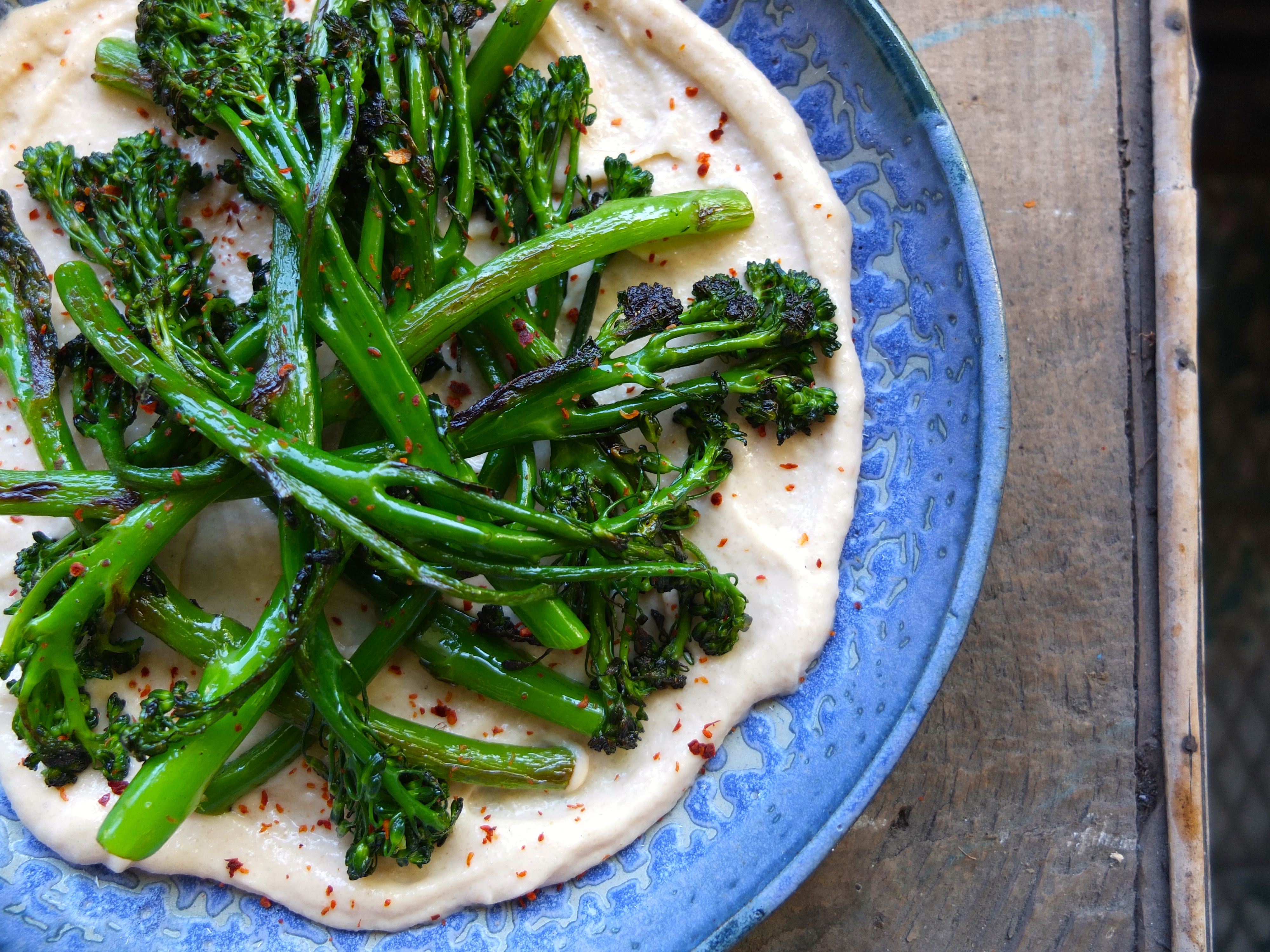
I will say however that there is a sort of ‘mayonnaise moment’ when making tarama for the first time, by which I mean that you will be shocked by how much oil goes into it. You’ll have to get over that because it tastes brilliant, just like its eggy friend mayo, and what are you going to do anyway, drink the stuff? That said, this version has a high amount of roe in proportion to oil, resulting in a rich tarama which is a perfect complement to the bright iron twang of the charred Tenderstem. Cook it on a BBQ for maximum smoky effect.

Charred Tenderstem with Taramasalata Recipe

250g smoked cod’s roe
50g stale white bread (weight without crusts)
100ml milk
125ml groundnut oil
75ml olive oil
Juice of 1/2 – 1 whole lemon
Pepper
Turkish or other chilli flakes to garnish

Tenderstem broccoli (allow as much per person as you like, 5 or 6 stems should do it)
A little oil, for frying

Cut the cod’s roe lobe in half and scoop out the roe with a spoon. Soak the bread in the milk for a few minutes, then add to the bowl of an electric mixer with the roe (you could also do this by hand if you have endless stamina and/or you don’t particularly like yourself). Mix the two oils together. Turn the whisk on high, then add the oils as you would if making mayonnaise, i.e in tiny drops to start off with, then in a very thin steady stream, incorporating it slowly. Beat in the lemon juice and some pepper.

Cook the broccoli for 3 minutes in boiling salted water, then drain. Either brush a griddle pan with a little oil, then char it in the pan, or cook it on a BBQ. I prefer the latter. Serve on top of the tarama, sprinkled with chilli flakes.

S0130435

Like most British people of a certain age I have two memories of pickled eggs. The first is the giant jar on the counter in the chippy, ghostly blobs suspended in liquid turned murky from too many spoons dipped inside. I used to be terrified of that jar, until I actually tried one. Then, I was hooked. Fish and chips was no longer acceptable unless I got a face full of egg and vinegar guff when I unwrapped the paper. Not tempting you? Weird.

The other memory of course is of a similar jar behind the counter at a certain type of boozer. A pickled egg, dropped into a pack of crisps, then shaken about, was one of the best beer snacks of all time. People are pussies nowadays with their quail scotch eggs and house made ketchup. Same goes for your delicately puffed pig skin served with apple sauce in ramekins. Give me a proper pork scratching with a layer of soft fat underneath and a tooth-breaking top, possibly sporting a couple of proud bristles.

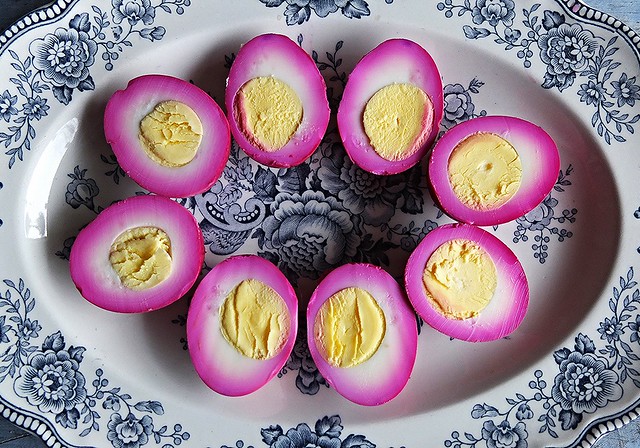
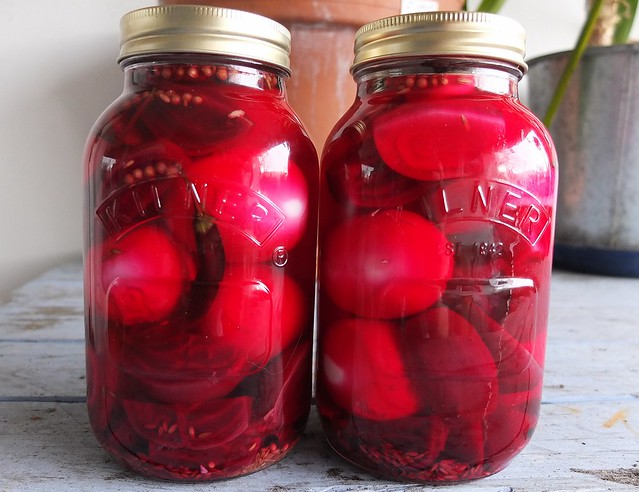
So this is my recipe for pickled eggs. In the spirit of those memories I’ve kept it fairly traditional but for the addition of a beetroot because it turns the eggs pink inside and who doesn’t want a trippy egg? There’s chilli too, because I just went to Mexico. Okay so it’s quite a modern pickled egg, but I can’t stink of chip fat and stale pints forever.

Pickled Eggs

I wrote this recipe for the Better with BRITA campaign.

Pink Pickled Eggs Recipe

12 excellent eggs (e.g. Clarence Court)
1 litre white or cider vinegar
500ml BRITA filtered water
4 garlic cloves
1 tbsp mustard seeds
1 tbsp black peppercorns
1 tbsp coriander seed
1 tbsp cumin seeds
4 dried puya entero chillies (or other dried chillies of your choice)
1 large beetroot, cooked and quartered
1 red onion, thickly sliced
1 tbsp salt
1 tbsp demerara sugar

Cook the eggs until hard boiled (place them in cold water, bring to the boil and cook for 7 minutes).

Mix the liquids, sugar, salt and spices together and simmer for 10 minutes.

Stack the peeled eggs, beetroot quarters and onion slices in sterilised jars then cover with the pickling liquor. They will be ready to eat after two weeks. Store in the fridge.

Green Goddess

Think of all the excellent American salads. There’s the cheesy, garlic laced Caesar, the creamy kicker that is the blue cheese wedge, the Waldorf…actually the Waldorf can be a bit like eating gravel mixed with mayonnaise, and let’s not even start looking into the ‘jello salads’…but my point is that there are some beauts out there. Which makes me wonder why we haven’t really fallen for the green goddess.

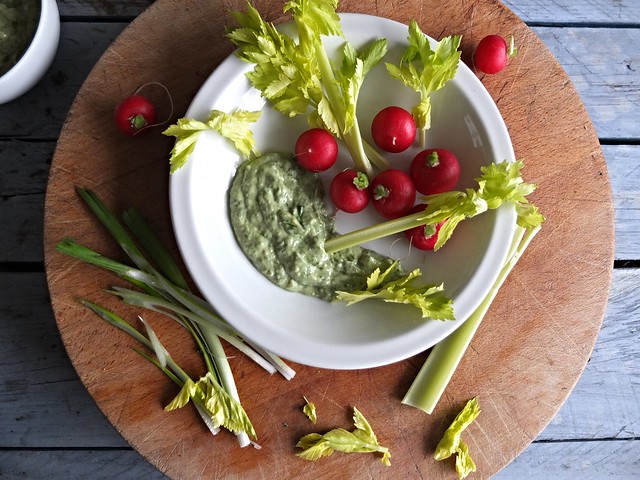
It’s a dressing, rather than a ‘whole salad’, and I can’t get enough of it. Basically, it consists of a truckload of herbs, avocado, spring onions (green things, see?), garlic, and then anchovies – those magical, concentrated-tasty transformers. Lots of recipes add mayonnaise to bind but to me, a mayo bound salad is a recipe for feeling sick afterwards, so I use yoghurt. It’s creamy, fresh, punchy as hell, and healthy. So yeah its basically witchcraft. Oh and you can use it in loads of ways. There’s the obvious, dressing a salad way, then there’s the dip way (see pic) or there’s the sauce way, by which I mean that it’s awesome with roast chicken, and also fish. Oh and then it’s brilliant in sandwiches, too. I think I’ve covered all the ways now.

Green Goddess Dressing Recipe

4 anchovy fillets or 1 tablespoon fish sauce
A large bunch of basil
Standard bunch of chives
2 spring onions
1 avocado, peeled
2 cloves garlic, peeled
3 tablespoons of natural (full fat) yoghurt
3 tablespoons white wine vinegar (or cider vinegar, or lemon juice)
3 tablespoons of extra virgin olive oil
Salt and pepper

Put everything in a blender. Blend.

Taste it – dressings are about balance and that depends on the creaminess of your avocado, the acidity of your vinegar and so on. If it tastes a bit ‘flat’, add some more vinegar and/or salt and see how that makes a difference.

Short Ribs, Peckham Style

I’ve been away a lot recently. That’s been great fun, of course – Australia in January, then San Diego last week – and I’ve eaten loads of things I can’t wait to write about. Today though, all I wanted was the flavour of home. The weather here is, of course, pissy, which was a bit of a shock after the whispering rustle of palms and cloudless California sky. I needed something slow braised and stodgy.

Short ribs, Peckham Style

Dumplings

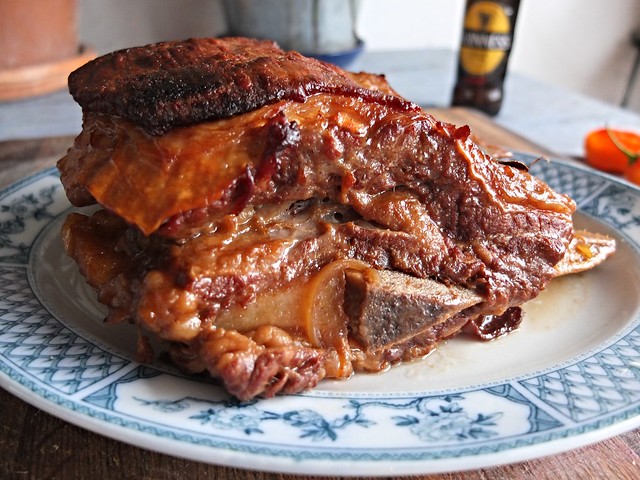
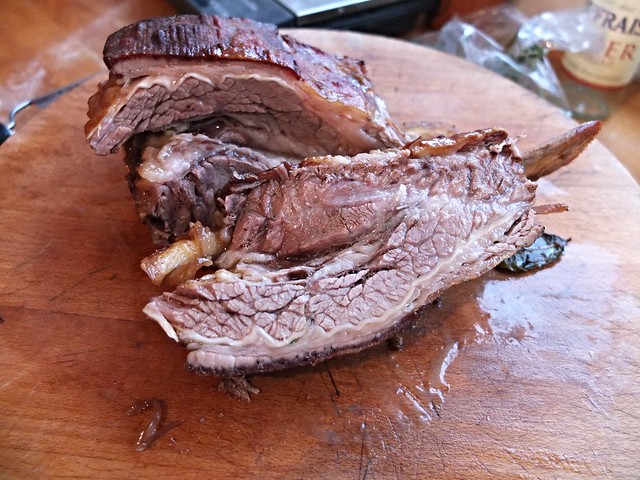
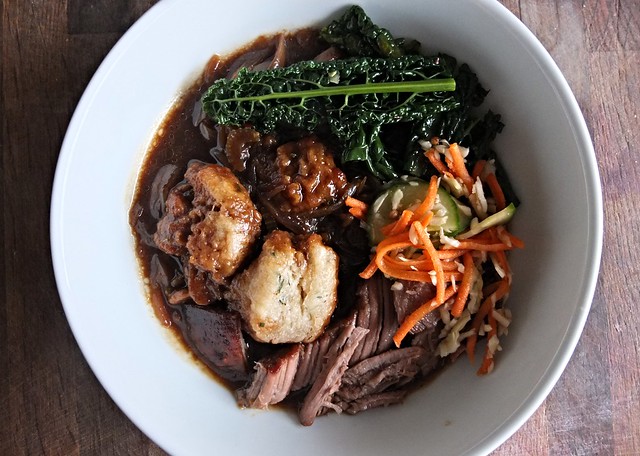
Every now and then I like to get a whacking great thonk (totally a word) of meat and cook it ‘Peckham style’ which means slow cooking it in stock turbo-charged with export strength Guinness (have you ever got drunk on that stuff? Like drinking psychoactive treacle then waking up the next day with no memories but an overwhelming sense of creeping doom), scotch bonnet chillies, allspice, and some other bits and bobs of Rye Lane origin. The result of this is a sweet and sticky sauce, meat which just gives up saying “damn, this is some tasty liquor, you deserve the imminent breakdown of all my connective tissues” and a really pleasing rumble of bonnet spice.

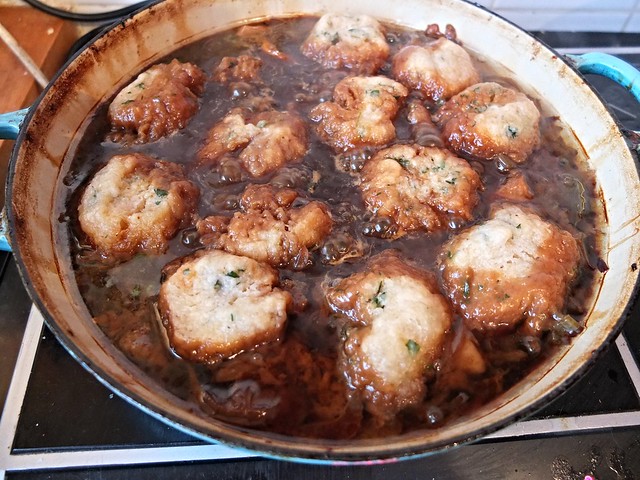
Dumplings are a must in this weather, so we made some with thyme. Well, I say ‘we’ but the truth is that I basically dictated this recipe from my sick bed, because I am being quite rightfully punished for all the fun I have had in the past six weeks. Seems fair. We had a pickled cabbage salad sort of thing on the side – a recipe which I doctored from this original on Smitten Kitchen – the changes are listed below. It’s a perfect accompaniment if you’re cooking this kind of full on big balls braise. Oh and there was some cavolo nero, because that’s always nice, isn’t it.

Short Ribs, Peckham Style
Short Ribs with Thyme Dumplings and Pickled Cabbage

(serves 6, or maybe 4)

1kg beef short ribs (I kept all mine in one piece)
2 litres chicken stock (I used home made and yes it does make a difference)
2 bottles export strength Guinness (660ml)
2 red onions, sliced chunkily
6 cloves garlic, peeled and left whole
1.5 inch ginger, peeled and thickly sliced
2 sticks celery, sliced
6 allspice berries
1 cinnamon stick
2 scotch bonnet chillies, pierced but left whole
3 tablespoons Muscovado sugar
2 bay leaves
Flour, for dusting the ribs

Preheat the oven to 160C

Cover a plate with flour, season it with salt and pepper, and put the ribs on it until they’re all coated. Heat a big, oven-proof, lidded casserole pan (large enough to fit the ribs and all the liquid – sounds obvious but we’ve all done it), then add some oil (veg, groundnut, not olive) and brown the ribs. Set them aside.

Whack a splash of stock in the pan so it bubbles up and use something not too scrape-y to get all the nice meaty bits up off the bottom, then chuck everything else in, so your onions, celery, garlic, ginger, spices, chillies, bay leaves, Guinness and enough stock to top it right up. Save the rest for topping up throughout cooking.

Put the lid on the casserole and cook for 3 hours, turning every so often if the ribs are poking out a bit.

After this time, remove the meat and skim a bit of the fat from the top of the sauce. Then you can make the dumplings…

For the dumplings (makes 12)

75g suet
175g self-raising flour
1 tablespoon thyme leaves

Mix the suet, flour and thyme lightly together, season with salt and pepper then gradually add enough water to bring it together (it won’t take much). Give the mix a brief knead until it’s a good mass then roll into 12 balls. Drop these into the sauce (I cook this bit on the hob), put the lid on and cook for 10-15 minutes.

For the pickled cabbage salad (this is from Smitten Kitchen – I have converted the measurements, ditched the red pepper, added coriander seeds instead of celery, reduced the amount of sugar and used cider vinegar instead of white)

1 white cabbage, cored and sliced
1/3 carrot, grated
1/2 red onion, sliced
A third of a cucumber, finely sliced
350ml cider vinegar
350ml water
70g grams caster sugar
1 tablespoon salt
1/2 teaspoon coriander seeds
1 tablespoon salt

Mix sugar, salt, coriander seeds, vinegar and water in a bowl until sugar and salt are dissolved. Mix with the veg and leave for at least an hour.

Poor Knights of Windsor

I’m really sorry about this, but I have to post it before we all go over the edge into healthiness and abstinence for the rest of the month.

The PKoW (yes) is a group of retired military officers, paid to doss about at Windsor Castle officiating ceremonies and the like for The Order of the Garter. Thanks Wikipedia. What? Did you expect me to go The British Library or something?  Not going to happen. I’ve got a boiling sprout-water related injury on my foot, for a start.

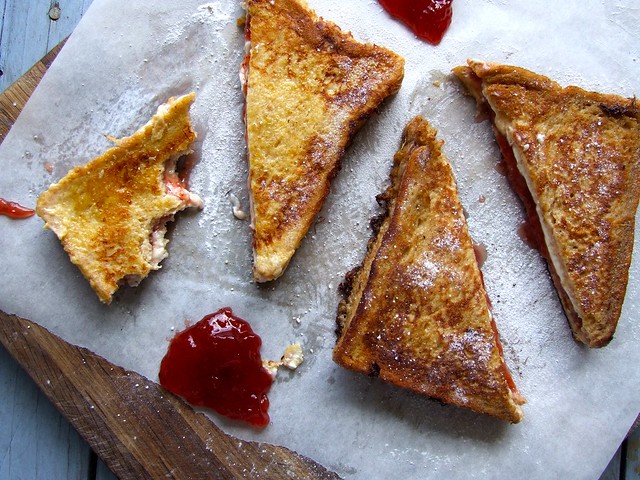
PKoW is also another name for eggy bread (French toast, pain perdu) but I can’t for the life of me find out (from my armchair) when or why it became the name for this sandwich. Perhaps it just refers to the bread, which is dipped in egg and fried in butter a la Eggy B. The red jam does add an extra military flair, I suppose.

Anyway, it’s a cream cheese and raspberry jam filling. Health. The whole thing is then, as mentioned, dipped in an eggy milk mixture and fried in butter, dusted with icing sugar, and served with more jam and a referral to a diabetologist.

A warning – this will ensnare you. I kept going back for another bite. Slightly salty, sweet…FRIED IN BUTTER.

Poor Knights of Windsor

(makes 2)

4 slices white bread of the pre-sliced, pre-packed variety
125g cream cheese
1 tablespoon icing sugar plus extra for dusting
4 tablespoons raspberry jam
25g butter
4 eggs
100ml milk

Beat the icing sugar with the cream cheese until well mixed. Spread the cheese over two slices of the bread and the other two with half of the raspberry jam.

Close the sandwiches with the other slices of bread.

In a shallow bowl, combine the eggs and milk. Melt the butter in a frying pan. Submerge the sandwiches in the egg mixture, making sure they soak it up for about 30 seconds on each side, and then fry in the butter until golden brown.

Dust each with icing sugar and serve with the remaining jam.

Gravadlax

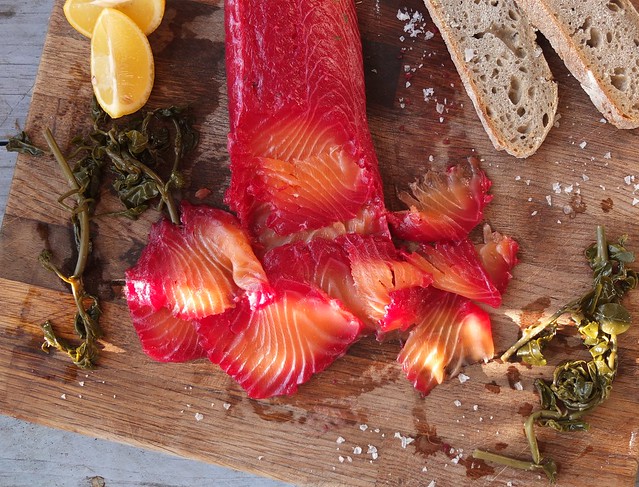
I’ve long been of the opinion that salmon is best eaten either raw, cured, or smoked; it just has such a lovely texture. Gravadlax is really easy to make, and so festive, particularly with a beetroot cure which makes for quite a trippy result, visually. Psychedelic salmon. There’s also gin, which is always welcome in this house.

Beetroot and Gin Cured Gravadlax Recipe

1 side of salmon, approx 1kg in weight, de-boned, skin on

For the cure

125g caster sugar
125g sea salt
2 medium sized beetroots
50ml gin
6 juniper berries
1 bunch dill

If your salmon has not been previously frozen, then you’re going to need to freeze it. If you’ve bought it from a fishmonger for example, then it will need freezing. If you’ve bought it in a supermarket, chances are it has already been frozen. This is important because it kills parasites that may be present in the fish that would normally be killed by cooking. So freeze it, then defrost and proceed with the curing.

Peel and roughly grate the beetroot, bash the juniper berries and then whack both in a blender with the salt, sugar and gin.

Run your finger over the surface of the salmon to check for any bones. If there are any, remove them with tweezers or pliers.

Cut the salmon in half widthways (mine was cut lengthways due to a kitchen communication fail). Smother the flesh sides with the cure. Lay the dill on top. Sandwich the two halves together so the thin end of one is resting on the thick end of the other. Wrap tightly in cling film. Place in a dish and weigh down with, say, another heavy dish.

Leave the salmon for 3-4 days in the cure, turning every day. After this time, unwrap, rinse briefly, pat dry.

To serve, cut down and slightly on the diagonal so as to cut slices but not the skin. Great with soda bread, butter, crisp bread, capers, lemon, sharp salads. Will keep on the fridge for a week or so, well wrapped.